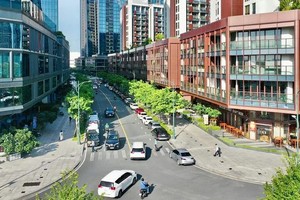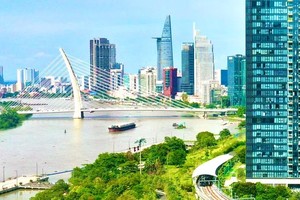
The city will complete 48 projects that have received investment approval in the 2026-2027 period; 15 urgent projects using public investment capital to address traffic congestion; and commence construction on 114 projects in the 2026-2027 period.
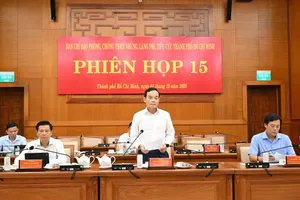
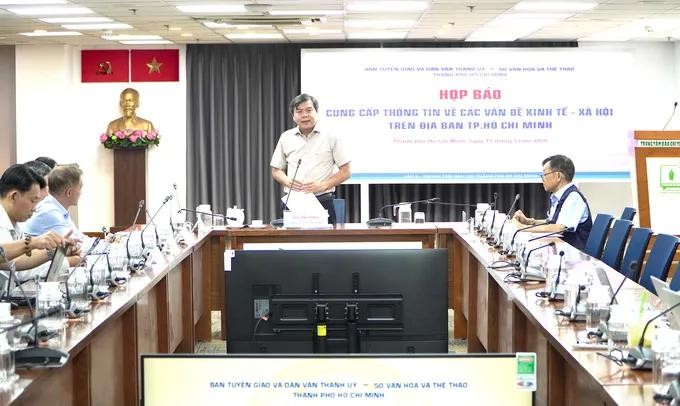
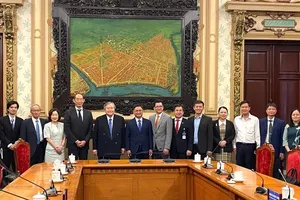
Yesterday, the Propaganda and Mass Mobilization Commission of the Ho Chi Minh City Party Committee, in coordination with the Department of Culture and Sports of Ho Chi Minh City, held a press conference to provide information on socio-economic issues in the city. Deputy Head of the Propaganda and Mass Mobilization Commission of the Ho Chi Minh City Party Committee, Tang Huu Phong, chaired the press conference.
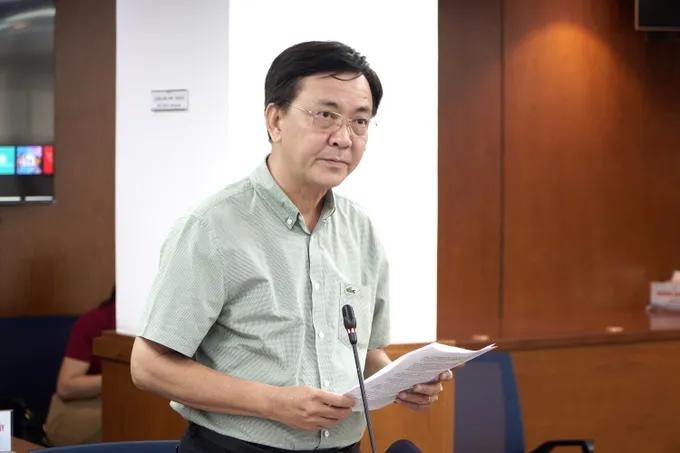
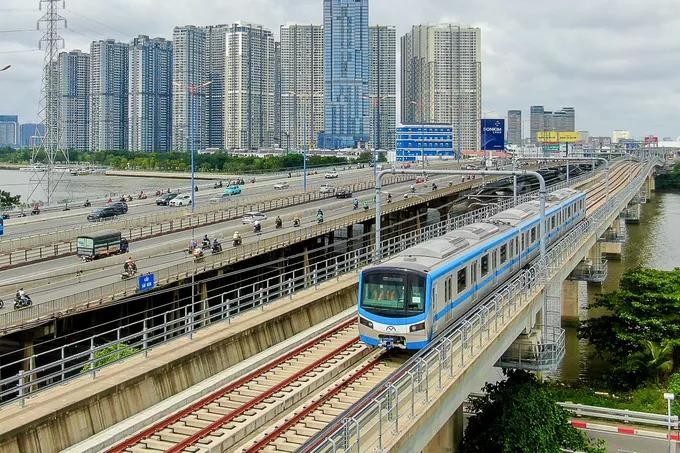
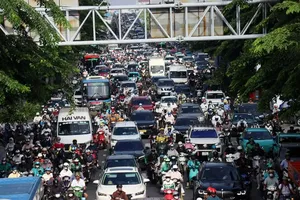
Reporting on solutions to reduce traffic congestion in Ho Chi Minh City, Ly Thanh Long, Chief of Office of the Ho Chi Minh City Department of Construction, stated that seven overarching measures have been identified. These include accelerating the implementation of tasks and projects under the Transport Infrastructure Development Plan for Ho Chi Minh City for the 2026–2030 period; the Public Transport Enhancement Program combined with measures to control the use of private motor vehicles; and the Urban Railway Development Plan in accordance with Conclusion No. 49 of the Politburo.
In parallel, efforts will focus on addressing bottlenecks along key transport corridors linking Ho Chi Minh City with the Mekong Delta, the Southeast region, and northern areas, ensuring the smooth flow of goods and convenient access for tourists. Appropriate plans will be developed to maintain reasonable travel times from Thu Dau Mot Ward to the city center, while ensuring synchronized and efficient connectivity between Long Thanh International Airport and the urban core.
In addition, connectivity strategies will be formulated for the Ba Ria–Vung Tau area and newly developed zones, aligned with the establishment of a modern and integrated transportation network.
HCMC expected to start work on nine steel overpasses in 2026
According to Chief Ly Thanh Long, the Ho Chi Minh City Department of Construction is coordinating with the Department of Finance to advise the Ho Chi Minh City People's Committee to prioritize allocating sufficient budget funds to quickly implement urgent projects to address traffic congestion in the 2026-2027 period. It is expected that 9 steel overpasses will be started in 2026 and completed in 2027. The plan also includes further refining the integrated transportation system within the overall socio-economic development plan.
A road map for relocating state administrative offices, academies, universities, colleges, vocational schools, large hospitals, and industrial zones outside the city center will be studied according to the plan. Solutions will be implemented to adjust working, studying, and business hours to help reduce traffic congestion (not on a large scale); and the development of waterway transportation will be promoted.
Regarding specific tasks and solutions for the 2026–2027 period, Mr. Ly Thanh Long stated that, in terms of infrastructure, the city will complete 48 projects already approved for investment during this period; implement 15 urgent public investment projects to alleviate traffic congestion (including nine steel overpasses); and commence construction on 114 additional projects, with completion and operation targeted before 2030.
In addition, 15 urgent projects will be implemented using recurrent expenditure funds to reduce traffic congestion while awaiting the completion of the planned interchange construction.
The Department also reported to and proposed that the Standing Committee of the Ho Chi Minh City Party Committee approve the expedited implementation of projects and permit the application of special mechanisms, including direct contracting or special contractor selection, concurrent processing of procedures during project preparation, and adjustments to local planning. These measures would apply to 15 urgent public investment projects and 15 projects funded by recurrent expenditure, enabling their immediate commencement and completion within the 2026–2027 period.
In addition, the Department called for accelerating the construction of key transport projects linking the city center with Long Thanh International Airport, including the An Phu interchange and the expansion of the Ho Chi Minh City–Long Thanh–Dau Giay Expressway, while also initiating research and proposing investment in the Thu Thiem–Long Thanh railway project.
In parallel, the Department proposed the implementation of seven road transport projects, to be commenced and completed during the 2026–2028 period. It also plans to develop five public waterway passenger transport routes between 2026 and 2027 to help ease pressure on the road network.
Traffic plans will be reviewed to reduce car lanes and increase mixed lanes
One of the non-infrastructure solutions is the regular review, adjustment, and flexible organization of traffic in a scientific way, suited to actual conditions. This includes closing certain nearby intersections and creating intermediate junctions, reducing car-only lanes to increase mixed lanes, and flexibly allocating lanes according to time of day.
The department will strengthen inspections and guidance for wards and communes; check and handle violations related to road construction on active routes. It will also review and propose solutions to address obstacles in urban and residential investment projects so they can be put into use, thereby expanding circulation space and easing pressure on main urban arteries.
Strict management of temporary use of roadways and sidewalks will be reinforced, alongside the construction of smart, modular multi-story parking facilities. At the same time, demand-responsive transport (DRT) models will be deployed to collect passengers in residential areas, and river bus routes will be developed to share traffic load from roads, especially on central corridors and inter-regional connections, ensuring effective integration of public transport modes.
Infrastructure for public transport will be expanded, with studies on restricting certain vehicle types on specific roads during designated times. Parking facilities will be built at major stations and gateway areas, allowing residents to leave their vehicles and switch to public transport.

)