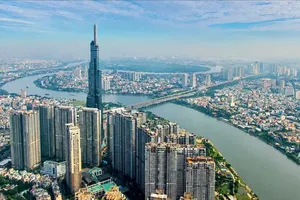
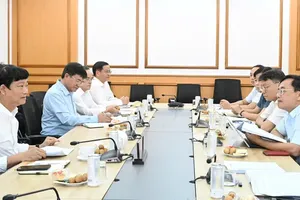
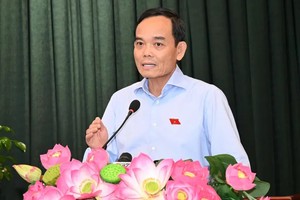
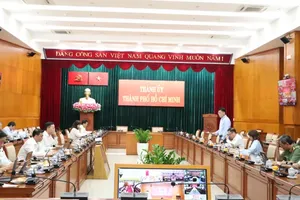
On the afternoon of May 8, the Ho Chi Minh City People’s Committee held a meeting on the city’s socio-economic performance in April and the first four months of the year, as well as key tasks and solutions for May 2026.
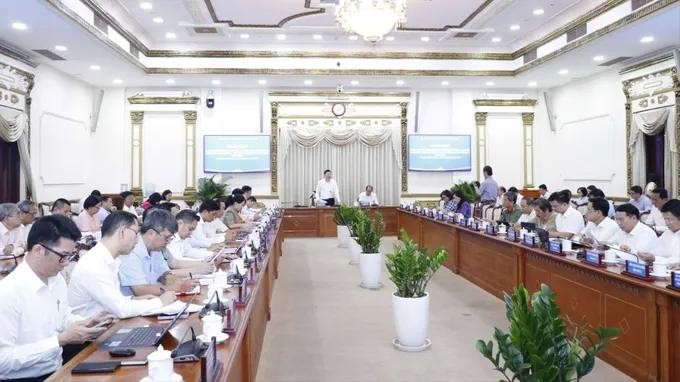
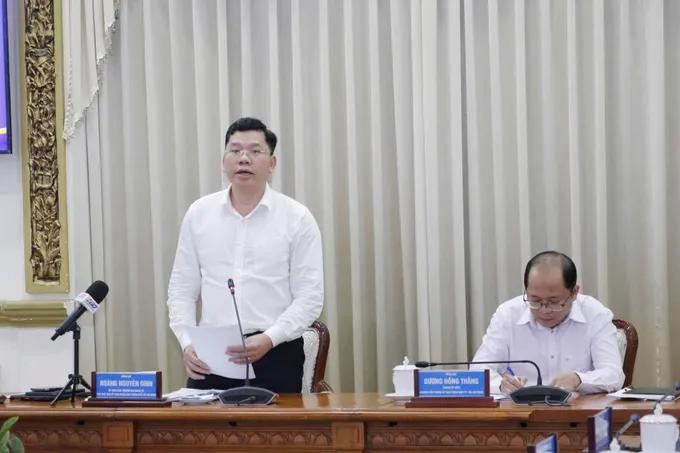
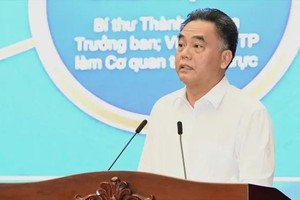
The meeting was chaired by Vice Chairman Hoang Nguyen Dinh of the Ho Chi Minh City People’s Committee.
Vice Chairman Hoang Nguyen Dinh said Ho Chi Minh City is entering a peak period for implementing major tasks, particularly directives issued by Party General Secretary and State President To Lam during a working session with the Standing Committee of the Ho Chi Minh City Party Committee. He called on delegates to accurately assess growth drivers to ensure the city achieves double-digit growth in 2026 and the following years.
He also stressed the need for in-depth analysis of key growth pillars, including investment, consumption, exports, FDI attraction, private sector development, science and technology, innovation, and digital transformation, while identifying bottlenecks, growth potential, and breakthrough solutions for each sector.
Addressing the city’s public investment disbursement rate, which was lower than the national average in the first four months of the year, the vice chairman instructed departments and agencies to closely review disbursement progress, describing it as a key task to stimulate growth and create spillover effects across the economy. He also requested a comprehensive review of budget revenue collection in the first four months of the year, aiming for state budget revenue of VND1 quadrillion in 2026. Relevant agencies were asked to analyze each revenue source and propose suitable management measures for the coming period.
During the first four months of the year, Ho Chi Minh City focused on achieving its 2026 GRDP growth target of more than 10 percent, in line with the set principle while strengthening inspections, supervision, and efforts to remove implementation bottlenecks. As a result, the city’s economy maintained positive momentum across multiple sectors.
Director Hoang Vu Thanh of the Ho Chi Minh City Department of Finance said total retail sales of goods and consumer service revenue in the first four months were estimated at VND639.349 trillion, up 13.2 percent year-on-year. Retail trade, accommodation and food services, tourism, and other services all recorded growth, indicating that domestic demand remains a key pillar supporting economic expansion.
Tourism continued to be a bright spot, contributing positively to consumption, services, employment, and the city’s image promotion. Total tourism revenue in the first four months reached VND172 trillion, equivalent to 52.1 percent of the annual target.
Import-export activities also maintained growth momentum, with export turnover in the first four months estimated at US$30.91 billion, up 4.25 percent, while import turnover was estimated at US$33.99 billion, up 8.06 percent.
The industrial production index rose 11.2 percent in the first four months of the year, including an 11.9 percent increase in processing and manufacturing industries, which remained the main growth driver. Several secondary industrial sectors posted strong growth, particularly chemical production, metal products, transport vehicles, non-metallic mineral products, paper, and pharmaceuticals.
Notably, newly registered FDI in the first four months reached nearly US$3.3 billion, equal to 30.2 percent of the annual target and up 127.1 percent from the same period in 2025. The city approved investment policies for 12 projects and adjusted capital increases for four domestic investment projects with total registered capital of about VND209 trillion. Authorities also approved a list of projects calling for investment during the 2026–2030 period.
Total state budget revenue in the first four months was estimated at more than VND325.7 trillion, equivalent to 40.5 percent of the target assigned by the central government and up 17.9 percent year-on-year.
However, the Finance Department director warned that pressure to achieve growth above 10 percent remains significant due to increasingly complex and unpredictable risks in international markets. Public investment disbursement reached only 10.5 percent, with many projects facing compensation issues and complicated legal procedures. The number of dissolved businesses surged 126.08 percent compared with the same period in 2025, while the number of businesses resuming operations declined. Meanwhile, progress in drafting master plans for social housing and social infrastructure has remained slow.
Key tasks and focus areas for the coming period
To maintain momentum, the city leadership outlined several priority tasks:
· Prioritizing measures to accelerate economic growth while maintaining proactive, flexible, and timely policy responses to emerging challenges, with the goal of achieving the city’s 2026 GRDP growth target.
· Focusing on removing obstacles facing projects, expediting key infrastructure developments, accelerating public investment disbursement, and advancing infrastructure expansion.
· Stepping up urban planning and infrastructure construction, improving transport systems, reducing traffic congestion and accidents, expanding social housing, and addressing housing along canals and waterways.
· Strengthening the management and efficient use of natural resources while implementing comprehensive measures to prevent and control environmental pollution.
· Promoting science and technology, innovation, emerging industries, and comprehensive digital transformation.
· Effectively and promptly implementing social welfare policies, improving public healthcare services, and prioritizing education and training.
· Continuing the effective implementation of directives and conclusions issued by the central government and the municipal Party Committee on streamlining the organizational apparatus, restructuring public service units, reorganizing public assets, and operating the two-tier local government model.
· Ensuring national defense, security, social order and safety, while intensifying anti-corruption efforts, combating wastefulness and misconduct, and promoting international integration.
)