Grassroots officials staying "one step ahead"
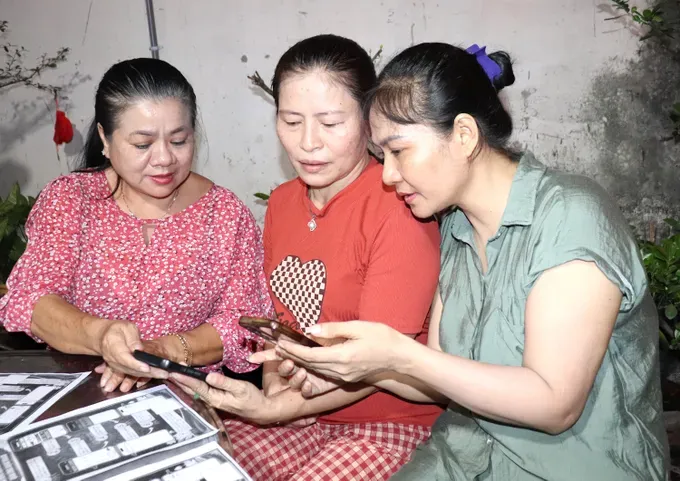
“Hello, Ms. Phuong. Are you free? I was hoping you could guide me through this process.” While busy sweeping leaves in front of her house in Alley 109 of Phan Chu Trinh Street, Head of Neighborhood 11 Dao Thi Lan Phuong looked up to see Tran Hong Hanh approaching. Noticing Ms. Hanh holding a smartphone and a stack of papers, Ms. Phuong asked, “What’s up, Hanh? How’s the baby doing?”
Ms. Hanh, a temporary resident from Vinh Long Province, has recently given birth to her second son. “He’s doing great. I stopped by to ask for your help with an online application for a copy of my college diploma. I want to apply for a job, but I’ve been struggling with the input since this morning,” she explained.
Offering a chair, Ms. Phuong patiently guided her guest through the public service portal. She facilitated the search for diploma copy procedures, meticulously following every step. Since Ms. Hanh lacks banking applications, Ms. Phuong even settled the online fees personally. “It’s finished; your documents arrive in days,” she noted.
This instance isn’t isolated, as Ms. Phuong frequently streamlines complex administrative tasks. Such grassroots support is reportedly flourishing throughout HCMC. From central hubs to outlying communes like Cu Chi, these initiatives are successfully saving residents significant time and travel expenses.
Since early April, every Saturday morning, the “Online Public Service Support Point” at the Binh Ha Dong Hamlet Office has been buzzing with activity. Officials from the Thai My Ward Public Administration Service Center and the community digital technology team directly guide residents through online procedures such as birth and marriage registration, social benefits, insurance, and the usage of VNeID accounts.
Meanwhile, in Phu Nhuan Ward, when word reached officials in March that Ngo Van Them, a solitary man with a disabled son, had passed away, the civil status officer immediately processed the dossier. Coordinating with the local police to verify the information, they advised the Ward People’s Committee to issue the death certificate. In less than four hours, the certificate was hand-delivered to the grieving family, ensuring they didn’t have to navigate bureaucratic hurdles during their time of loss.
“Touching” public services at home
Statistics from the Tan Nhut Commune Public Administration Service Center reveal that in the first quarter of 2026, the commune received over 6,250 dossiers and resolved 6,220, achieving a 99.49-percent rate; notably, online submissions accounted for over 99 percent.
To reach these figures, especially in helping the elderly, Tan Nhut Commune implemented “Online Public Service Guidance Points” right in neighborhoods and hamlets. Specialized training sessions were launched to help grassroots officials master technology so they can directly assist the public.
Years ago, Ms. Dao Thi Lan Phuong only guided residents on preparing paperwork for in-person submissions. However, since HCMC shifted to the public service portal, she’s actively attended technology classes. “I live close to the people and see them every day. In this era of technological advancement, I must learn to have the knowledge to guide them when needed,” she shared.
For months, Ms. Phuong has sought out digital transformation classes and studied official documents during her spare time in order to help those in need around her. After such classes, many neighborhood officials have even prepared “digital transformation notebooks” to record specific steps and processes for others to refer to.
Secretary Nguyen Hoang Dan Khanh of the Binh Thanh Ward Ho Chi Minh Communist Youth Union shared that the union have launched the “Digital Popular Education” model at local coffee shops. Volunteers even venture into small alleys to guide the elderly at home. As a result, many seniors are becoming proficient with technology.
“I’ve had a smartphone, but I rarely used apps like banking because I was afraid of losing personal info. After being guided by the Youth Union, I feel more secure. Now, I don’t mind scanning QR codes for transfers. It makes life much more convenient,” expressed Ms. Tran Khanh Hoang Lan, a resident of Neighborhood 26.
The 50-year journey of the city named after late State President Ho Chi Minh isn’t just written in GRDP figures or trillion-VND infrastructure projects. It’s written with the dedication of ordinary people who see serving the public as their life’s purpose. As the city ascends to a global metropolis, its intelligence is led by a heart of gratitude. From Ms. Phuong’s helping hand to the speed of Phu Nhuan Ward officials, it appears that people are the anchor and ultimate goal of all development.
Synchronized movement from mindset to action
A distinct feature of HCMC today is the materialization of political commitments into Key Performance Indicators (KPIs) closely linked to daily life. Local leaders don’t just make vague promises; they commit to specific people, tasks, and responsibilities. The comprehensive digitalization of healthcare, education, and traffic aims to liberate time and labor for residents, ensuring a higher quality of life.
Specifically, HCMC is striving for modern, transparent land management through a 90-day campaign to clean data for over 4 million land plots. The highlight is the total elimination of paper storage, switching to real-time digital data shared between tax, construction, justice, and police departments.
With the motto “accurate, sufficient, clean, and live,” the city aims for citizens to perform all financial obligations electronically. “The City for the People” – that philosophy has truly permeated every policy and action of every official and citizen in the city named after the Leader.






)