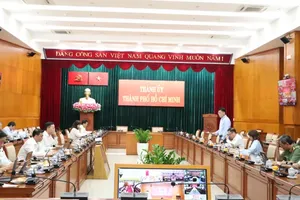
As of May 8, the Ho Chi Minh City Party Committee issued Directive No. 11-CT/TU on promoting double-digit economic growth in Ho Chi Minh City for the 2026–2030 period.
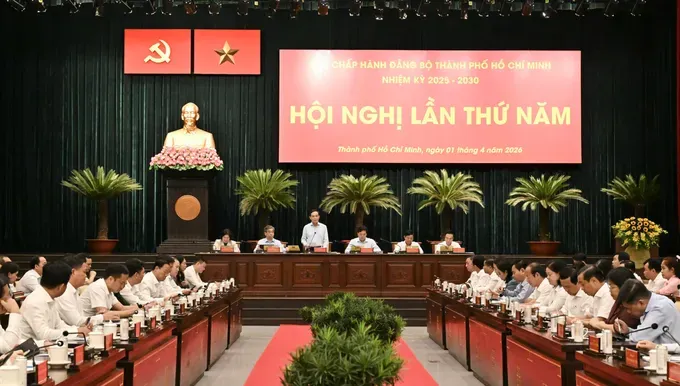
Accountability for leadership
The Standing Committee of the Ho Chi Minh City Party Committee requested all Party organizations, authorities, the Vietnam Fatherland Front and socio-political organizations in the city to identify double-digit economic growth as a key political task throughout the 2026–2030 period.
Heads of Party committees, agencies and units will bear direct and comprehensive responsibility for implementation results, which will serve as a major criterion for evaluation and classification. Those failing to fulfill assigned tasks may face accountability measures under regulations.
Authorities are also required to clearly define responsibilities, progress timelines, deliverables, and authority in implementing tasks. Specific growth targets for each sector, field, and locality must be finalized by the second quarter of 2026, alongside monthly and quarterly monitoring indicators.
The directive also calls for stronger inspections and supervision to promptly detect and strictly handle cases of negligence, responsibility avoidance, or delays in public service performance.
Party committees in wards, communes and special administrative zones are tasked with directly leading local socio-economic development efforts and taking full responsibility for implementation outcomes in their respective areas.
The city also emphasized strengthening administrative discipline, enhancing the accountability of leaders, and promptly resolving bottlenecks related to land, investment, construction order and social welfare to avoid prolonged delays affecting economic development and residents’ livelihoods.
Science, technology and digital transformation as key drivers
The Standing Committee directed the Party Committee of the Ho Chi Minh City People’s Committee to urgently issue a comprehensive implementation plan, translating double-digit growth targets into sector-specific and locality-based objectives.
The city aims to maintain average annual GRDP growth above 10 percent, with total GRDP reaching approximately US$200 billion by 2030 and per capita GRDP exceeding US$14,000.
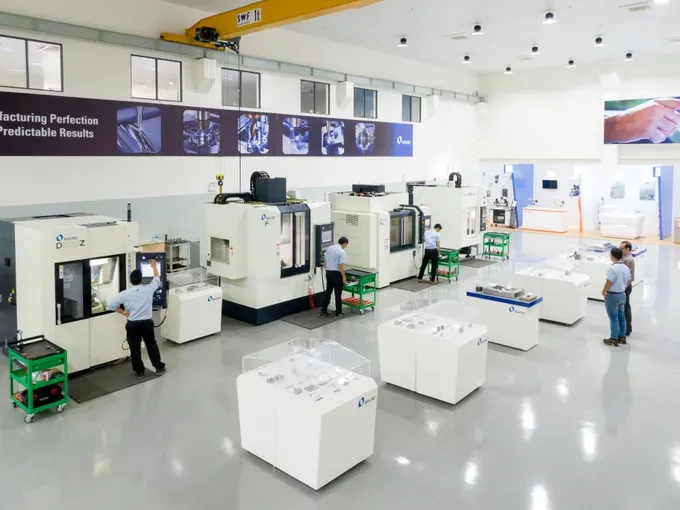
Specific growth targets will be assigned to departments, sectors, and localities together with clear mechanisms for evaluation, rewards, and discipline. Priority resources will be allocated to sectors, industries, and areas identified as major growth engines.
The directive also focuses on removing institutional and policy bottlenecks, particularly in land management, planning, investment, construction, and public assets. Specialized task forces will be established to resolve long-standing projects and obstacles.
Authorities were instructed to strictly handle officials showing weak performance or responsibility avoidance while encouraging proactive and innovative thinking for the public interest.
The city plans to accelerate public-private partnerships, attract strategic investors, and prioritize major infrastructure projects in transport, logistics and digital infrastructure. Regional connectivity and development space expansion will also be strengthened.
Fiscal and budget management will follow a proactive and flexible approach, prioritizing resources for development investment, science and technology, digital transformation and strategic infrastructure while promoting savings and preventing wasteful spending.
Directive No. 11 also requires restructuring public investment toward more focused and efficient allocation, reducing scattered projects by at least 30 percent, achieving annual public investment disbursement rates above 95 percent, and basically resolving stalled projects during 2026–2027.
Innovation and high-tech development
The directive identifies the private sector as a major driver of growth and calls for policies supporting large-scale enterprises and improving competitiveness. State-owned enterprises are expected to operate under international standards and play a leading role in development.
The city will also selectively attract foreign direct investment projects focused on high technology and innovation while promoting technology transfer and stronger linkages with domestic enterprises.
At the same time, Ho Chi Minh City plans to accelerate the establishment of an International Financial Center and further develop its innovation ecosystem, including research and development centers and startup hubs.
Human resource development will focus on technology, finance, urban management and logistics. Education and vocational training will be closely aligned with labor market and business demands, while digital technologies and artificial intelligence applications in education will be expanded.
The city also aims to develop high-quality healthcare services, including specialized and international healthcare systems, contributing to the growth of high-value medical services.
Social welfare goals include developing approximately 199,000 social housing units by 2030 and improving residents’ quality of life.
Directive No. 11 further states that Ho Chi Minh City will accelerate its growth model transformation by making science and technology, innovation, and digital transformation the main growth drivers. By 2030, the digital economy is expected to account for 30–40 percent of GRDP, while research and development spending will reach 2–3 percent of GRDP.
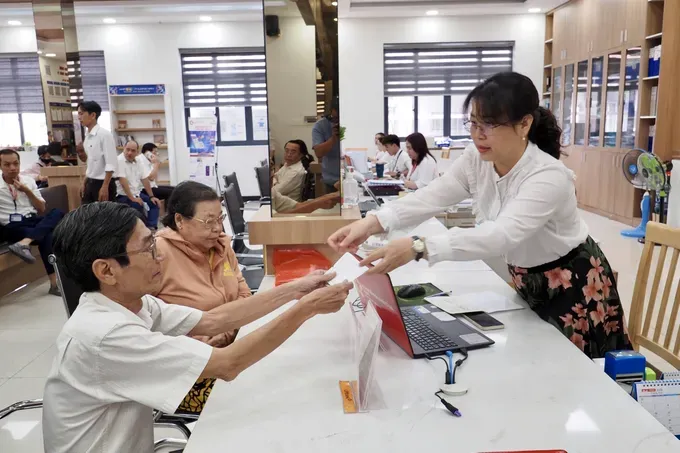
The city also plans to strongly develop high-tech industries, artificial intelligence, semiconductors, finance, logistics, the digital economy and the green economy.
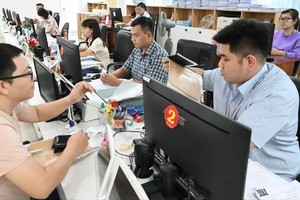
Administrative reforms will also be intensified, with a target of reducing administrative processing times by at least 30 percent, digitizing 100 percent of administrative procedures, and implementing a “one focal point, one process, one timeline” mechanism.

)