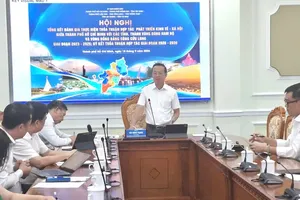
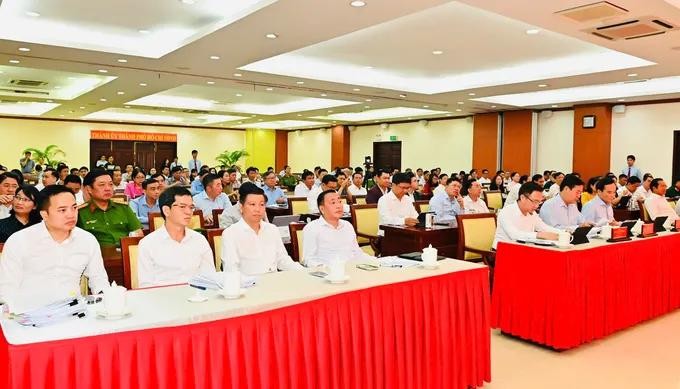
On January 14, the city’s Steering Committee for Science, Technology, Innovation, and Digital Transformation (abbreviation: the Steering Committee) held a conference to review its 2025 performance and outline key tasks for 2026 under Resolution 57 of the Politburo, Project 204 of the Party Secretariat, and Project 06 of the Government.
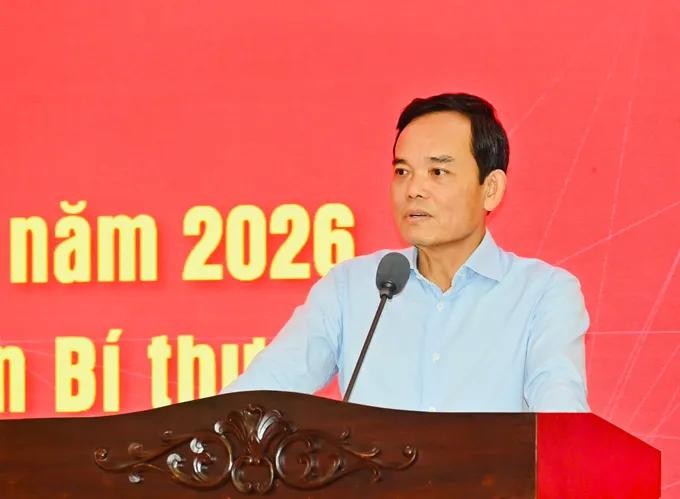
The meeting was chaired by Tran Luu Quang, Secretary of the Ho Chi Minh City Party Committee and Head of the Steering Committee.
Speaking at the conference, Secretary Tran Luu Quang emphasized two key priorities including digital transformation and scientific–technological development. He underscored that digital transformation is a critical tool to enhance the efficiency, responsiveness, and effectiveness of the administrative system, an effort already being pushed vigorously from central to local levels. However, he noted, significant challenges remain and must be addressed urgently.
He called on delegates to identify bottlenecks and obstacles in implementation and propose practical solutions for 2026. “If Ho Chi Minh City fails to quickly overcome existing limitations,” he cautioned, “we risk falling behind other localities in digital transformation and science–technology development.”
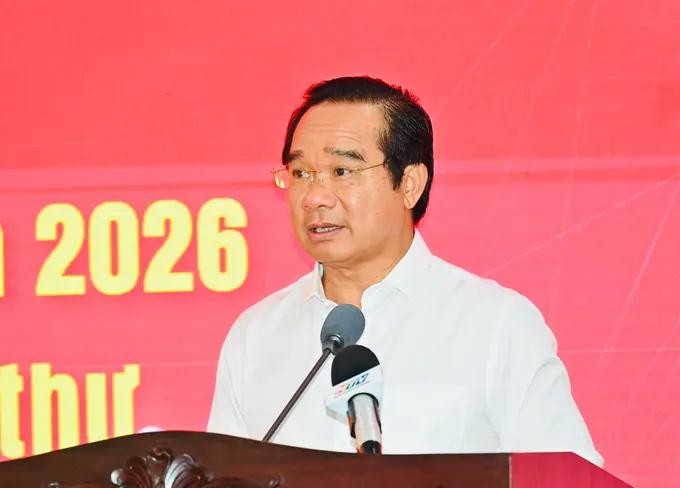
Summarizing 2025 achievements, Chairman of the Ho Chi Minh City People’s Committee Nguyen Van Duoc noted that the city’s coordinated efforts in science, technology, and digital transformation had produced key results, paving the way for the next phase of growth.
According to Chairman Nguyen Van Duoc, 2025 marked a turning point in the implementation of Resolution 57, signaling a strong shift from a “management mindset” to a “development mindset,” with science, technology, innovation, and digital transformation serving as core drivers of progress. Resolution 57 has become a strategic framework guiding the city toward a new development model based on knowledge, technology, and data which create an important foundation for the 2025–2030 period.
This shift is not limited to slogans or awareness-raising; it has led to practical changes in policy design, resource allocation, and project execution across the city. Initiatives such as the “Digital Literacy for All” campaign have become highlights, helping promote digital skills and build public consensus on digital transformation.
Under Project 204, the city has gradually developed a unified coordination and monitoring mechanism for digital transformation across the political system, using an integrated platform to track progress on Resolution 57. Accountability of leaders has been strengthened, driving Ho Chi Minh City to fulfill 100 percent of centrally assigned tasks.
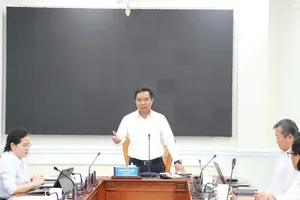
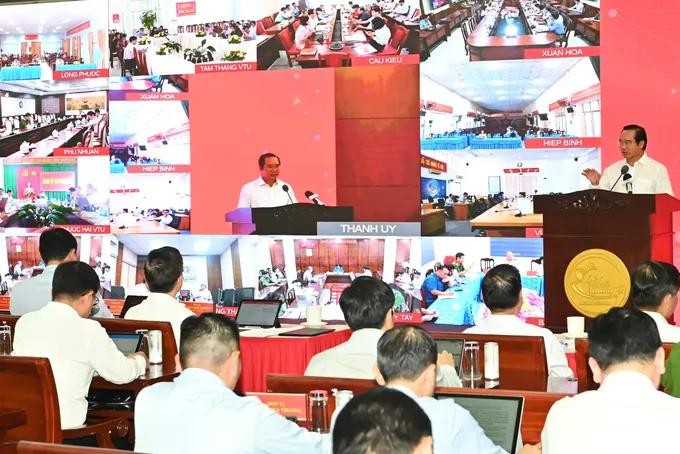 The online conference takes place in different venues (Photo: SGGP)
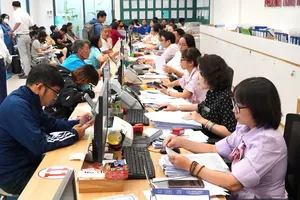
Meanwhile, the implementation of Project 06, which centered on citizens and businesses, continues to affirm its pivotal role in building a digital government and digital society. The city has achieved deep, meaningful progress in administrative digitalization, with over 80 percent of public services now fully online and most applications processed on time, particularly at the grassroots level. Innovative initiatives such as “Digital Citizen Stations” and “AI-powered Administrative Service Kiosks” have enhanced accessibility, reduced costs and processing time, and improved citizen satisfaction.
Chairman Nguyen Van Duoc emphasized that the city’s two-tier digital government model has been operating effectively, improving public service quality and unlocking new development resources. He added that the resolutions and projects have moved from slogans to substance driving real changes in governance and daily life.
Creating new value and development capacity
Continuing the implementation of Resolution 57, Project 204, and Project 06 remains of critical importance requiring stronger innovation, decisive action, and measurable results.
For Resolution 57, the city will transition from laying the groundwork to generating new value and capacity, positioning innovation and technology as central to sustainable and high-quality growth. Leadership will shift from administrative management to development facilitation, with success measured by socio-economic impact and citizen satisfaction.
Ho Chi Minh City also plans to refine institutions and policies, propose pilot mechanisms to the central government, and advance initiatives in strategic technologies, the digital economy, and smart urban development.
The city will prioritize key technology sectors and flagship products, tightly linking research and commercialization to build core technological capabilities and domestic value chains. It will also strengthen the innovation ecosystem by connecting government, academia, and business, leveraging innovation hubs, high-tech parks, and dedicated science–technology investment funds, including the planned “Northern HCMC Science–Technology Urban Area.”
For Project 204, digital transformation within Party organizations will redefine leadership methods in the new era. Under Project 06, the city will continue to champion a citizen- and enterprise-centered approach, with data as the foundation for building a truly digital society.