Regarding the North–South high-speed railway project, Ho Chi Minh City has prepared approximately six hectares of land at the Long Buu resettlement area (Phase 2), which is expected to accommodate around 200 affected households.
The city has also proposed that the central government allocate VND10.8 trillion (approximately US$413 million) from the 2026 state budget for compensation, support, and resettlement for the section passing through the city.
For routes connecting to Long Thanh International Airport in Dong Nai Province, the city has identified three main corridors.
Among them, Metro Line 2 (Ben Thanh–Tham Luong section) broke ground on January 15, 2026, and is scheduled for completion in the 2026–2030 period. The Ben Thanh–Thu Thiem and Thu Thiem–Long Thanh lines are finalizing procedures for implementation under the public-private partnership (PPP) model, with groundbreaking targeted for 2026 and completion by 2030.
For Metro Line 6 (Tan Son Nhat International Airport–Phu Huu section), the city prioritizes Phase 1 investment during 2026–2030 to connect with Long Thanh International Airport.
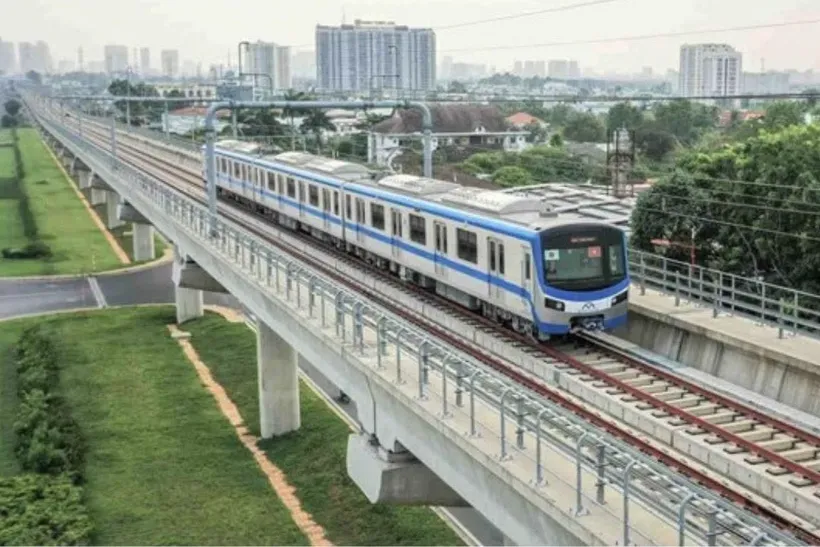
The project to extend Metro Line 1 (Ben Thanh–Suoi Tien) to the Dong Nai provincial administrative center and Long Thanh International Airport, approximately 38.5 kilometers long, has been approved by the People’s Councils of Ho Chi Minh City and Dong Nai Province, assigning the Dong Nai Provincial People’s Committee as the competent authority. Implementation is expected in the 2026–2030 period.
The city also plans to develop underground metro lines in the inner urban area (inside Ring Road 2), maximize underground space use and promote transit-oriented development (TOD).
By 2030, Ho Chi Minh City will prioritize investment in six metro sections and lines with a total length of about 187 kilometers and a preliminary total investment of approximately US$17 billion. In addition, several major enterprises have proposed studying and investing in new lines under the PPP model.