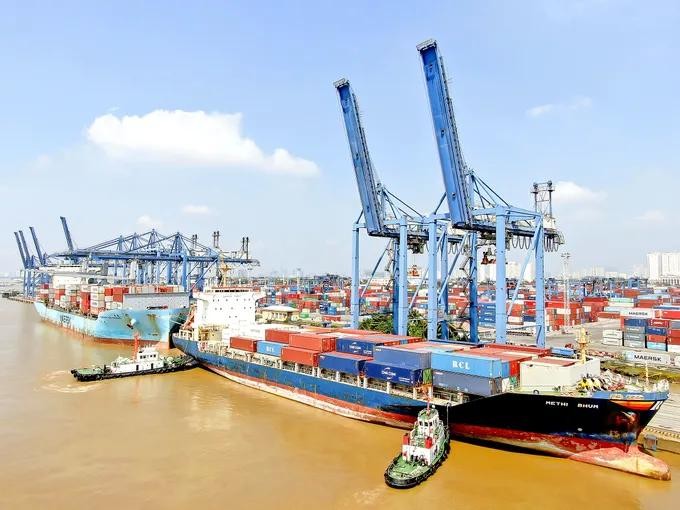
A wave of long-stalled projects in Ho Chi Minh City is being revived through large-scale investments as municipal authorities resolve administrative bottlenecks, opening new growth avenues for the special status metropolis. This reality serves as compelling evidence to refute distorted narratives that deny the leadership role of the Communist Party of Vietnam. It comes at a time when Party building, rectification efforts, the handling of violations, and the unblocking of development resources are driving visible transformations across the socio-economic landscape.
HCMC actively resolves long-stalled projects
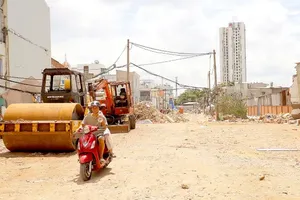
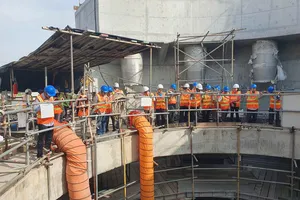
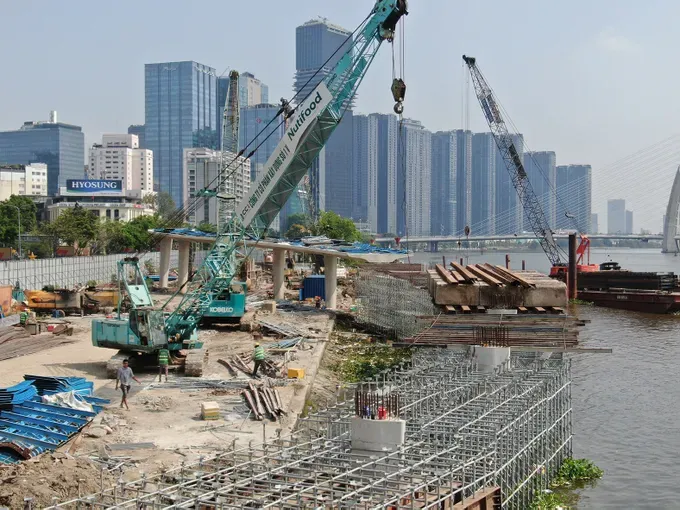
Work is currently bustling at the construction site of the City Central Square and the new Ho Chi Minh City Administrative Center within the Thu Thiem New Urban Area. Laborers are working through weekends as construction vehicles stream in and out. The once-barren marshland of nipa palms is being leveled to make way for modern infrastructure.
After years of delays, complaints, and regulatory violations requiring intervention, an area once considered a major bottleneck is entering a new phase of development with a series of key projects underway.
Nguyen Duc Hoa, former Deputy Minister of the Ministry of Planning and Investment (now the Ministry of Finance), stated that breaking ground on this project carries significance far beyond a typical urban infrastructure development. It serves as a clear demonstration of the city's determination to resolve long-standing hurdles, unlock resources, and restore confidence among residents and businesses.
However, opportunistic elements have recently exploited economic court cases and misconduct by a segment of degraded officials to deny the Party’s leadership and distort anti-corruption campaigns. Conversely, the aggressive and transparent approach taken by Ho Chi Minh City demonstrates that the political system possesses the resolve to self-examine, self-correct, handle violations, clean up the apparatus, and reinforce discipline.
In the first quarter of 2026, the Standing Committee of the Ho Chi Minh City Party Committee disciplined eight Party members holding committee positions, including four who were expelled from the Party. At the local level, Party committees took disciplinary action against two Party organizations and 43 members, with eight expulsions recorded. The figures underscore the continued enforcement of the Party’s anti-corruption policy, reaffirming the principle of “no forbidden zones” and “no exceptions.”
More importantly, addressing misconduct does not stop at disciplining officials. Public concern centers on whether backlogs are resolved, public assets are returned to serve society, and suspended projects are "awakened" or left stagnant for years.
Evidence shows the city is tackling its toughest challenge: managing aftermaths and unblocking development resources. To date, Ho Chi Minh City has resolved difficulties for all 838 identified stalled projects, liberating over 17,000 hectares of land and unlocking more than VND206 trillion (approximately US$7.8 billion). The Ho Chi Minh City Inspectorate has established six inspection teams and one review team to audit 100 of these 838 resolved projects, aiming to bring them into operation swiftly.
Prior to this, 94 troubled projects underwent inspection to clarify the causes of delays, determine stakeholder responsibilities, and propose solutions. Based on these findings, numerous cases have seen their hurdles cleared, allowing them to finalize necessary procedures and bring land funds and projects into effective use, preventing resource waste.
Several prime real estate locations, left vacant for years, now have new utilization plans. Beyond the Thu Thiem New Urban Area, the city is reviving the Nha Rong Wharf - Khanh Hoi area under a new master plan, while developing exploitation strategies for prime plots at 8-12 Le Duan, 2-4-6 Hai Ba Trung, and 152 Tran Phu.
Notably, the Ho Chi Minh City People's Council approved a list of 33 land plots slated for payments toward Build-Transfer (BT) projects, establishing a framework to mobilize social resources for infrastructure investment. This policy ensures valuable land assets are no longer wasted amid high development demand.
Accelerated investments consolidate public trust
Alongside efforts to clear project bottlenecks, Ho Chi Minh City broke ground on 10 major infrastructure projects totaling over VND520 trillion in the first four months of 2026. Vice Chairman Hoang Nguyen Dinh of the Ho Chi Minh City People's Committee noted that departments, agencies, and localities operated at "rocket speed" to launch multiple mega-projects concurrently within a few months. This indicates rising confidence among strategic investors and enterprises in the city's investment environment.
The city is also accelerating investment procedures to launch several key projects before July 2. These include:
* The Thu Thiem - Long Thanh railway (over VND85 trillion )
* The Can Gio - Vung Tau undersea tunnel bridge (over VND92.6 trillion )
* The Nha Rong Wharf - Khanh Hoi Cultural Park (approximately VND20 trillion )
* The Ho Tram - Long Thanh International Airport urban expressway (over VND51 trillion )
* The Cat Lai - Phu Huu inter-port link (nearly VND9 trillion )
According to public administration expert Nguyen Tuan Anh, the simultaneous launch of these key projects represents a significant shift in the development governance capacity of the special status city.
Notably, the city is transitioning from a reactive stance against bottlenecks to proactively creating new growth spaces, translating economic achievements into improved quality of life for its citizens. If the city maintains this momentum, manages risks effectively, and follows through on each project, these works will not only deliver new infrastructure but also reinforce confidence in Ho Chi Minh City's capacity to lead and pioneer.
The socio-economic performance of Ho Chi Minh City continues to show positive momentum across multiple sectors, aiming for double-digit growth. Reflecting this, the city's GRDP growth in the first quarter of 2026 reached its highest level since 2020. Concurrently, local authorities maintain a strong focus on labor, employment, poverty reduction, social welfare, and healthcare insurance.
The city continues to sustain support policies for poor and near-poor households, meritorious individuals, social protection beneficiaries, women, and children. Welfare programs, ethnic and religious affairs, and community support are managed effectively to maintain social stability. Furthermore, a universal free health screening program has been rolled out, and several prime downtown land plots have been converted into public parks.
Associate Professor Nguyen Duc Loc, Director of the SocialLife Research Institute, said Ho Chi Minh City is strengthening social welfare policies to ensure residents receive tangible and sustainable benefits from development, reflecting the city's commitment to making people the primary beneficiaries of economic growth.