In the early days of the Year of the Horse 2026, Ho Chi Minh City sent positive signals in a new phase of development. A highlight was the proactive application of Resolution No. 260/2025/QH15 of the National Assembly to resolve outstanding and problematic projects and implement strategic projects according to Action Program No. 03-CTrHD/TU of the Ho Chi Minh City Party Committee, implementing the Resolution of the first Congress of the Ho Chi Minh City Party Committee for the term 2025-2030.
Ho Chi Minh City revives Binh Quoi–Thanh Da Project under Resolution 260
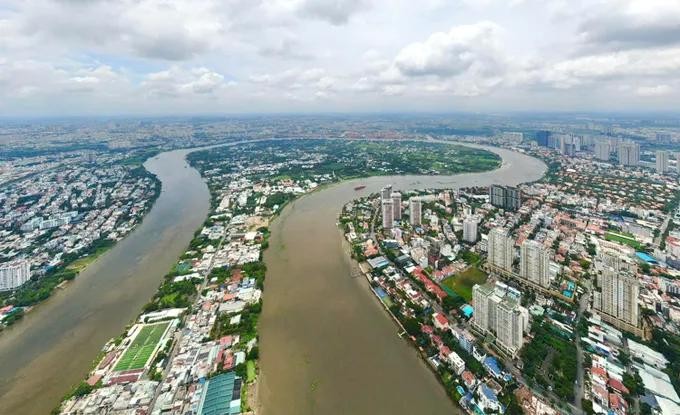
In early 2026, the Ho Chi Minh City People's Committee approved the investment plan for the Binh Quoi - Thanh Da area after decades of suspended planning. At the same time, the Ho Chi Minh City People's Committee also approved the consortium of Sun Group Joint Stock Company, Ha Long Sun Company Limited, and Sun City Company Limited as the strategic investor for the Binh Quoi - Thanh Da new urban area project.
This represents the "sweet fruit" of the proactive implementation of the National Assembly's Resolution No. 260/2025/QH15, which amends and supplements several articles of Resolution 98/2023/QH15 (hereafter referred to as Resolution 260). In particular, following the passage of Resolution 260, Ho Chi Minh City promptly reassessed the criteria for strategic projects.
With a scale of over 405 hectares, a total projected investment of over VND98 trillion (US$3.75 billion) (minimum required of VND50,000 billion), and located in a key urban development area of the city, the Binh Quoi - Thanh Da new urban area project meets the conditions for selecting a strategic investor according to Resolution 260.
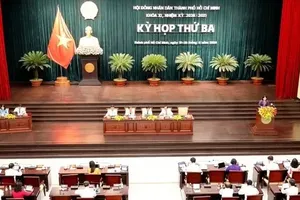
Subsequently, on January 13, the Chairman of the Ho Chi Minh City People's Committee directed the selection of an investor to implement the Binh Quoi - Thanh Da new urban area project according to Resolution 260. After completing the procedures as prescribed, on February 6, the Ho Chi Minh City People's Council passed a resolution abolishing the bidding process and instead approving the investment policy, while also approving the strategic investor that meets the necessary conditions and capabilities. Consequently, the aforementioned consortium was approved by the Ho Chi Minh City People's Committee as the investor.
The project is expected to transform the Binh Quoi - Thanh Da peninsula into a modern ecological and service urban center, making a significant contribution to Ho Chi Minh City's double-digit growth target, as set out in the Resolution of the First Congress of the Ho Chi Minh City Party Committee. In particular, this result reflects Ho Chi Minh City's efforts in implementing breakthroughs in policies and institutions according to the key programs and breakthroughs identified in the congress resolution.
Ho Chi Minh City Party Secretary Tran Luu Quang described Resolution 260 as a “diamond opportunity” for the city, urging the entire machinery of the State to seize it with determination. He emphasized that difficult tasks must not be avoided, new responsibilities should not be delayed, and interconnected duties cannot be shirked.
The Ho Chi Minh City Party Committee has approved the investment policy and adjustments to planning related to the sea-crossing road project connecting Ho Chi Minh City and Ba Ria–Vung Tau.
Under Resolution 260, the city is simultaneously revising planning documents and adding the Can Gio–Vung Tau bridge route to relevant plans, while preparing and appraising the investment proposal report. This move is intended to ensure project progress and contribute significantly to developing Vung Tau–Can Gio into a high-end eco-tourism and resort hub, as well as elevating Can Gio into a national tourism destination under Action Program No. 03-CTrHD/TU.
In addition, Ho Chi Minh City continues to focus on resolving long-standing difficulties in projects, works, and land use, in line with the Resolution of the 11th Party Congress of the city. Among them are projects that have faced obstacles for years, such as the tidal flood control project in Ho Chi Minh City (phase 1, with climate change considerations) and the road connecting Pham Van Dong Street to the Go Dua interchange on National Highway 1. The city is applying Resolution 260 to address challenges in implementing build-transfer (BT) contracts with investors, enabling stalled projects to restart.
Ho Chi Minh City accelerates strategic infrastructure under Resolution 260
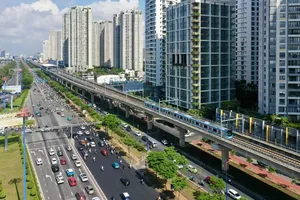
To concretize the requirement to proactively implement Resolution 260, the Ho Chi Minh City People's Committee issued Decision No. 3523/QD-UBND assigning detailed tasks, including focusing on urban development according to the Transport Development Orientation (TOD) model, the Ho Chi Minh City Free Trade Zone, resolving obstacles for ongoing projects, and maximizing the use of delegated and authorized powers.
Besides the TOD project, which is one of the key tasks and solutions of the Ho Chi Minh City Party Committee for the 2026-2030 period, many other strategic infrastructure projects, according to the Resolution of the first Congress of the Ho Chi Minh City Party Committee and Action Program No. 03-CTrHD/TU have also been simultaneously launched. Notably, the Rach Chiec National Sports Complex project, with a total investment of over VND145,000 billion, includes a stadium with 75,000 seats.
This will be a multi-functional complex integrating sports, culture, services, public spaces, and modern urban institutions. It will also include indoor arenas, a multi-purpose sports center, a specialized training area, community spaces, and supporting service facilities, forming a modern and integrated sports and cultural complex.
The transportation network is also receiving a new impetus with the groundbreaking ceremony for the Can Gio Bridge and Phu My 2 Bridge projects under the public-private partnership (PPP) model, applying Resolution 260. Action Program No. 03-CTrHD/TU of the Ho Chi Minh City Party Committee identifies these projects as investments in the 2026-2030 period. Upon completion, these projects will help expand urban development space, reduce pressure on existing transportation routes, and enhance connectivity between the city center and the South, the East, and the Southern Key Economic Region.
Furthermore, the Thu Thiem 4 Bridge project is planned to commence in Q3 2026, aiming to connect the southern area in Tan Thuan Ward with the Vietnam International Finance Center in Ho Chi Minh City in An Khanh Ward. For this project, the Ho Chi Minh City Party Committee has approved the adjustment of the project's investment capital from "State investment capital participating in PPP projects and projects serving PPP projects" according to the Ho Chi Minh City Party Committee’s Action Program No. 03-CTrHD/TU to "public investment" to ensure early commencement.
In addition, Ho Chi Minh City and Dong Nai have agreed to extend the Ben Thanh - Suoi Tien railway line to the Dong Nai Provincial Administrative Center and Long Thanh International Airport; and to invest in the Thu Thiem - Long Thanh railway line to create a backbone connecting Ho Chi Minh City with Dong Nai Province, especially to Long Thanh International Airport.