A series of major transport projects across the Mekong Delta were simultaneously launched, inaugurated, or opened to technical traffic on December 19, marking the lead-up to the 14th National Congress of the Communist Party of Vietnam and underscoring the region’s accelerating infrastructure push.
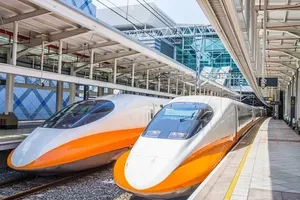
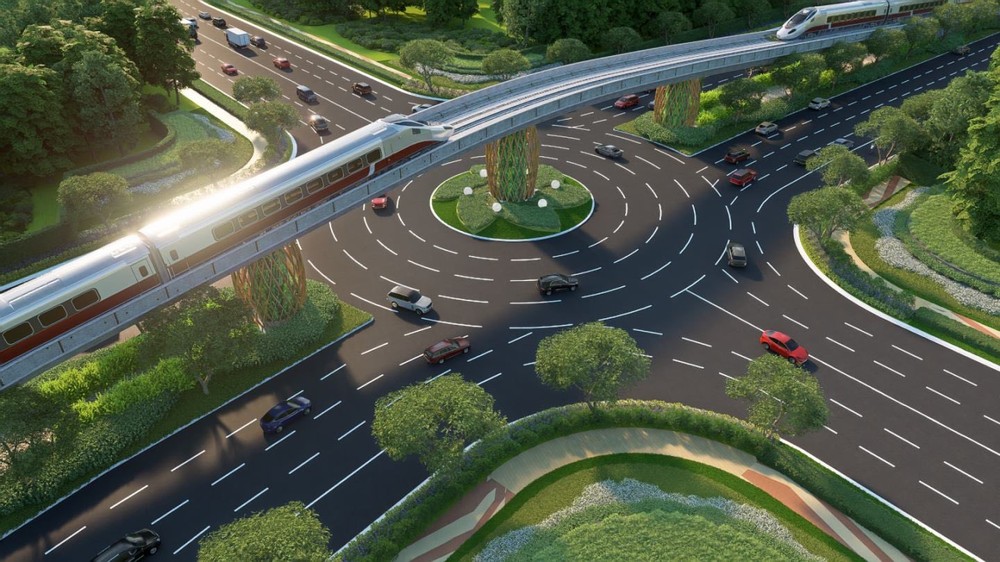
In Phu Quoc Special Zone (An Giang Province), construction began on Phase 1 of a light rail transit (LRT) line invested by Sun Group. The 17.59-km line will link Phu Quoc International Airport with the APEC 2027 Convention Center, running along the DT.975 corridor and featuring six stations, including one underground stop. Implemented under a BOT model with a total investment of nearly VND9 trillion, the project is scheduled for completion in the second quarter of 2027 and is expected to establish a modern, environmentally friendly public transport network.
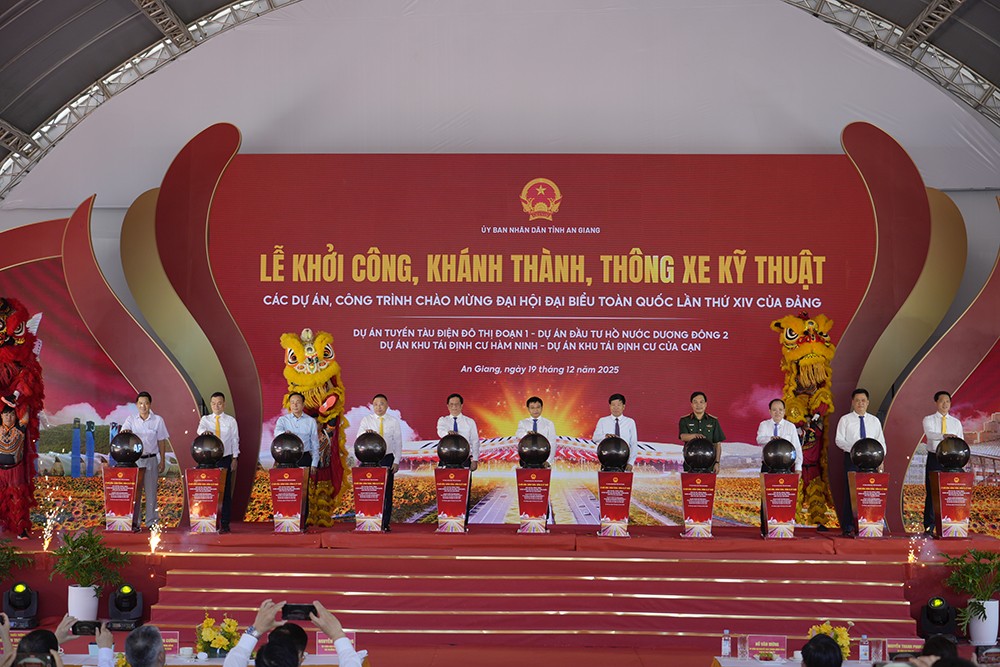
Also breaking ground in Phu Quoc was the Duong Dong 2 Reservoir project, with total investment exceeding VND1.52 trillion and an implementation timeline of 2025–2027. Once completed, the reservoir will supply about 36,500 cubic meters of water per day for domestic use, production, and tourism, helping balance water supply and demand, ease pressure on existing systems, and ensure a stable supply during the dry season and peak periods. The project is also designed to integrate landscape development and eco-tourism.
Two resettlement areas—Ham Ninh and Cua Can—were launched the same day to accommodate households affected by land acquisition for APEC 2027-related projects and socio-economic development plans. Ham Ninh covers about 103.3 hectares with an investment of VND1.2 trillion, while Cua Can carries an investment of VND1.65 trillion. Both will be implemented during 2025–2027, playing a key role in social welfare, population stabilization, and sustainable urban development for Phu Quoc.
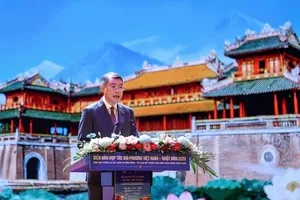
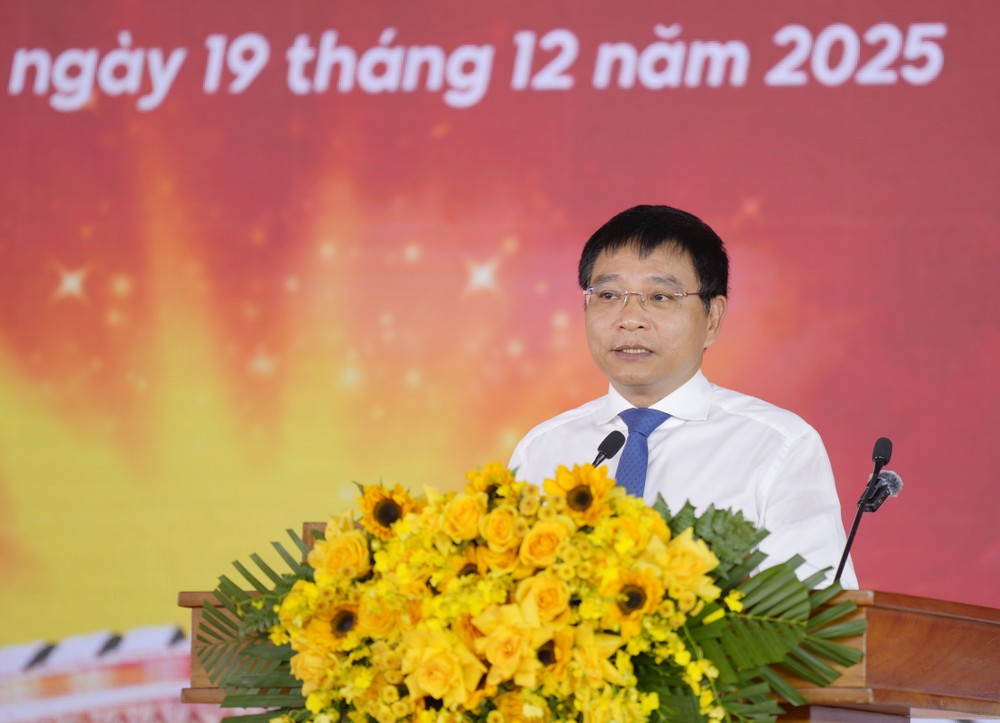
Speaking at the ceremony, Finance Minister Nguyen Van Thang called on the Party Committee of An Giang Province, authorities, and residents to continue supporting site clearance and resettlement, while facilitating investors and contractors to ensure progress, safety, and quality so the projects can be put into operation promptly.
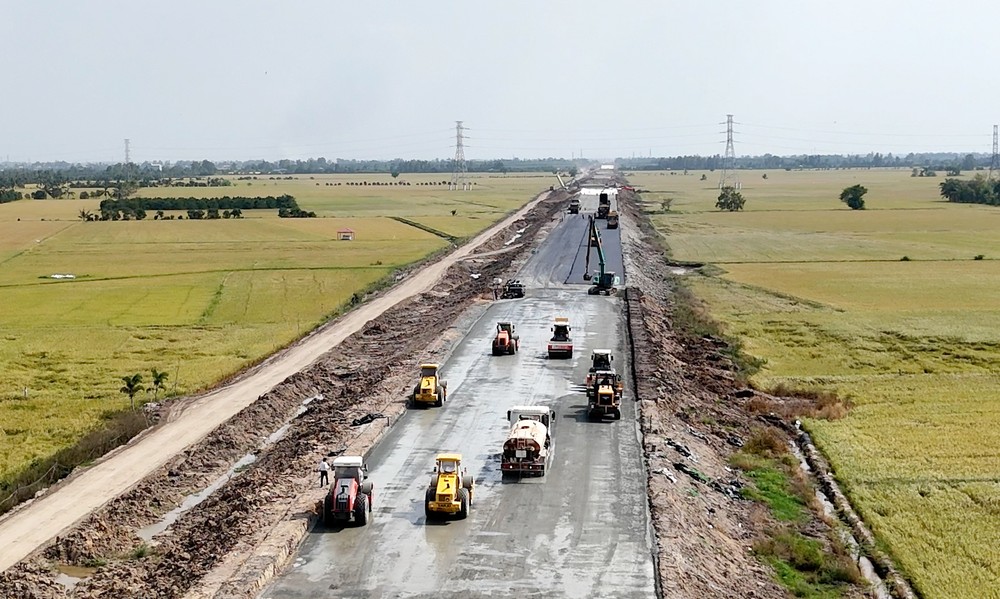
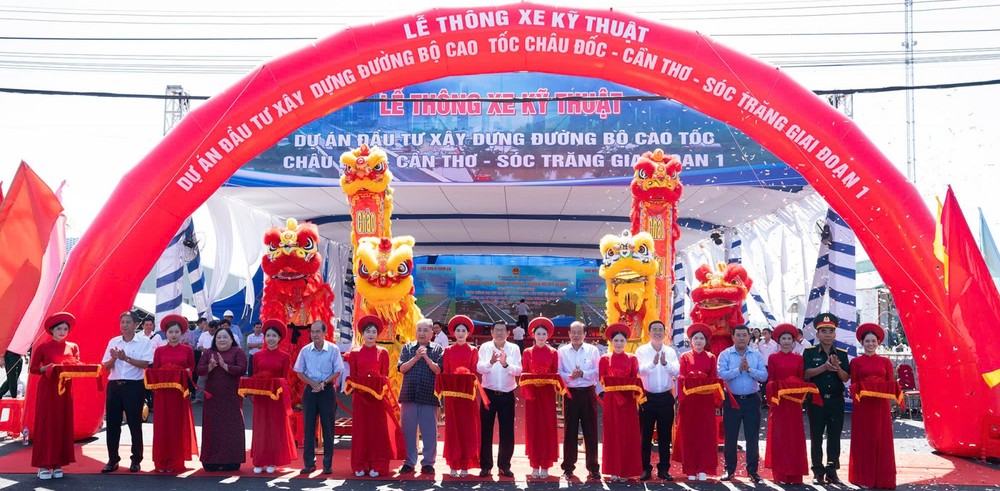
On the same day, An Giang Province held a technical opening for its section of the Chau Doc–Can Tho–Soc Trang Expressway (Phase 1). The 188-km project has a total investment of more than VND44.69 trillion; the An Giang segment spans 57 km with an investment of VND13.53 trillion. Construction output across four main packages has reached 67.73 percent, slightly ahead of schedule.
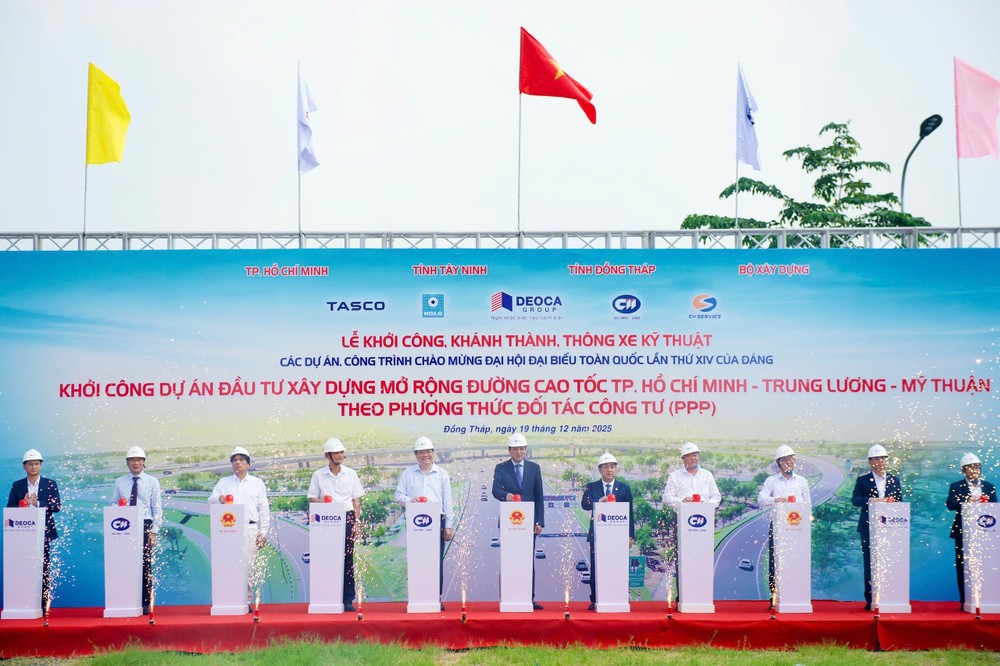
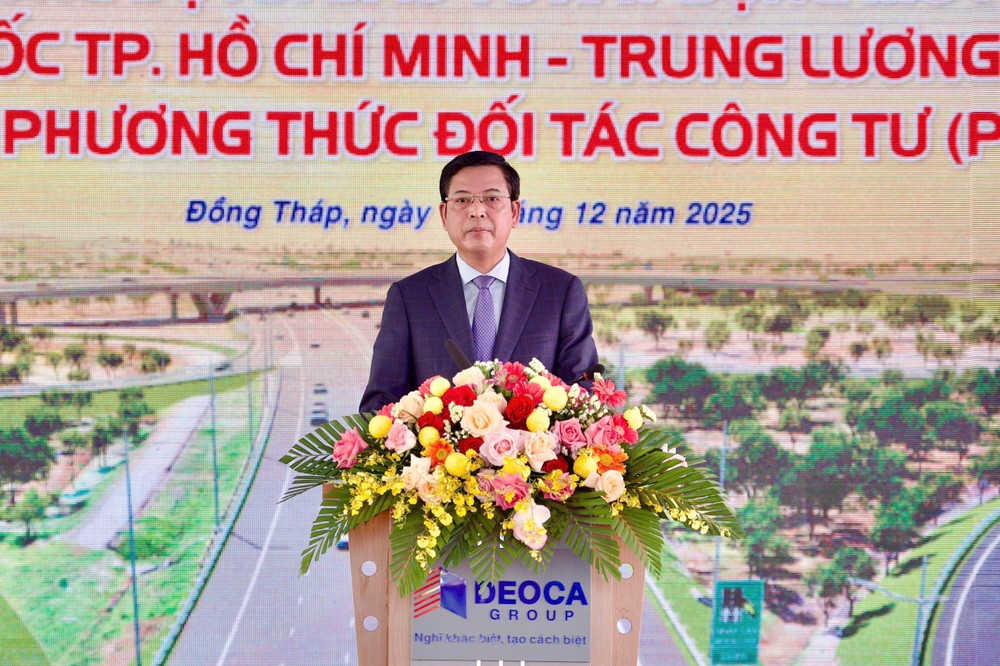
In Dong Thap Province, construction began on the expansion of the HCMC–Trung Luong–My Thuan Expressway under a PPP model. With a total investment exceeding VND36 trillion and a length of 96 km, the project is scheduled for completion in 2028. The route is designed for speeds of 100–120 km/h and is expected to ease pressure at HCMC’s western gateway and strengthen regional connectivity. The project is divided into three sections, with up to 10–12 lanes on the HCMC–Trung Luong segment and six lanes on the remaining sections, alongside interchanges, rest areas, intelligent transport systems, and cashless tolling.
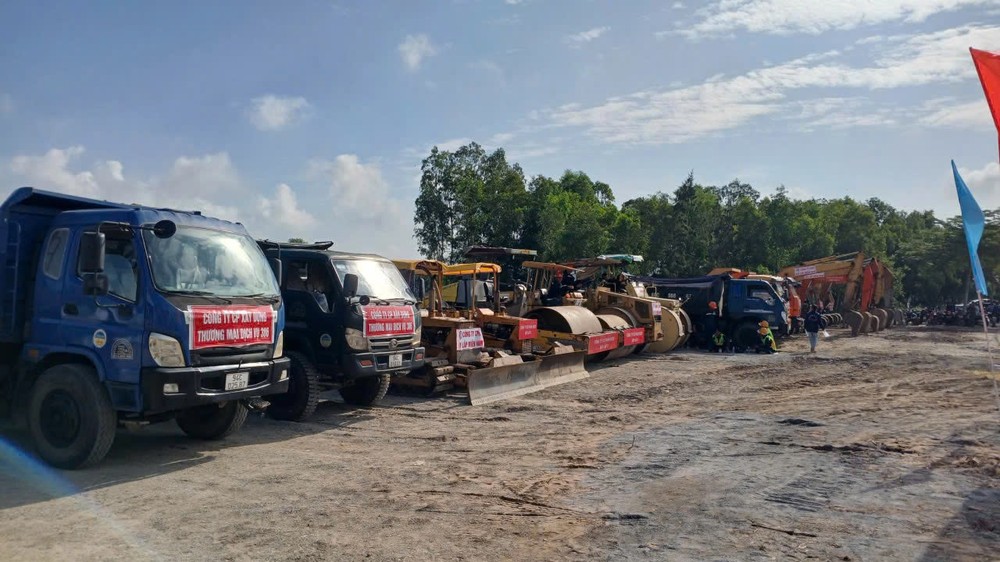
Deputy Minister of Construction Bui Xuan Dung urged localities to expedite site handover and material procedures, while calling on contractors to deploy modern equipment and ensure safety, quality, and timelines.
In Ca Mau Province, ground was broken on two key projects: the Outer Ring Road (Phase 1), stretching over 9.5 km with an investment of VND1.44 trillion, and the Inner Ring Road (Phase 1), 1.7 km long with an investment of about VND294 billion. Designed for speeds of 50 km/h, the projects are expected to expand urban space, attract investment, and enhance services.
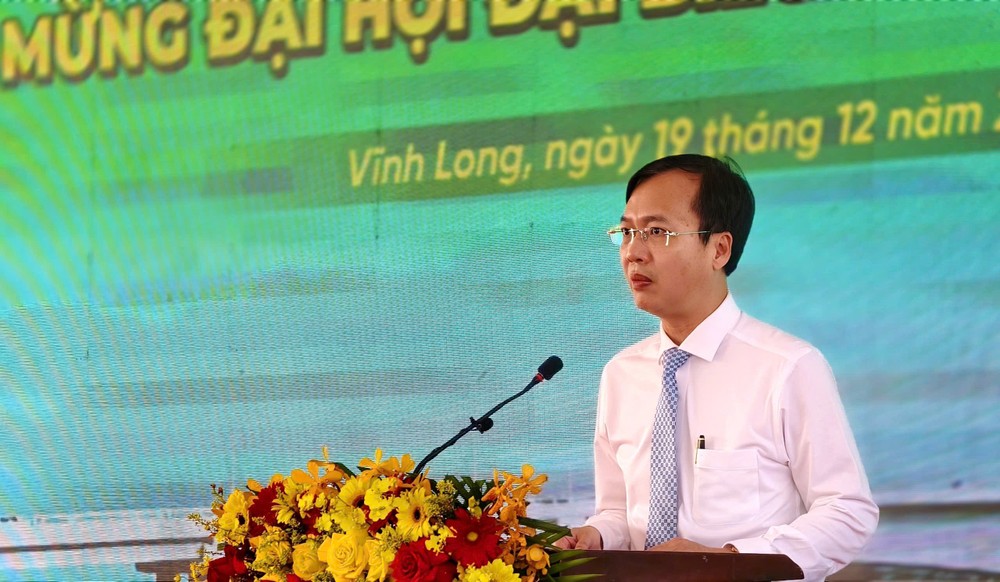
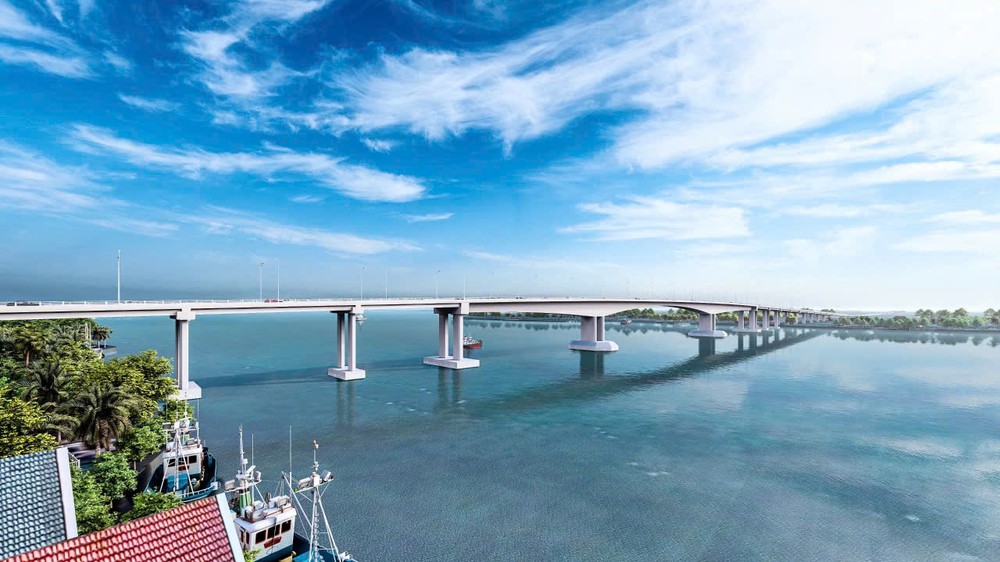
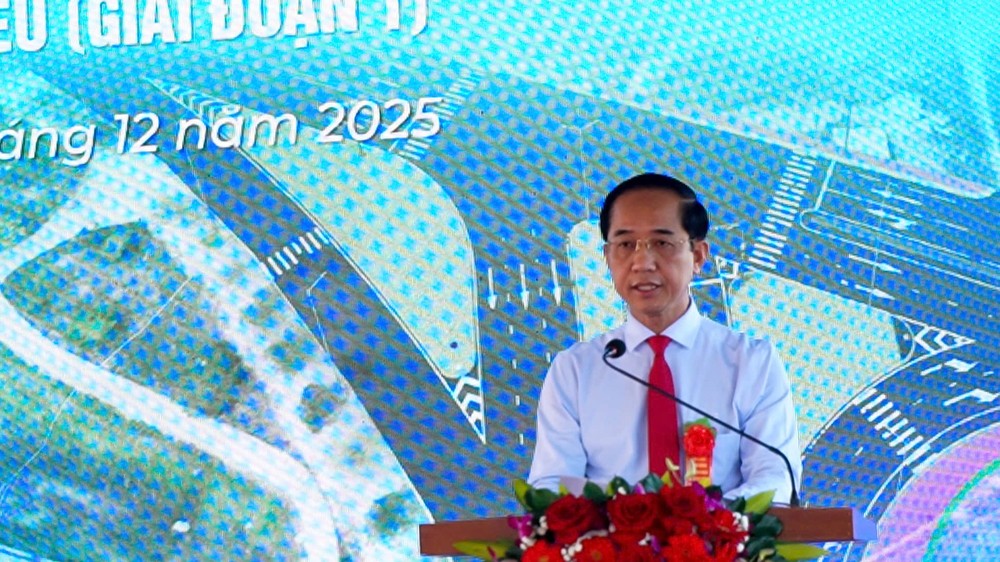
Meanwhile, Vinh Long Province launched the Dinh Khao Bridge project under a PPP model, with a total investment of more than VND2.85 trillion.
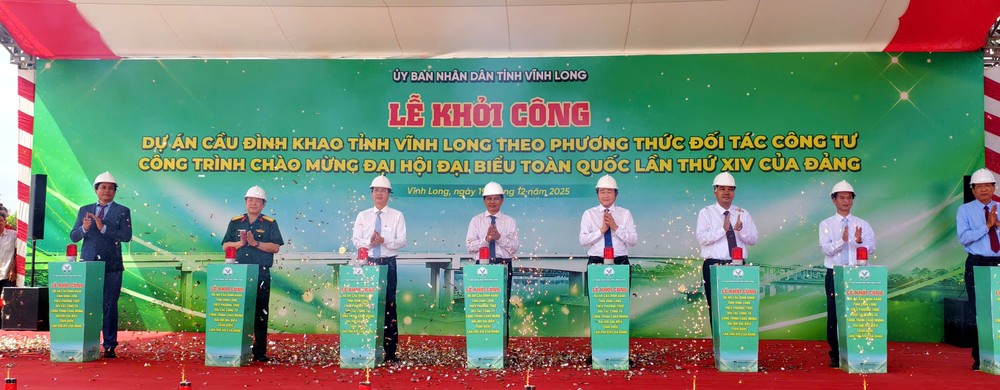
Built to Class III plain-road standards with four lanes and a design speed of 80 km/h, the bridge will replace the long-standing ferry bottleneck, improve connectivity among National Highways 57, 53, and 1, and link to major expressways, including Trung Luong–My Thuan and My Thuan–Can Tho.
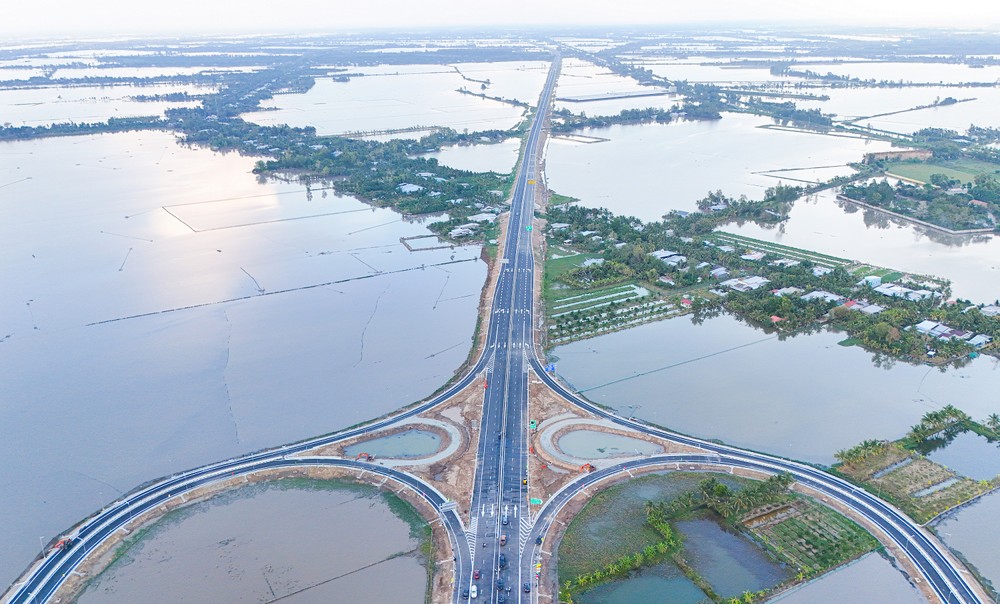
In Can Tho City, a ceremony marked the inauguration and technical opening of the Can Tho–Ca Mau Expressway, part of the North–South Expressway East. After nearly three years of construction, the 110-km route—designed with four lanes and speeds of 100 km/h—was completed with a total investment exceeding VND27.2 trillion.
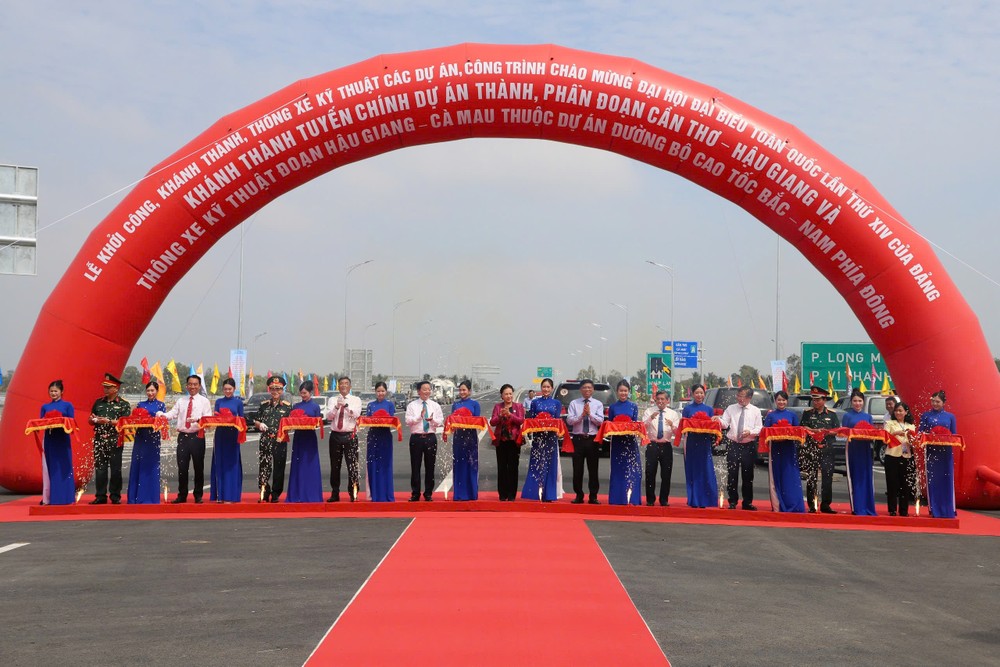
As the final link of the North–South Expressway East, Can Tho–Ca Mau Expressway is expected to cut travel time from Ca Mau to HCMC to about 3.5–4 hours, roughly half that of National Highway 1A, providing a strong boost to Mekong Delta development.