Ho Chi Minh City expands ornamental agriculture with flowers and fish
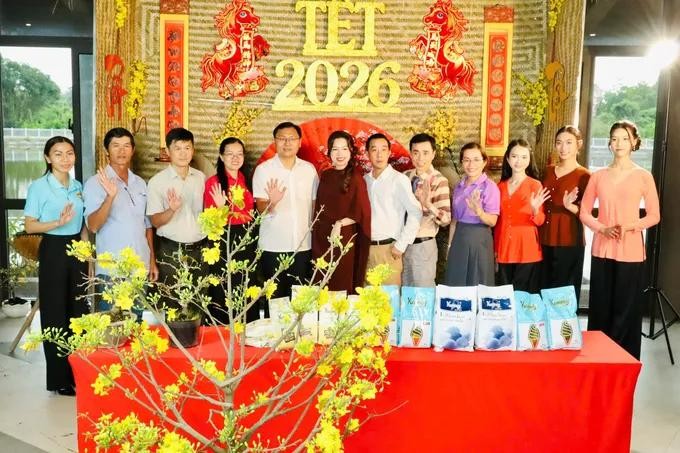
According to data from the Ho Chi Minh City Department of Agriculture and Environment, in 2024, the total area planted with flowers and ornamental plants in the city reached 3,100 hectares; in 2025, this number increased to 3,200 hectares; the plan for 2026 continues to maintain this area, showing a stable development orientation, reflecting a trend of selective expansion, focusing on high-value plant varieties.
The agricultural land area mentioned above exhibits a favorable distribution of crop structure. Yellow apricot blossoms, which are linked to the Tet market and the cultural identity of the Southern region, will occupy an area of 810 hectares during the 2024-2025 period and are anticipated to remain stable in 2026. Additionally, a concentrated production area for yellow apricot blossoms will be created, alongside large-scale cultivation models for orchids and ornamental flowers.
Notably, the Binh Loi yellow apricot blossom cultivation village was recognized by the Ho Chi Minh City People's Committee at the end of 2024, creating a legal basis for brand development, linking production with ecotourism and trade promotion. This area generates hundreds of billions of Vietnamese dong in revenue annually for yellow apricot blossom growers.
The area for orchid cultivation also remains stable at 300 hectares, focusing on Dendrobium orchids and cut-flower orchids for the domestic and export markets. The area for ornamental flower cultivation will also increase from 900 hectares in 2024 to 950 hectares in 2025. Meanwhile, ornamental plants and bonsai reached 1,140 hectares, a 4.6 percent increase compared to the previous year.
While flowers and ornamental plants are the traditional pillars, ornamental fish are emerging as the fastest-growing sector of Ho Chi Minh City's agriculture. In 2024, ornamental fish production reached 120.3 million fish, a 20.3 percent increase compared to 2023, focusing on high-value species such as discus fish, koi, Japanese carp, and guppies.
By 2025, ornamental fish production was expected to continue its breakthrough with 250.8 million fish, a 4.2 percent increase; of which 13.9 million fish will be exported, bringing in $15.39 million, nearly 7 percent higher than the previous year. The main export markets were Europe (66.7 percent ), followed by Asia (25.2 percent), demonstrating that Ho Chi Minh City's ornamental fish industry has met stringent quality and quarantine standards.
The flourishing agricultural industry has led to the development of successful business models. A notable instance is the Saigon Ornamental Fish Cooperative located in Tan An Hoi Commune. Founded in 2013, the Saigon Ornamental Fish Cooperative now oversees 15 hectares, collaborating with more than 150 fish farming households, and broadening its network to include Tay Ninh and Dong Thap provinces.
According to Nguyen Van Thuy, Director of the Saigon Ornamental Fish Cooperative, the development model is based on a production chain, divided into groups specializing in raising specific fish species, with strict quality control and supervision. “Each month, the cooperative exports nearly 700,000 ornamental fish, generating revenue of over VND2 billion and providing stable employment for hundreds of rural workers. Currently, the cooperative's products are available in Singapore, Japan, South Korea, and several Middle Eastern countries,” Mr. Nguyen Van Thuy stated.
Ho Chi Minh City urban agriculture eyes high-tech growth and global markets
According to Tran Thanh Binh, Deputy Director of the Ho Chi Minh City Development Research Institute, ornamental plants, orchids, and aquarium fish represent typical high-value products in urban agriculture. Nevertheless, in contrast to successful models in Thailand, where the value of orchids can attain between US$100,000 and US$300,000 per hectare, Ho Chi Minh City possesses significant potential to enhance value by standardizing processes, improving plant varieties, and establishing a sustainable export market.
The potential for agriculture in Ho Chi Minh City is becoming evident through these "small yet sophisticated" industries. When structured into value chains and connected with science, technology, and international markets, this approach not only aligns with the needs of a unique urban area but also offers a viable solution for sustainable agricultural development moving forward.
Regarding the development orientation of the city's agricultural sector, Vo Thanh Giau, Deputy Director of the Department of Agriculture and Environment of Ho Chi Minh City, informed that urban agriculture in the coming period will be built on the basis of harmoniously integrating agricultural production development with the requirements of civilized, modern, and sustainable urban development. In particular, the city will focus on perfecting the urban agricultural development space in a way that suits the specific conditions of a special urban area, linking agricultural production with ecological space, landscape, and quality of life.
“Promoting the application of high technology and digital technology in the production, management, and consumption of agricultural products will contribute to improving productivity, quality, traceability, and competitiveness of the city's agricultural products.
Along with that, multi-value agricultural economic models will continue to be encouraged, linking agricultural production with services, ecotourism, experiential education, and agricultural value chains,” said Vo Thanh Giau, Deputy Director of the Department of Agriculture and Environment of Ho Chi Minh City.


)