The Government’s policy of maintaining stable interest rates, coupled with flexible exchange rate management, has instilled confidence among overseas Vietnamese, encouraging them to send money home. These inflows are not only strengthening household finances but also providing a crucial source of capital for socio-economic development, ensuring that remittances remain a powerful driver of Vietnam’s financial stability and progress.
This ties seamlessly with the earlier narrative about Ho Chi Minh City’s strategy to channel remittances into infrastructure, trade, and investment, showing how national monetary policies and local initiatives are working in tandem to maximize the impact of this vital resource.
Banks roll out incentives as remittances to Vietnam continue steady rise
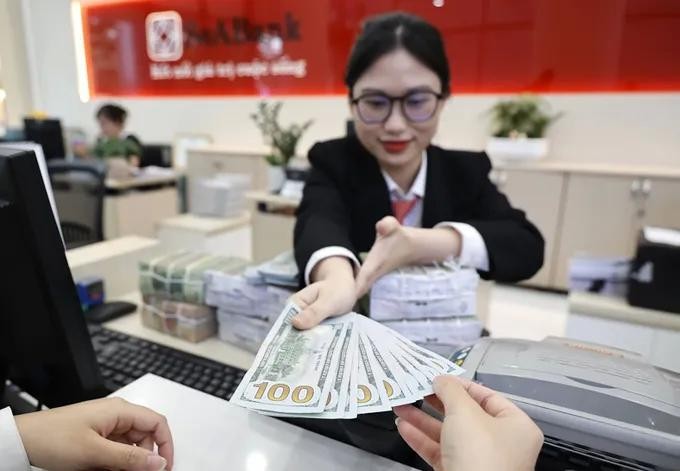
As remittance inflows to Vietnam grow year after year, banks are stepping up preferential interest rates, flexible exchange policies and targeted promotions to strengthen overseas Vietnamese confidence and channel billions of dollars into the domestic economy.
Remittances typically surge in the final months of the year, especially ahead of Lunar New Year, when overseas Vietnamese increase transfers to support family spending and holiday needs. Seizing this seasonal peak, many commercial banks have introduced new incentives to attract foreign currency flows.
Agribank, in partnership with Western Union, has launched its annual “Agribank Remittance Season 2026” program running through February 28, 2026, offering total incentives worth up to VND1.2 billion (US$46,100) to customers receiving international remittances at branch counters.
Rather than focusing solely on promotional gifts, banks are increasingly competing on the factors that matter most to recipients including exchange rates and transaction costs. The strategy is to maximize the real value of funds converted into Vietnamese dong while minimizing fees.
Maritime Bank (MSB), leveraging ties with global remittance partners, is rolling out the “Profitable Remittances, Double the Benefits” campaign through March 31, 2026. Customers who receive remittances via MSB accounts and convert US dollars into Vietnamese dong are offered an exchange rate 0.5 percentage points higher than the listed transfer purchase rate. The preferential rate helps boost the amount received in local currency, particularly for large transfers used for savings or investment, while lowering the cost of withdrawing foreign cash.
Nam A Bank, meanwhile, is linking incentives directly to transaction value. Customers receiving Western Union remittances are given immediate cash rewards credited to their Vietnamese dong payment accounts upon completion of each transfer.
The bank has also introduced the “Happy Hometown” program exclusively for overseas Vietnamese, offering fee exemptions for up to five years, savings interest rates up to 0.2 percent per year higher than standard rates, preferential foreign exchange pricing, along with gifts and investment and securities privileges. Participants are entitled to priority services, airport lounge access and other premium benefits.
In a longer-term move to channel remittances into productive sectors, Nam A Bank has signed a strategic cooperation agreement for 2025–2030 with the Ho Chi Minh City Center for the Fourth Industrial Revolution (HCMC C4IR). The partnership aims to develop specialized financial products to direct remittance capital into priority areas such as science and technology, green infrastructure and sustainable development.
Remittance flows shift from consumption to investment
For many years, Vietnam has consistently ranked among the top 10 countries receiving the largest remittances in the world. Ho Chi Minh City has consistently held the leading position nationwide in attracting remittances, often accounting for approximately 60 percent of Vietnam's total remittances.
Tran Thi Ngoc Lien, Deputy Director of the State Bank of Vietnam's Regional Branch 2, commented that the main driving force behind remittance flows comes from overseas Vietnamese's confidence in the stability of the domestic economy. Remittances are considered a "golden resource," not only contributing to improving people's lives but also supporting large projects, helping to realize the city's double-digit growth targets.
According to data from the State Bank of Vietnam's Regional Branch 2, in 2025, remittances to Ho Chi Minh City are expected to reach over US$10.34 billion, an increase of 8.3 percent compared to 2024 and the highest level ever recorded.
The flow of remittances is undergoing a marked transformation, moving away from consumption and savings toward production, business, and investment. Overseas Vietnamese are channeling capital into major projects in Ho Chi Minh City, including the International Financial Center, free trade zones, and large-scale infrastructure developments.
Remittances are expected to continue their upward trajectory this year as the city ramps up efforts to mobilize capital for critical infrastructure, electricity, and transportation projects. In response, municipal authorities have introduced the Policy Scheme to Effectively Utilize Overseas Remittances in the City until 2030. The initiative aims to steer financial inflows into priority sectors, easing the burden on domestic capital mobilization while generating momentum for service, trade, and entertainment industries.
According to Dr. Can Van Luc, Chief Economist of BIDV, approximately 80-85 percent of remittances are concentrated in real estate, consumption, and supporting relatives, while the proportion allocated to production, business, and investment only accounts for about 15-20 percent . To improve the efficiency of using remittances, additional incentive mechanisms and specialized financial products should be added to enable this money to better play its role in promoting sustainable economic growth.