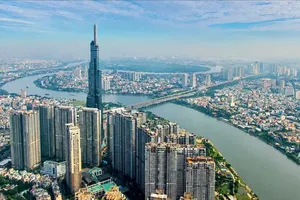
The plan is being implemented under directives issued by the Chairman of the municipal People’s Committee.
Aimed at stabilizing livelihoods and advancing socio-economic development in riverine and coastal areas while contributing to the safeguarding of national security and defense, the city’s plan outlines a series of urgent measures.
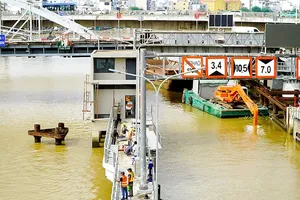
These include the installation of warning signs in areas already affected by erosion or deemed at high risk; tighter oversight of sand and gravel extraction along riverbeds and coastal zones to address sediment imbalances and curb erosion threats; and a sweeping crackdown on illegal mining activities, particularly in locations previously identified as erosion-prone.
Authorities will also carry out the emergency relocation of households from areas classified as especially dangerous or at imminent risk of collapse. In addition, the city will strengthen the management and regulation of inland waterway traffic, including stricter controls on vessel speed and load capacity, in an effort to minimize erosion-related impacts.
Over the longer term, the city will prioritise structural and preventive solutions, including the development of resettlement plans and the proactive relocation of households from erosion-prone areas, with priority given to zones assessed as facing the highest risk. These efforts will be closely linked to resettlement programs designed to ensure stable housing, livelihoods, and living conditions for affected residents.
Authorities also plan to invest in the construction of real-time monitoring systems to track changes in river channels and the progression of riverbank and coastal erosion. The initiative will include the establishment of early-warning systems for high-risk areas and the continuous updating of a comprehensive erosion database to support risk forecasting and policy responses.
The city will construct erosion prevention and control works to safeguard urban centers and densely populated residential areas deemed vulnerable, in line with plans approved by the competent authorities. Investment will continue in protective infrastructure at newly emerging erosion sites to ensure the safety of surrounding communities.
In parallel, authorities will step up efforts to protect and expand mangrove forests and coastal protection forests. The city aims to mobilize greater private-sector participation in investment, management, and sustainable exploitation, tied to clear responsibilities for the planting, maintenance, and conservation of coastal mangroves, while helping to secure stable livelihoods for residents.
The city will study and apply multi-source remote sensing data integrated with artificial intelligence to monitor riverbanks, coastlines, canals, and waterways, enabling risk zoning for erosion and the early detection of changes in surface water areas. The system is intended to support more effective management and the proactive formulation of erosion prevention measures.
Additionally, authorities will intensify international cooperation in research, data and information sharing, and the exchange of expertise in riverbank and coastal erosion control. The city will also seek to mobilize technical and financial assistance from foreign governments and international organizations to strengthen its response capacity.
Ho Chi Minh City will proactively allocate state budget resources while stepping up efforts to mobilize non-budget funding sources—particularly from the private sector, businesses, and beneficiaries—to support riverbank and coastal erosion prevention initiatives.




)