Ports require cargo sources to attract shipping lines, while factories need favorable logistics to export. Tran Thanh Hai, Deputy Director General of the Agency of Foreign Trade under the Ministry of Industry and Trade, analyzes this connection and emphasizes the requirement for inter-regional port planning.

According to Deputy Director General Tran Thanh Hai, one of the primary causes lies in the lack of synchronized connectivity among seaports, cargo sources, production, and logistics. Logistics plays a vital role directly tied to the maritime economy. Therefore, maximizing the value of the sea cannot be separated from the equation of transportation, goods circulation, and connecting production hubs with markets.
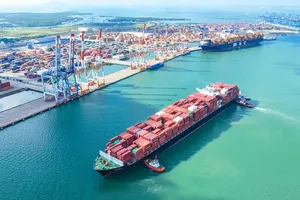
Vietnam has established major port hubs at both ends of the country, including the Lach Huyen area in Hai Phong City and the Cai Mep - Cat Lai area in Ho Chi Minh City. These hubs possess the capability to receive direct shipping routes to distant markets such as Europe and the United States.
Significant disparities in cargo volume and connectivity capacity persist among the Northern, Central, and Southern regions. Many coastal localities possess ports, but their cargo volumes remain insufficient to establish direct international shipping routes.
In central Vietnam, many ports operate on a small scale with limited cargo sources, leading to low operational efficiency. Shipping lines do not automatically call at every constructed port; they must calculate cargo throughput, shipping routes, time, and costs.
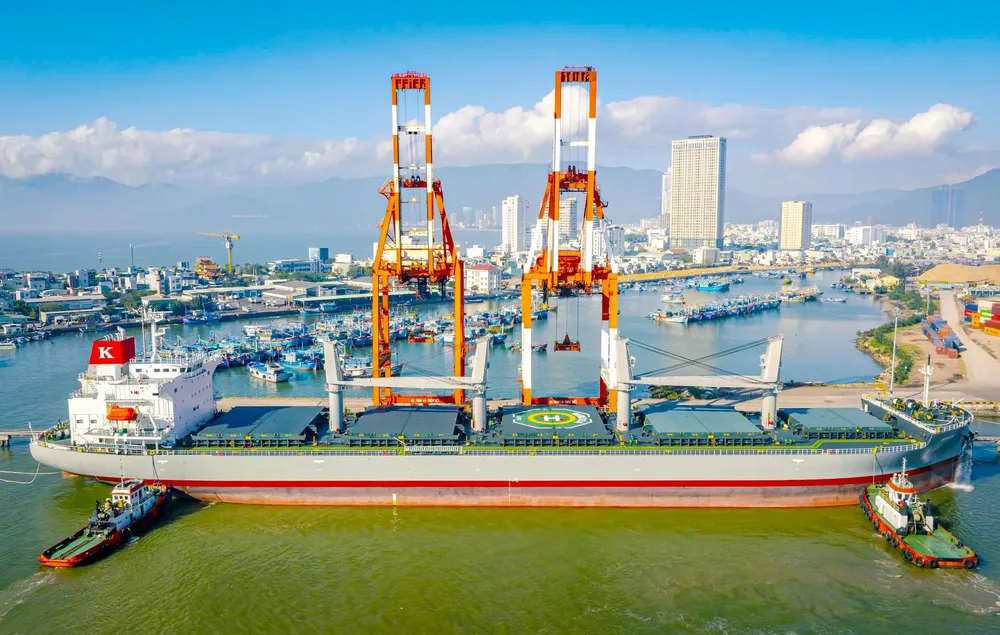
A large vessel calling at a port must handle a substantial cargo volume to achieve cost efficiency. If a port handles only a few dozen or a few hundred containers, shipping lines must weigh the expenses and time constraints. Consequently, cargo in certain areas in the Central region currently must be consolidated at major hubs such as Lach Huyen or Cai Mep - Thi Vai to connect with international shipping routes. This situation stems from the scale of cargo sources rather than merely the capacity of individual ports.
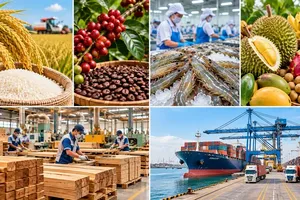
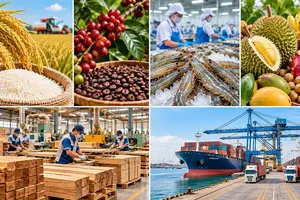
When choosing factory locations, investors must consider importing raw materials and transporting finished products to ports for export. Areas with favorable logistics systems naturally hold greater investment appeal. For industries tied directly to raw material regions, goods must be transported from production sites to ports.
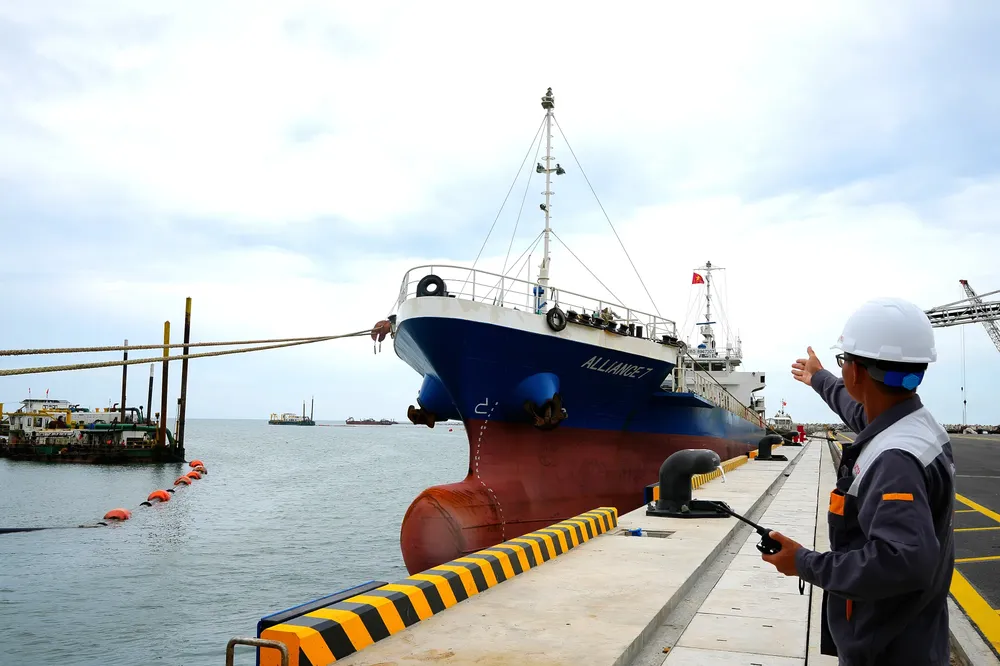
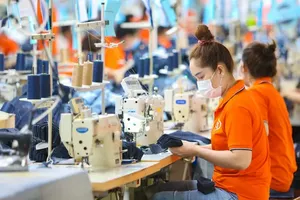
However, for many other industries, logistics infrastructure serves as a critical factor in investment decisions. These include leather footwear, textiles and garments, electronics, and wood processing, which do not necessarily need to be located adjacent to raw material areas. Once production clusters are established, cargo sources will become abundant, allowing ports to operate at capacity and attract additional logistics services. Therefore, seaports and industrial zones cannot be planned as two independent projects.
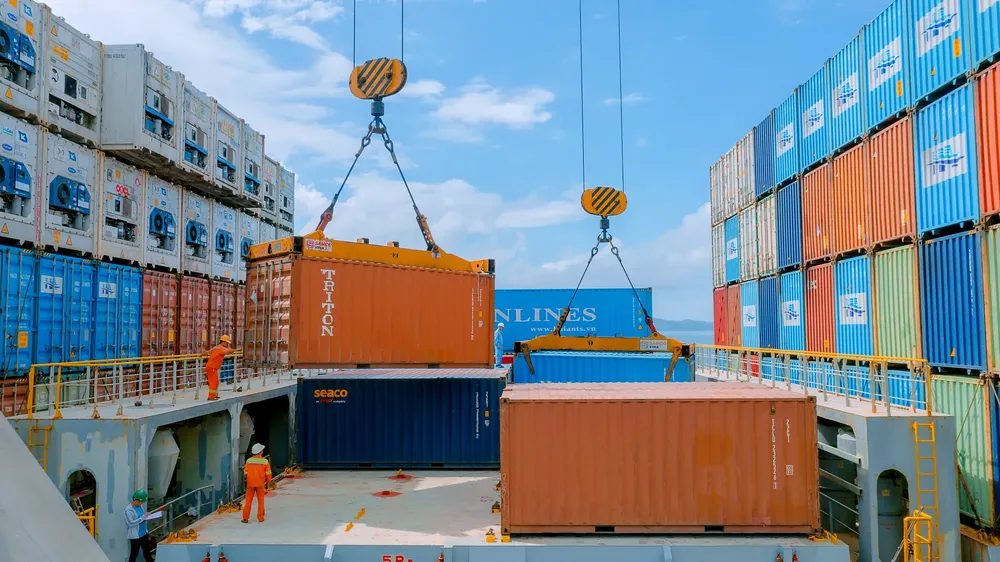
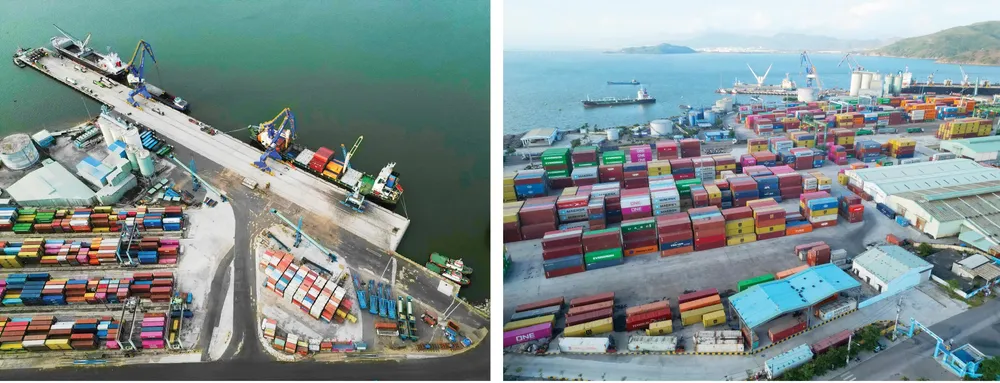
My Thuy Port looks toward the Truong Son Mountain Range
When planning the My Thuy deep-water port in Quang Tri Province, provincial leaders viewed My Thuy not merely as a port for their own province, but within the broader framework of freight transportation routes connecting neighboring countries in the region, even looking toward the Truong Son Mountain Range to determine optimal solutions. Nguyen Duc Chinh, former Chairman of the Quang Tri Province People's Committee, recounted this vision from the early days of closely following the project. My Thuy is currently both operating and undergoing continued construction, aiming to serve as a trade gateway along the East-West Economic Corridor.
According to Nguyen Xuan Dung, Permanent Deputy General Director of My Thuy International Port Joint Venture Joint Stock Company, the port serves as the starting point of the corridor connecting Quang Tri Province with Laos, Thailand, Myanmar, and vice versa. The project encompasses 10 berths with a total investment of approximately VND15 trillion (US$600 million), designed to accommodate vessels up to 100,000 DWT. The port serves industrial facilities in the Southeast Quang Tri Economic Zone and across the province, while attracting transit cargo from Laos and northeastern Thailand. The enterprise plans to research expanding My Thuy into a major gateway port and an international transshipment port, while collaborating with the province to study and plan a regional logistics center and a free trade zone attached to the port.