At a seminar on leveraging the Comprehensive and Progressive Agreement for Trans-Pacific Partnership (CPTPP) to redirect and expand exports, organized by the Ministry of Industry and Trade on September 28, Trade Counselor at the Vietnamese Trade Office in Mexico, Nguyen Thi Trang, said Mexico imported around US$664 billion worth of goods in 2025, while Vietnam’s exports to the market totaled only about US$7 billion, equivalent to roughly 1 percent.
Deputy Director General of the Department of Foreign Market Development and Multilateral Trade under the Ministry of Industry and Trade, Ngo Chung Khanh, said that in Canada and Mexico—two markets with which Vietnam has free trade agreements through the CPTPP—Vietnamese goods likewise account for only about 1 percent of total imports.

In 2025, CPTPP member countries, excluding Vietnam, imported around US$4.25 trillion worth of goods, while Vietnam’s exports to these markets accounted for only about 1 percent.
According to Mr. Khanh, this represents a substantial market opportunity that Vietnamese businesses have yet to tap. However, he noted that to sell their products in these markets, businesses must first meet CPTPP rules of origin in order to qualify for preferential tariffs.
They must also comply with technical standards, labor and environmental requirements, as well as the import regulations of individual markets.
“Compliance with rules of origin comes first. It is a prerequisite for accessing preferential tariff rates,” Mr. Khanh said.
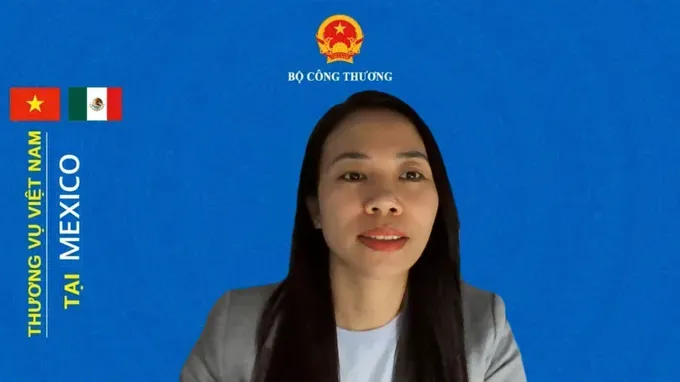
Trade Counselor at the Vietnamese Trade Office in Mexico, Nguyen Thi Trang, noted that having access to a market and preferential tariffs does not automatically translate into orders. Mexican importers also consider product quality, specifications, certifications, production capacity, minimum order quantities, delivery times, and the ability to maintain a stable supply.
“The ability to turn opportunities into actual orders still depends largely on the capabilities of our businesses,” Ms. Trang said.
The Vietnamese Trade Office in Mexico recently brought eight Mexican companies to Vietnam to attend a series of Vietnam International Sourcing events in early September. Following the meetings, four companies reached trade agreements with Vietnamese suppliers. However, one Vietnamese company lost an advantage at the outset of talks with a partner because it was unable to provide staff capable of communicating in English.
For businesses seeking to enter the Mexican market, the Trade Counselor at the Vietnamese Trade Office in Mexico recommended starting with their products, HS codes, rules of origin, CPTPP tariffs, technical standards, and import requirements. Businesses should then assess their competitiveness, identify the right customer segments, test their products in the market to gauge demand, seek buyers, and continue monitoring the market after making initial connections.

Vice Chairwoman and Secretary General of the Vietnam Electronic Industries Association, Do Thi Thuy Huong, said businesses cannot adopt a one-size-fits-all approach across the CPTPP markets. Instead, they need to prepare for technical standards, environmental requirements, traceability, and delivery capabilities.
The Ministry of Industry and Trade is developing an FTA implementation management system based on three pillars, including providing information through the Government’s FTA portal, assessing FTA implementation outcomes in localities, and building an FTA utilization ecosystem connecting regulatory agencies, local authorities, business associations, companies, logistics providers, financial institutions, and other stakeholders across production and export chains.