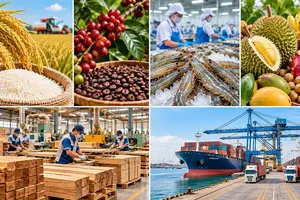
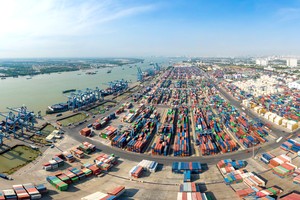
On September 29, information from the Vietnam Fruit and Vegetable Association revealed that in the first 9 months of 2026, the country's total fruit and vegetable export turnover reached nearly US$7.4 billion, up 19.9 percent year-on-year.
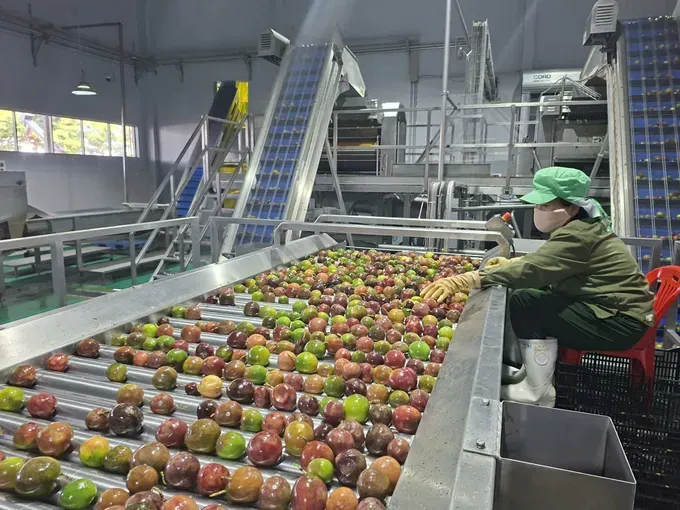
The Chinese market continued to rank first in importing Vietnamese fruits and vegetables, followed by the United States, South Korea, Japan, and the EU.
This growth shows that Vietnam's fruit and vegetable industry is gradually asserting itself as a reliable partner thanks to its ability to comply with Sanitary and Phytosanitary (SPS) regulations of the EU. In particular, within the structure of non-EU imported fruit and vegetable supplies, Vietnam's position is being clearly consolidated owing to a strong shift toward deeply processed goods.
Nguyen Van Muoi, Deputy Secretary-General of the Vietnam Fruit and Vegetable Association, assessed that fruit and vegetable exports will continue to grow positively in the final months of this year, driven by supply advantages and market demand.
In September and October, durian in the Central Highlands region enters the peak harvest phase at the end of the season, while other countries have almost no harvested durian at the same period. Therefore, Vietnam is virtually the sole supplier of fresh durian to the Chinese market during this time, which will help maintain durian exports at a high level.
November and December mark the period when demand for goods serving end-of-year holidays and New Year celebrations in China, Northeast Asia, European countries, and North America surges. Meanwhile, Vietnam's supply of export fruits and vegetables remains abundant, with key fruit items such as fresh coconut, passion fruit, grapefruit, and processed fruit and vegetable products, which will help compensate once fresh durian passes its peak harvest time in the Central Highlands region.