Becoming a powerful maritime nation is a strategic goal central to Vietnam’s development and international standing. Transforming maritime advantages into national strength requires effective spatial planning, technological mastery, and deep integration into global trade networks.
It also means creating conditions for citizens and businesses to build sustainable prosperity, while safeguarding natural resources and firmly protecting maritime sovereignty and island territories. Resolution No. 20-NQ/TW on building and developing Vietnam into a strong maritime nation sets out this vision, while Government Resolution No. 218/NQ-CP translates it into concrete tasks and policy measures.
The sea provides livelihoods and abundant resources, yet much of its added value continues to slip away through overcrowded fishing ports, poorly planned aquaculture zones, and a lack of integrated logistics and processing services.
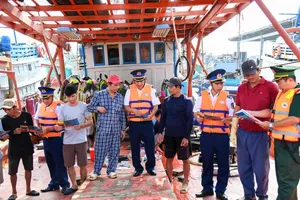
A light autumn drizzle fell over Zone D of Tam Quan Fishing Port in Hoai Nhon Bac Ward, Gia Lai Province, in August as the vessel of Nguyen Van Minh, 45, returned from a smooth two-month fishing expedition. Fisherman Nguyen Van Minh’s fleet consists of four vessels operating purse-seine fisheries around fish aggregation devices in the waters about 50 nautical miles from the Spratly Islands. One logistics vessel transports seafood back to shore each month, while the remaining three stay at sea for extended periods, maintaining the aggregation devices and continuing fishing operations.
According to the fisherman, a full fish hold is only part of the profitability equation. Each voyage requires roughly six tons of fuel, more than 1,300 blocks of ice, provisions, and crew wages of around VND7 million (about US$270) per person per month. Total operating costs range between VND300 million and VND350 million per trip. Rising expenses mean that even during productive fishing seasons, many voyages generate little profit.
The challenges do not end when vessels sight land. The channel leading into Tam Quan Port is narrow, with sections affected by sedimentation. During rough weather, fishermen often have to hire tug services at a cost of VND2 million to VND3 million per trip, with additional monthly expenses sometimes reaching VND5 million.
Hoai Nhon Bac is one of Vietnam’s key ocean tuna fishing regions. In 2025, its annual tuna catch reached approximately 7,566 tons, accounting for more than 42 percent of the country’s total ocean tuna production.
At Tam Quan Port in August 2026, tuna sold to traders fetched around VND95,000 to VND100,000 per kilogram. Retail prices could reach VND150,000 per kilogram, while tuna fillets served in restaurants sold for between VND300,000 and VND500,000 per kilogram. These price gaps underscore where most value is created: in preservation, processing, distribution, and post-harvest services.
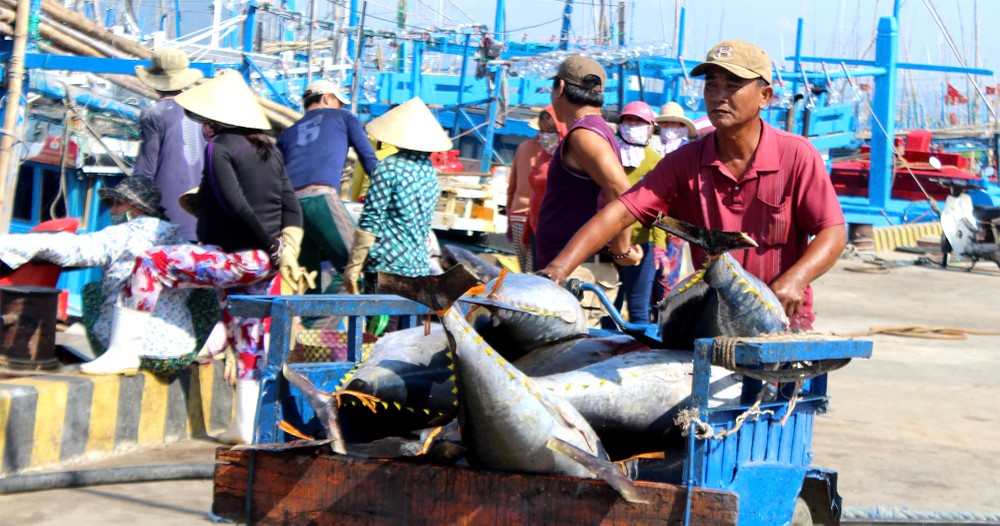
At the end of each lunar tuna fishing cycle, typically between the 10th and 15th days of the lunar month, Tam Quan Port becomes a hive of activity. Fishing vessels return laden with catches, while fishermen work from dawn unloading seafood, refueling, replenishing ice and supplies, and preparing for the next voyage. Traders await on the docks, negotiating prices, weighing catches, and quickly transporting seafood to markets across the country.
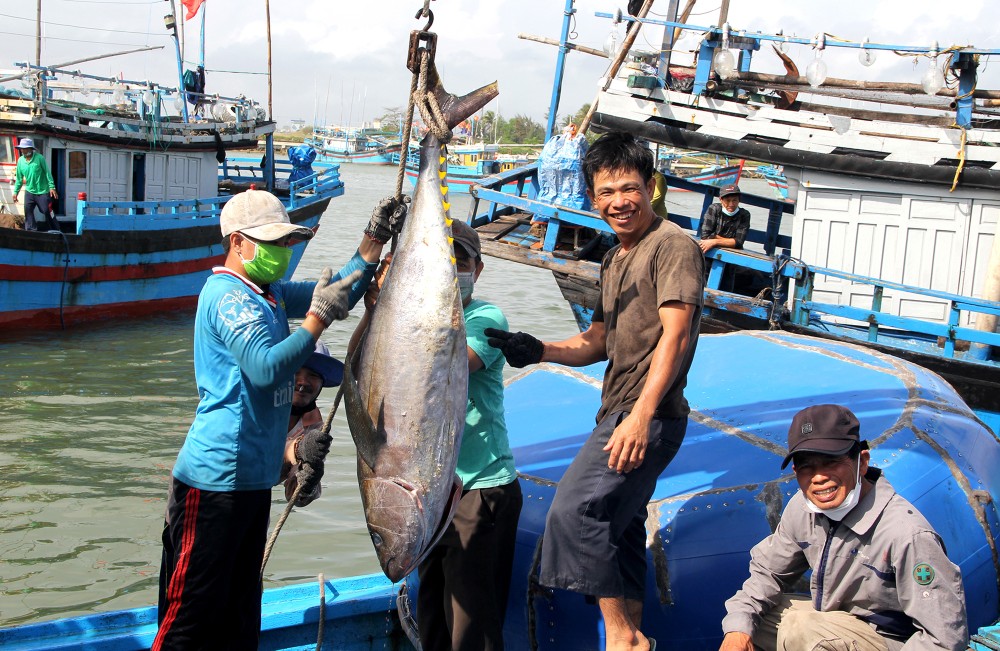
Nguyen Xuan Nhat, a tuna procurement business owner at Tam Quan Port, noted that although the fish land in Tam Quan, many of the value-adding stages, particularly deep processing and exports, take place elsewhere.
“Tuna landings have been abundant this year,” Nhat said. “At one point, we purchased as much as 110 tons in just seven days.”
Yet prices remain under pressure due to high transportation and logistics costs, coupled with the distance to major processing centers. As a result, both fishermen and businesses bear the burden. Vietnamese tuna exports also continue to face challenges in the European market because of the European Commission’s “yellow card” warning on fisheries, first imposed in 2017. Meanwhile, fluctuations in the U.S. market, along with shipping rates and tariffs, have made it difficult for exporters to increase product value.
Nguyen Duc Dam, Deputy Head of the Economic, Infrastructure and Urban Development Division of Hoai Nhon Bac Ward, acknowledged the challenge.
“Tam Quan receives around 23,000 tons of seafood annually, but the lack of local logistics, deep-processing facilities, and export infrastructure keeps value creation low,” he said. “Most seafood is purchased and shipped elsewhere for further processing, which drives up logistics costs. We recognize the issue and are actively seeking solutions.”
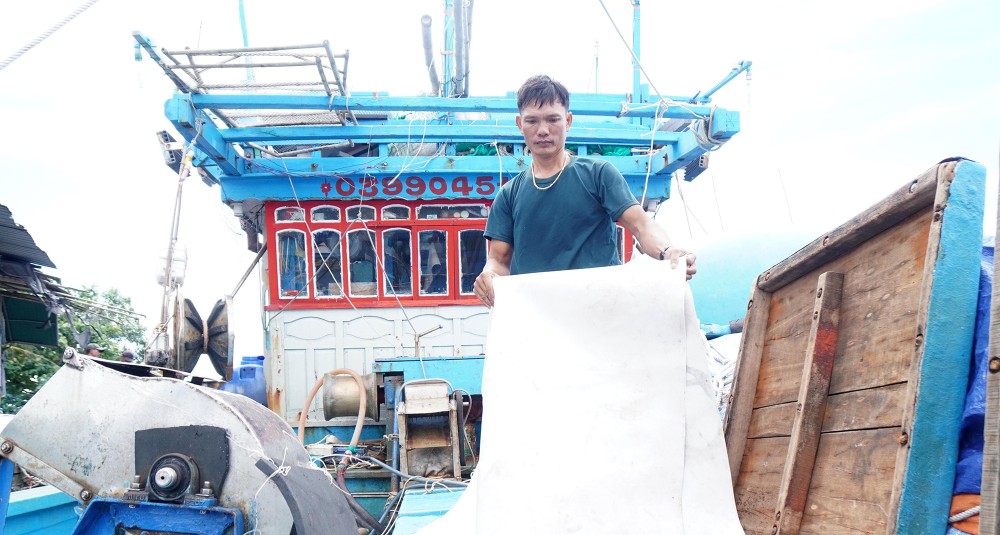
Fishing vessels from the Tam Quan – Gia Lai region still rely on traditional storage methods, resulting in a loss of seafood quality and revenue. Photo: Ngoc Oai
Logistics ecosystem key to bridging gap between raw fish and end-products
Drawing on the reality of “big catches, low prices,” narrowing the gap between the value of raw fish and the products that ultimately reach consumers’ tables will require a robust maritime support ecosystem. That means investing in essential infrastructure such as cold-storage facilities, processing plants, efficient transport corridors and logistics networks capable of preserving quality and reducing costs throughout the supply chain.
Without these supporting elements, much of the value generated from the sea continues to be lost after the catch is landed. Strengthening logistics and processing capacity would not only improve returns for fishermen and businesses but also enable coastal communities to capture a larger share of the value created from marine resources.
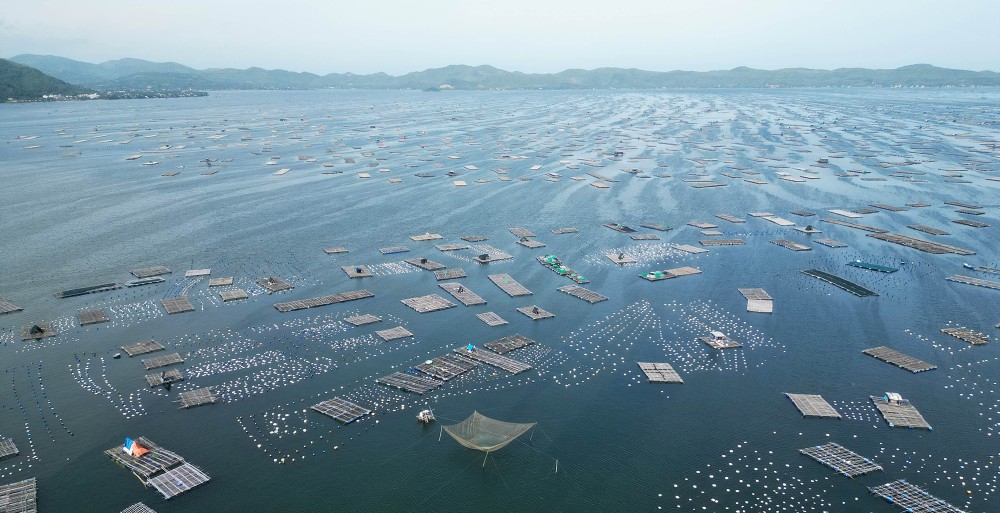
The aquaculture zone in Xuan Dai Bay in Dak Lak Province is deviating from its master plan and gradually deteriorating due to pollution and losses caused by natural disasters. Photo: Ngoc Oai.
Regarding this issue, Director Dang Van Dan of Tam Quan Fishing Port stated that Tam Quan serves as the rear base for one of the largest offshore fishing fleets in the Central region, with approximately 2,300 vessels. The large fleet size places immense pressure on fairways, anchorage areas, and logistics space. Fairways remain narrow and have not been synchronously dredged; during adverse weather, entering and exiting the port becomes both costly and unsafe.
Meanwhile, development space and land funds allocated for the port are revealing numerous shortcomings. Many projects aimed at establishing a major seafood logistics center in Tam Quan have not been implemented due to a lack of capital. The smart offshore fishing port expansion project, with an estimated total investment of VND8 trillion -VND10 trillion, is currently paused to prioritize resources for upgrading two existing fishing ports. Even more challenging is that land reserved for the fishing port's logistics service area is being encroached upon.
Under the planning approved by the Provincial People's Committee, the Tam Quan fishing port logistics area covers 15.2 hectares, but the management unit has leased and utilized only about 5 hectares. The remaining area was leased to several private enterprises for 50 years to construct seafood processing plants. "If land is reduced, where will the port find space to expand in the future?" Director Dang Van Dan raised the issue, suggesting that land use requires long-term thinking to align with the development vision of the fisheries sector through 2040-2050.
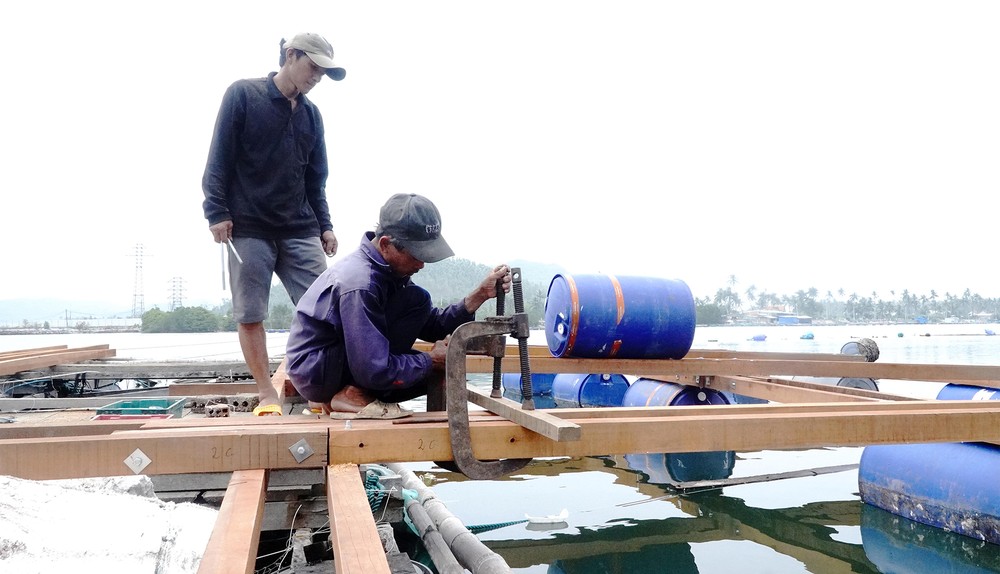
Aquaculture farmers in Cu Mong Lagoon (Dak Lak Province) use wood to construct fish-rearing rafts using traditional, high-risk methods. Photo: Ngoc Oai
Lack of infrastructure, planning bottlenecks hinder coastal seafood growth
Infrastructure lags behind fleet size and catch output at Tam Quan Fishing Port. Meanwhile, obstacles hit another coastal aquaculture zone in the former Phu Yen Province (now part of Dak Lak Province), an area endowed with huge potential thanks to sheltered bays and lagoons like Cu Mong Lagoon, Xuan Dai Bay, and Vung Ro Bay.
In Song Cau Ward, which encompasses a vast water surface area in Xuan Dai Bay, lobster farming started here in 1996, eventually creating livelihoods for nearly 2,000 households. The ward currently has nearly 93,000 aquaculture cages, 90 percent of which host lobsters, producing an estimated output of over 1,400 metric tons per year and generating annual revenues of around VND1 trillion.
Yet, this trillion-dong aquaculture area faces severe risks from pollution, disease, and natural disasters, while awaiting the most fundamental base for long-term development: detailed spatial planning and water surface allocation. A Song Cau Ward official noted that high cage density, primary reliance on wooden rafts and fresh feed, and unsynchronized infrastructure for trading, materials, waste collection, and shore services along lagoons and bays create major hurdles. Policies on career transitions for households ineligible for water surface allocation also remain unclear.
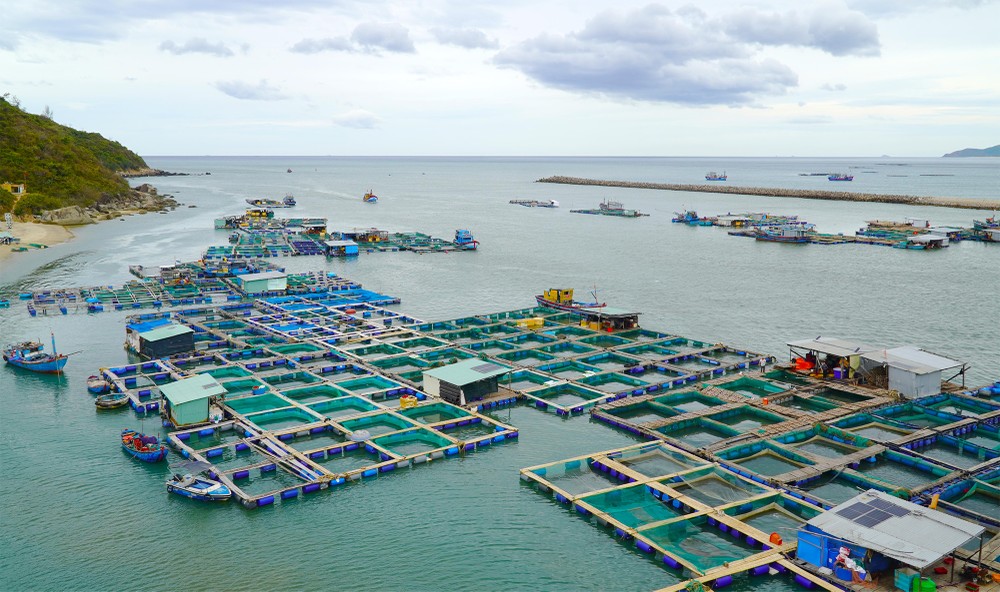
Aquaculture in the Central provinces remains spontaneous and fragmented, failing to achieve significant scale or modernization. Pictured here is a spontaneous aquaculture zone constricting the De Gi estuary. Photo: Ngoc Oai
Back in 2017, the former Phu Yen Province approved a master plan for fisheries development through 2025, with a vision toward 2030. However, Le Huu Tinh, Deputy Director of Dac Loc Seafood Company, stated that zoning and water surface allocation in Song Cau have yet to be practically implemented. Spontaneous, rapid expansion alongside depleted wild lobster seed stocks leaves the country's largest lobster capital in a tough spot. Unstable water allocation deters farmers from making long-term investments and makes enterprises hesitant to commit large capital.
Deputy Director Le Huu Tinh emphasized that planning must establish a legal foundation to reassure residents and businesses, form concentrated farming zones, and integrate deeply into the value chain. Planning serves as the cornerstone; without it, methodical and sustainable development remains elusive.
Tam Quan and Song Cau present two distinct pictures, yet share a common denominator including production outpaces infrastructure, planning, and logistics service ecosystems. Though families like Mr. Minh's in Tam Quan persevere at sea, and fishermen in the Cu Mong and Xuan Dai farming zones continue working tens of thousands of lobster cages, their dreams of building wealth from the sea will stay fragile and distant until value chain bottlenecks are cleared.