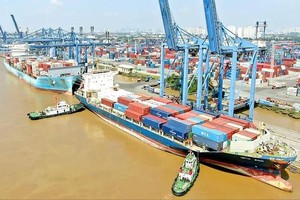
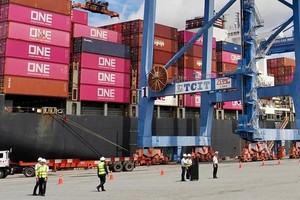
The joint operation between Cai Mep International Terminal (CMIT) and Tan Cang - Cai Mep Thi Vai Terminal (TCTT) to receive the Zim Shenzhen vessel in early September marks a positive signal for the Cai Mep - Thi Vai deep-water port cluster while opening up an innovative operational model: interconnecting adjacent berths to expand capacity for mega container ships.
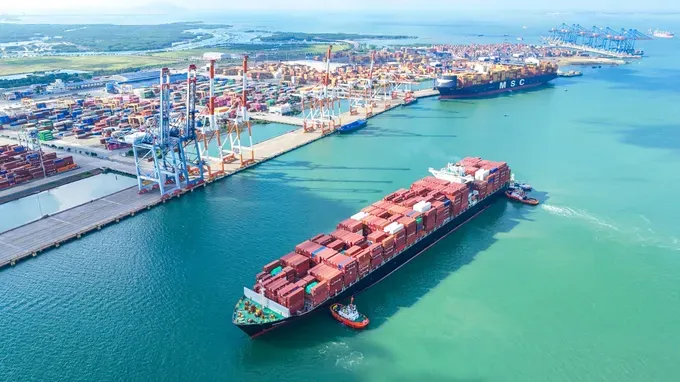
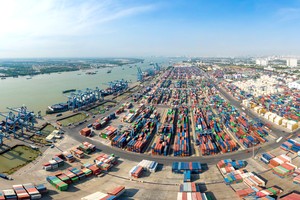
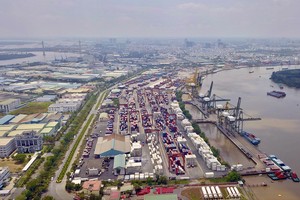
The Cai Mep - Thi Vai port cluster currently has 25 operating ports. Most container berths at Cai Mep - Thi Vai were originally invested in with a pier length of around 600m, designed to accommodate two ships of roughly 280m in length simultaneously.
Meanwhile, the global container fleet is rapidly transitioning toward vessels measuring 350m or longer to reduce transport costs, shorten sailing schedules, and limit transshipment through third-party ports. Under standalone berth structures, each port can host only one large vessel at a time, resulting in underutilized pier capacity and equipment.
The agreement between CMIT and TCTT demonstrates a practical solution. Each party allocates 230m of adjacent pier to create a shared 460m berth section; combined with the remaining pier length, this forms a continuous 1,200m berth strip. As a result, the two ports can arrange cargo handling flexibly and receive three mega mother vessels concurrently. The Zim Shenzhen vessel, over 335m long, was jointly handled by the two entities to unload approximately 3,200 TEUs in under a day, departing on schedule.
This model of infrastructure sharing and resource linkage represents the shortest lever for the Cai Mep - Thi Vai deep-water port cluster to seize opportunities, keep pace with global maritime transport trends, and address the long-standing issue of fragmentation. While the practical benefits are clear, this model cannot operate over the long haul relying solely on mechanical agreements between enterprises.
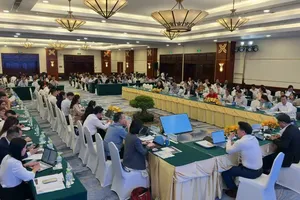
To maximize the efficiency of this port alliance, a synchronized institutional framework must be established promptly. First and foremost, regulatory authorities need to serve as the conductor, quickly implementing a pilot mechanism for the adjacent berth integration model.
In addition, customs and maritime regulation agencies must institute specialized procedures and seamless single-window management so that goods and vessels passing through two sub-terminals face no procedural bottlenecks. Concurrently, the legal framework must clearly standardize civil liability, insurance, and incident resolution protocols among operating corporate entities.