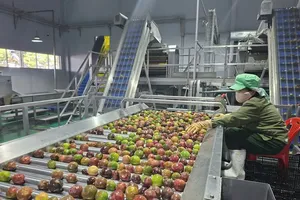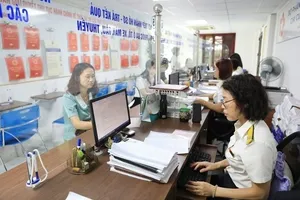
According to new regulations, imported agricultural products must undergo document checks, physical inspections, and food safety testing. The waiting time for test results can extend from 7 to 15 days, causing delays in customs clearance for many shipments.
Yesterday afternoon, in response to the congestion of fresh agricultural products at several border crossings, the Vietnam Food Administration (VFA) under the Ministry of Health issued a document providing guidance on the implementation of state inspections of food safety for agricultural products as stipulated in Government Decree No. 46/2026/ND-CP dated January 26, 2026.
On January 30, the VFA received a report from the Department of Plant Production and Protection under the Ministry of Agriculture and Environment outlining difficulties in implementing inspections required under Government Decree No. 46/2026/ND-CP.
Later that day, the VFA convened a meeting with relevant agencies, concluding that the problems stemmed from organizational implementation rather than the decree itself. The administration instructed inspection units to adopt flexible procedures when handling dossiers to avoid unnecessary losses for businesses.
After the meeting, the VFA requested the Department of Plant Production and Protection and the National Authority for Agro-Forestry-Fishery Quality to report to the Ministry of Agriculture and Environment leadership for guidance, ensuring that import and export activities are not disrupted. It also proposed that once challenges and solutions are fully documented, the Ministry of Agriculture and Environment should consult the Ministry of Health, which chairs the Inter-Ministerial Steering Committee on Food Safety, to unify inspection practices.
Inspection agencies need to be flexible in handling dossiers, avoiding rigid procedures that could cause damage to the assets of citizens and businesses.
The Vietnam Food Administration also suggested that, after fully compiling the difficulties and proposed solutions related to state inspection of food safety in the agricultural sector, if necessary, units under the Ministry of Agriculture and Environment should advise the Ministry's leadership to send a document to the Ministry of Health (in its role as the Standing Committee of the Inter-Ministerial Steering Committee on Food Safety) to organize a meeting to unify guidance on the implementation of Decree No. 46/2026/ND-CP.
Upon investigation, the cause of this bottleneck stems from the fact that Decree No. 46/2026/ND-CP only came into effect on January 26, 2026 (replacing Decree 15/2018/ND-CP).
Although the goal of the decree is to improve quality standards, due to the lack of immediate detailed guidance circulars, specialized inspection units are confused in its implementation.
According to the new regulations, imported agricultural products must undergo document inspection, physical inspection, and sample testing. The waiting time for test results can range from 7 to 15 days, which is believed to be the reason why many imported agricultural products are delayed in customs clearance in Vietnam.
“It’s fine for dry goods, but for fresh fruit, waiting 10 days means the goods might be spoiled by the time we receive the results,” worried one business owner.
On the same day, the Vietnam Custom under the Ministry of Finance also sent an urgent document to the Ministry of Health, the Ministry of Industry and Trade, and the Ministry of Agriculture and Environment regarding food safety inspections.
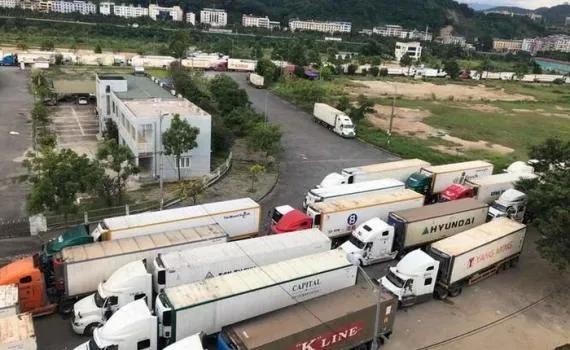
According to the statistics as of January 30, at Kim Thanh International Border Gate in Lao Cai Province, there were approximately 300 trucks carrying fresh agricultural products including vegetables, tubers, and fruits that had not yet received food safety inspection results for customs clearance. At Hoa Lu Border Gate in Dong Nai Province, there were approximately 250 trucks carrying cassava chips and bananas that had not yet received food safety inspection results. At the Lao Bao border gate in Quang Tri Province, approximately 50 trucks carrying agricultural products.
According to the Customs Department, the goods imported through border gates are mainly fresh agricultural products, which are perishable if not cleared on the same day, causing significant losses for businesses.
To promptly resolve the issue for businesses, the Customs Department requests that relevant ministries provide guidance soon to minimize losses for businesses and avoid congestion that could compromise security at border gates.