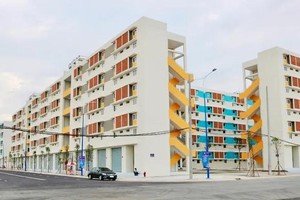
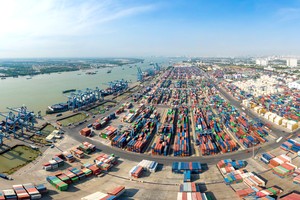
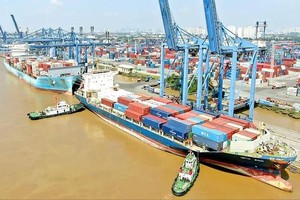
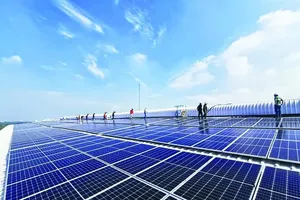
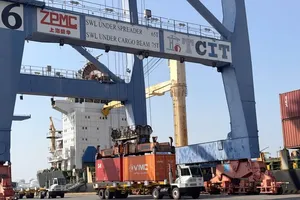
In this context, Ho Chi Minh City has been emerging as a key destination for high-quality, sustainability-driven capital flows where green standards and sustainable development are gradually becoming a competitive advantage.
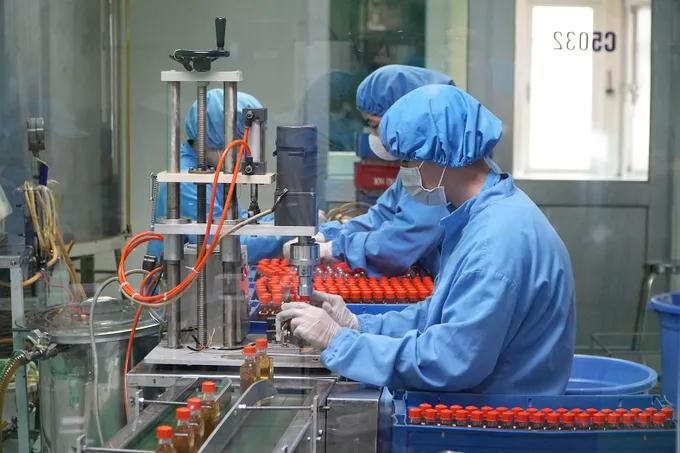
Significantly improved investment environment
One of the clearest indicators of Vietnam’s improving investment climate is the marked increase in confidence and business performance among foreign enterprises operating in the country.
Japanese enterprises are demonstrating peak confidence in the Vietnamese market, with profitability projections hitting a 15-year high. According to Mitsutoshi Okabe, Chief Representative of the Japan External Trade Organization (JETRO) in Ho Chi Minh City, a recent survey of over 2,000 Japanese firms reveals that 67.5 percent expect to post profits in fiscal year 2025. This surge represents the highest level of financial optimism recorded in over 15 years. This profitability is driving a robust wave of reinvestment. The survey indicates that more than 56 percent of these companies plan to expand their local operations within the next 24 months, a growth rate that currently outpaces many of Vietnam’s peers within the ASEAN region.
“These figures reflect the long-term confidence of Japanese businesses in Vietnam’s investment environment, particularly in major economic centers such as Ho Chi Minh City,” Mr. Okabe said.
A similarly positive outlook is evident among European enterprises. According to the European Chamber of Commerce in Vietnam (EuroCham), the Business Confidence Index reached 80 points in the fourth quarter of 2025, the highest level in seven years. More than 88 percent of European businesses expressed optimism about the 2026–2030 period, reinforcing Vietnam’s position as a strategic destination for cross-border investment as new-generation free trade agreements continue to deliver tangible benefits.
The US business community has also reported encouraging signals. Speaking at a recent event marking the 30th anniversary of diplomatic relations between Vietnam and the United States in Ho Chi Minh City, Mark Gillin, President of the American Chamber of Commerce in Vietnam (AmCham Vietnam), noted that Vietnam is increasingly viewed as a key investment partner for US companies, particularly in technology, education, innovation, and energy transition.
From a macroeconomic perspective, Tran Phu Lu, Acting Director of the Ho Chi Minh City Investment and Trade Promotion Center (ITPC), highlighted significant improvements in both the scale and quality of Vietnam’s growth. Gross domestic product rose from approximately US$346 billion in 2020 to an estimated US$510 billion in 2025, while GDP per capita is approaching US$5,000. During the 2021–2025 period, total foreign direct investment is expected to reach around US$185 billion, while total trade turnover is expected to reach US$900 billion, underscoring Vietnam’s deepening integration into the global economy.
Attracting green capital flows
Building on rising investor confidence and stronger domestic fundamentals, green finance is emerging as a new pillar of Vietnam’s investment environment. No longer considered an experimental funding channel, green capital is increasingly embedded in the strategies of global financial institutions, investors, and enterprises.
At the kick-off workshop for a green finance technical assistance project jointly organized by the Asian Development Bank (ADB) and the State Bank of Vietnam, Shantanu Chakraborty, ADB Country Director for Vietnam, emphasized the banking system's central role in steering capital toward sustainable growth. To fulfill its commitment to achieving net-zero emissions by 2050, Vietnam will need to mobilize an estimated US$81 billion in additional investment by 2040, a substantial portion of which must come through the financial sector.
Green finance flows are already gaining momentum. According to financial institutions, outstanding green credit is expected to approach VND750 trillion by 2026, with a strong focus on renewable energy, low-emission agriculture, and environmental infrastructure. In the capital market, the issuance of green bonds, sustainability bonds, and sustainability-linked bonds exceeded VND11 trillion in 2024, signaling a growing shift of long-term capital toward ESG-aligned investments.
“Vietnam is currently one of the fastest-growing green finance markets in Southeast Asia,” an International Finance Corporation (IFC) representative noted. “By mid-2023, green credit had supported more than 1,700 projects with a total value exceeding VND66 trillion, primarily in renewable energy, low-carbon agriculture, and sustainable urban infrastructure.”
According to Dinh Hong Ky, Chairman of the Ho Chi Minh City Green Business Association, the most successful sustainable models are built upon the reorganization of production processes, resource efficiency, waste reduction, and the extension of product lifecycles. He notes that in its foundational stage, green transformation is primarily a matter of smarter management.
Consequently, a powerful synergy between international investor confidence, the expansion of domestic enterprises, and the emergence of concrete green finance programs is driving a substantial influx of green capital into Vietnam.
Ho Chi Minh City, which hosts a network of over 500,000 active businesses, is poised to become a central hub for sustainable finance. It is here that global climate commitments are being translated into tangible projects, robust capital flows, and long-term economic value.