Mr. Bui Quoc Hung, Deputy Director of the Electricity Authority of Vietnam under the Ministry of Industry and Trade, said on January 29 that the ministry has tasked the National Power System and Market Operator Company (NSMO) with developing electricity load forecast scenarios, including calculations of power demand from electric vehicles.
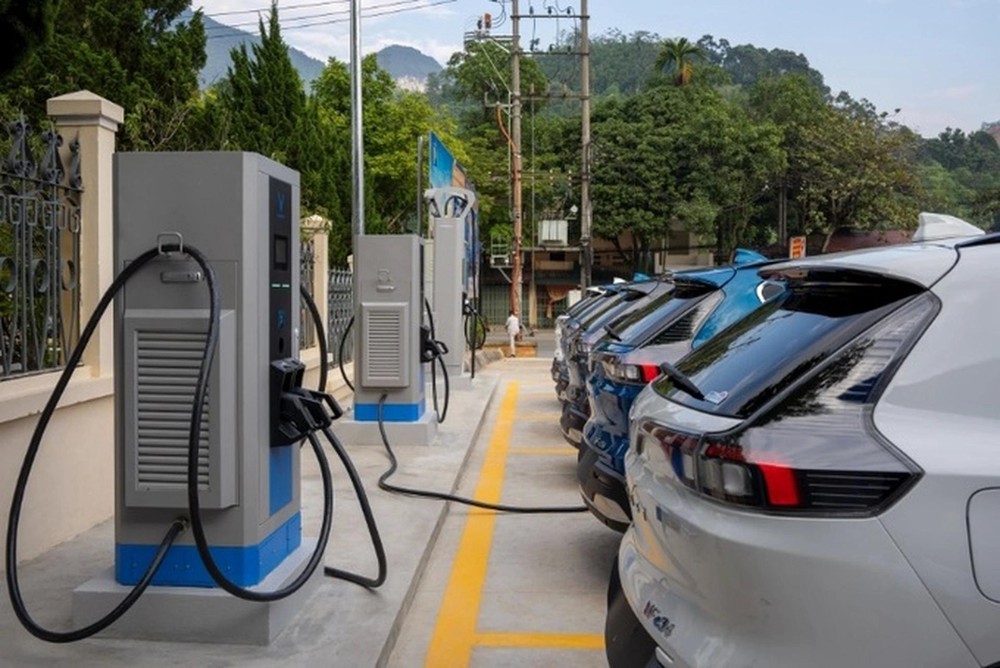
According to NSMO’s scenarios, by 2030, Vietnam could have around one million electric cars. At this scale, annual electricity consumption by electric vehicles is estimated at about 3–4 billion kWh, equivalent to roughly 1–1.5 percent of the country’s total electricity consumption. Mr. Bui Quoc Hung noted that this increase is not significant and can be accommodated by the existing power system without creating substantial pressure.
The deputy director added that the annual growth in electricity load attributable to electrified transport is estimated at only around 1–1.5 percent, and therefore, based on current assessments, does not pose a risk to the operation of the national power system.
However, in major urban centers such as Hanoi and HCMC, high vehicle density could lead to localized overloads in distribution grids, particularly in areas with a high concentration of charging stations. In the short term, the Ministry of Industry and Trade will assign Vietnam Electricity (EVN), together with power corporations in Hanoi and HCMC, to add substations to ensure a stable power supply for charging infrastructure.
Over the longer term, the ministry said it is necessary to update the national power development plan in line with the growing adoption of electric vehicles. At present, power planning at various levels has not fully factored in electricity demand from charging stations, while the development of charging infrastructure is closely linked to transport and urban planning. The power sector will base its adjustments to power planning on the additional load arising from transport and urban development plans to ensure alignment and adequacy.