In recent days, vegetable and fruit growing regions across Ho Chi Minh City have entered peak production, as agricultural cooperatives ramp up output to serve the 2026 Tet market.
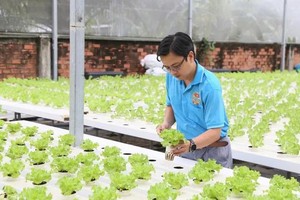
Many safe vegetable cooperatives began planning months in advance to ensure steady supply and consistent quality. According to Mai Van Khanh, Director of GAP Clean Vegetable Cooperative in Dong Thanh Commune, preparations started as early as October 2025, with the unit securing seeds and farm inputs, reorganizing labor and encouraging seasonal workers to join production during peak periods.
With about three hectares under cultivation, the cooperative specializes in leafy greens such as bok choy, mustard greens and Malabar spinach. It also partners with and purchases products from five safe vegetable groups in Dong Thanh, forming a sustainable production and distribution chain.
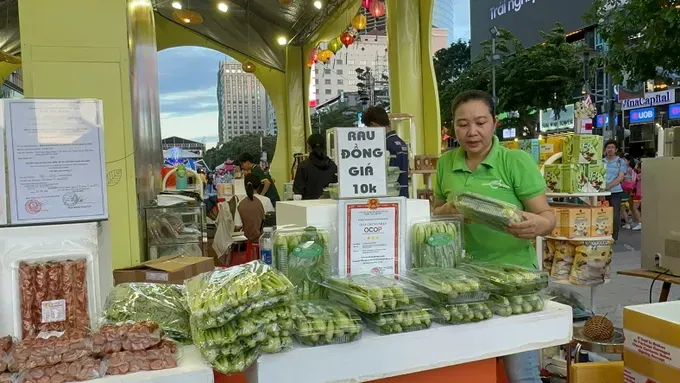
“Vegetable output during Tet is expected to rise 10–20 percent compared to normal days. We have also opened direct retail outlets so consumers can access clean vegetables more conveniently,” Khanh said.
In Tan Thanh Ward, green-skin pomelo has long been a key source of income for local farmers. Song Xoai Green-Skin Pomelo Cooperative has emerged as a standout model with a structured production strategy. Supplying up to 5,000 tons annually, the cooperative is gradually strengthening the presence of Vietnamese fruit in international markets.
Ho Hoang Kha, Director of the cooperative, said the unit manages 300 hectares directly and links with more than 1,000 hectares of partner farms, producing 700–800 tons of pomelo for export each year. Farmers are now entering the main harvest season for Tet (the Lunar New Year), with nearly 80 percent of the fruit meeting Grade 1 standards thanks to improved cultivation techniques.
City authorities are also working alongside farmers and cooperatives to stabilize supply. Data from the Department of Agriculture and Environment show that Ho Chi Minh City currently has more than 6,000 hectares of vegetable cultivation, concentrated in areas such as Binh My, Nhuan Duc, Cu Chi, Hung Long, Binh Chanh, Phu Giao, Dat Do, Phuoc Hai and Chau Pha. In 2025, local cooperatives supplied approximately 884,950 tons of vegetables to the market, up 4.5 percent year on year.
Notably, about 17 percent of the area applies high-tech farming methods, including automated irrigation systems, temperature and humidity sensors, and software-based nutrient management, helping improve productivity and product quality.
To further support farmers, the Ho Chi Minh City Farmers’ Association has opened clean and safe food outlets in wards such as Phu Nhuan, Duc Nhuan and Thong Tay Hoi. The expansion of direct sales points gives cooperatives greater confidence to scale up production while encouraging members to invest in greenhouses and standardized technical processes.
Nguyen Thanh Trung, Vice Chairman of the Vietnam Fatherland Front Committee of Ho Chi Minh City and Chairman of the city’s Farmers’ Association, said the programs not only help consumers access safe products but also create stable market outlets for farmers and cooperatives, enhancing the value of local agricultural goods.
Support policies for cooperative development, production-consumption linkages and safe agricultural branding will continue to be implemented, enabling cooperatives to expand operations and strengthen competitiveness.