Confidence in competitive capacity
Commenting on international competitiveness, Chairman of Phuc Sinh Group Phan Minh Thong said that Vietnamese enterprises must continuously improve themselves. From a company exporting raw pepper, Phuc Sinh Group has made a strong shift toward deep processing, brand building, and direct participation in global distribution chains.
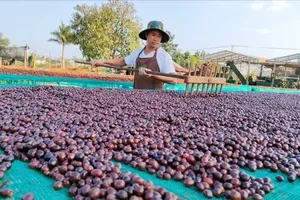
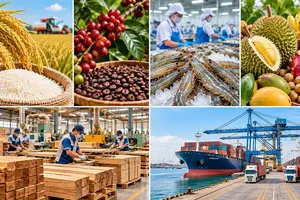
To date, Phuc Sinh’s pepper and coffee products have reached more than 120 markets, with total export turnover estimated at over US$400 million per year.
According to him, global competition now focuses on retaining markets rather than simply selling products. Rather than focusing on price, partners now prioritize the origin of raw materials, production sustainability, and the company’s ability to guarantee long-term supply. Failing to reform traditional farming practices will undermine long-term viability. By contrast, standards-based agriculture can deliver sustainable, high-value returns, he said.
Sharing a similar view, Chairman of Vina T&T Group Nguyen Dinh Tung noted that mastering the entire value chain is essential for Vietnamese enterprises to compete on equal terms with foreign companies.
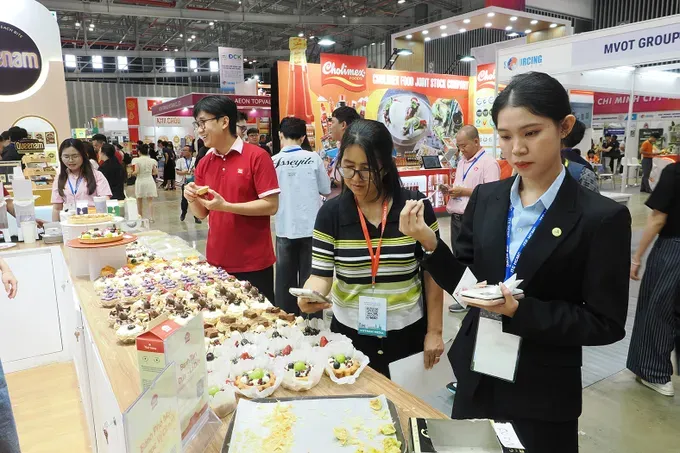
International partners now prioritize supply stability, reliability in contract performance, and the ability to meet standards consistently over many years. Drawing from experience exporting fresh fruit to the United States, the European Union and Japan, Mr. Nguyen Dinh Tung said that only by controlling raw material areas and proactively managing quality standards and logistics can businesses retain markets and compete fairly with multinational agribusiness corporations.
Beyond agriculture, the competitiveness of Vietnamese enterprises is also increasingly evident in high-tech sectors. According to Dr. Luong Viet Quoc, CEO of Real-time Robotics (RtR), unmanned aerial vehicles researched, designed and manufactured by Vietnamese companies are now capable of competing directly with products from China, Israel and the United States. The company controls its designs, control algorithms, and AI integration, and can customize products to meet market demand.
Designing appropriate policies
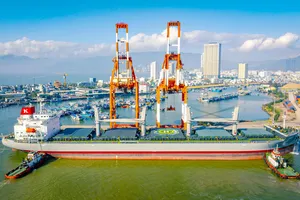
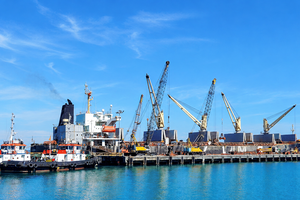
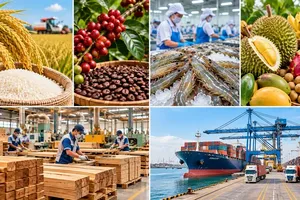
Vietnam’s export turnover rose from more than US$336 billion in 2021 to US$475 billion in 2025. Tens of thousands of businesses are now engaged in export activities, and many industries have established a stable presence in major markets such as the United States, the European Union and Japan. However, experts note that the number of enterprises capable of competing on equal footing internationally remains disproportionate to the country’s economic potential.
According to Mr. Nguyen Ngoc Hoa, Chairman of the Ho Chi Minh City Business Association (HUBA), the biggest challenge facing Vietnamese enterprises today lies in their resilience and ability to adapt to the “new rules of the game” in global trade. Requirements related to carbon taxes, ESG standards, trade remedies, rising logistics costs, and growing compliance expenses are placing significant pressure on businesses, many of which lack the resources to keep up.
From another perspective, Associate Professor Vu Minh Khuong of the Lee Kuan Yew School of Public Policy under the National University of Singapore emphasized that enterprise competitiveness must be viewed holistically. Businesses may be at the center, but they cannot be separated from the role of institutions, the business environment and linkages within the broader ecosystem.
Based on these realities, several solutions have been proposed. First, administrative procedure reforms must continue, with a focus on reducing compliance costs for enterprises. At the same time, more suitable credit policies are needed to support innovation-driven businesses and those pursuing green transformation. Developing logistics infrastructure and strengthening supply-chain linkages between domestic firms, FDI enterprises, and international distribution networks are also critical to enhancing competitiveness.
For Vietnamese companies that have already ventured into global markets, the key challenge now is how to enable a growing number of domestic enterprises to “take off” and maintain their footing amid intensifying global competition.
Mr. Nguyen Ngoc Hoa emphasized that the performance of a small group of leading enterprises is not sufficient evidence of improved competitiveness across the Vietnamese business sector. The central issue lies in scaling up the number of firms that can effectively participate in global value chains. This, in turn, demands policy interventions focused on key constraints such as credit availability, land access, logistics infrastructure and administrative reform.