According to the plan, Long Thanh International Airport is expected to officially commence commercial operations in mid-2026, marking a significant milestone in Vietnam’s rise in a new era of development.
However, the project puts significant pressure on investing in and completing multimodal transport infrastructure to ensure seamless connectivity between the airport and Ho Chi Minh City, as well as linking Dong Nai with the South Central Coast, the Mekong Delta, and the Central Highlands. It also calls for strategic urban planning to maximize its role as a key socio-economic growth driver for the Southeastern region.
As a nationally significant project approved by the National Assembly under Resolution No. 94/2015/QH13 dated June 25, 2015, Long Thanh International Airport is designed with a capacity of 100 million passengers and five million tons of cargo per year, to be developed in three phases.
The project symbolizes Vietnam’s aspiration for strong advancement in a new development era and demonstrates the capability of domestic enterprises to deliver large-scale, world-class transport infrastructure meeting green and smart standards.
Applying modern technology
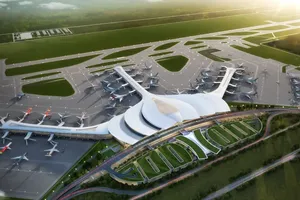
Phase 1 of the Long Thanh International Airport project includes four component sub-projects. Component Project 3, covering essential airport facilities and invested by the Airports Corporation of Vietnam (ACV), comprises the passenger terminal, cargo terminal 1, parking structures, and airfield infrastructure such as runways, taxiways, aviation lighting systems, Instrument Landing System (ILS) /Distance Measuring Equipment (DME) equipment, aircraft aprons, fuel supply systems and other supporting works.
The passenger terminal is being built to 4F standards, which is the highest classification of the International Civil Aviation Organization (ICAO), and will operate as a “Smart Green Airport” meeting international five-star standards, offering a wide range of advanced digital experiences.
Before departure, passengers can use apps such as VNeID or iACV, or airline online check-in systems, to register biometric identification (ACV ID), check in, and access information on procedures, boarding gates, and travel time to the airport. Data is synchronized across the Airport Operations Database (AODB), airline systems and immigration systems managed by the Ministry of Public Security.
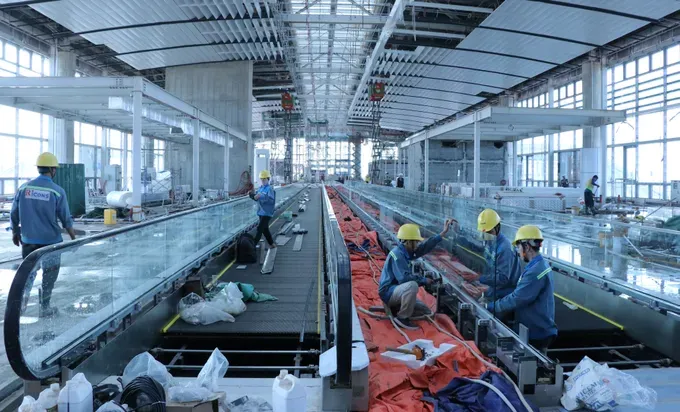
Inside the terminal, passengers will experience a seamless digital journey through smart aviation systems, including 96 biometric-enabled self check-in kiosks, including 12 located in parking areas, and 64 biometric self bag-drop counters for automated baggage handling.
Security procedures are also streamlined with 12 automated e-gates using facial recognition linked with ACV ID and VNeID, allowing passengers to pass through within seconds, along with 28 CT scanners using multi-angle X-ray imaging to create 3D visuals, reducing screening time as passengers no longer need to remove laptops or liquids from their baggage.
Additionally, automated exit systems jointly developed by ACV and the Immigration Department enable fast and accurate passenger processing through integrated data connectivity.
Lessons in construction and planning vision
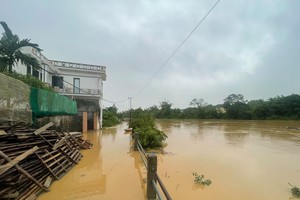
During implementation, the project faced unprecedented challenges, including large-scale land clearance affecting tens of thousands of residents, disruptions caused by the Covid-19 pandemic, supply chain breakdowns, volatile material prices, and stringent quality requirements.
Amid these difficulties, strong direction from the Government proved decisive. The Prime Minister established a special task force led by Deputy Prime Minister Tran Hong Ha, who held regular on-site meetings to promptly resolve bottlenecks and support engineers and workers.
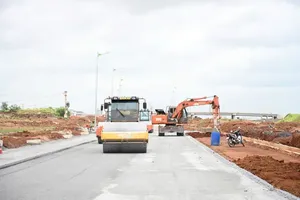
A series of special mechanisms and timely decisions were issued by the National Assembly and the Government under the guiding principle of not allowing obstacles to hinder development or delay progress. The project was built day and night continuously under the “three shifts, four crews” model.
With a high sense of responsibility and commitment, all parties worked around the clock, treating the construction site as their second home and bringing blueprints to life as a modern infrastructure project.
A representative of the Long Thanh Airport Project Management Board emphasized that key lessons include selecting capable and experienced contractors, ensuring close coordination among stakeholders, holding daily briefings to promptly address technical issues, and maintaining effective collaboration among multiple investors in such a complex project.
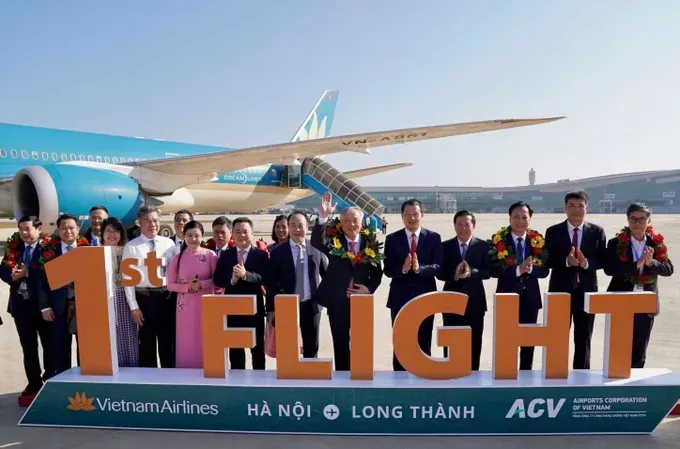
The Ministry of Transport officially worked with the provincial leadership on the planning and construction of an international airport in Long Thanh after Dong Nai provincial leaders secured in-principle approval from the central authorities for the matter.
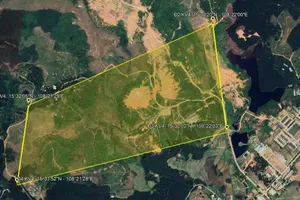
Drawing on the high operational capacity of Bien Hoa military airport, reported by a British military magazine to handle takeoffs or landings every three minutes during the Vietnam War, with favorable weather and stable geology, the Ministry of Transport and Dong Nai Province reached an agreement to reserve 5,000 hectares for Long Thanh International Airport and proposed Government approval for joint surveying and boundary marking.
Dong Nai Province relocated plans for five industrial parks covering 1,500 hectares and refrained from establishing new economic zones.
The contributions of Dong Nai Province’s leadership and local residents have also been significant. Early planning decisions, including land allocation and industrial zone adjustments, laid the groundwork for the project. By 2002, the Government had officially approved the airport planning, opening up new development space for Dong Nai and the entire Southeastern region.
Phase 1 of the project was approved by the National Assembly under Resolution No. 95/2019/QH14 and by the Prime Minister under Decision No. 1777/QD-TTg, with a capacity of 25 million passengers and 1.2 million tons of cargo annually, supported by synchronized infrastructure systems.
As a strategically important mega-project, Long Thanh Airport not only reflects Vietnam’s long-term vision but is also expected to become a powerful engine for national socio-economic growth.