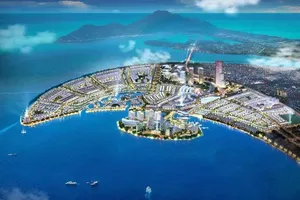
Associated with Long Thanh International Airport in Dong Nai Province, the Long Thanh airport urban area is being developed on a scale of tens of thousands of hectares as a new growth space integrating industry, services, logistics and innovation. It is envisioned as a modern “airport city” and a key transit hub for the region.
An integrated urban space
Globally, the airport city model has proven effective in transforming airports from mere transport infrastructure into comprehensive economic centers. Successful examples in the Republic of Korea, Singapore and Thailand have driven the development of logistics hubs, commercial centers, financial districts and high-tech industries.
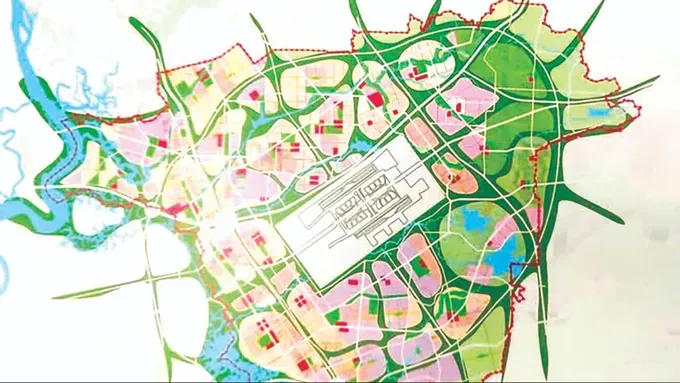
In Long Thanh, this model is being implemented on the largest scale ever seen in Vietnam. The planned airport urban area covers more than 43,000 hectares and could expand to around 57,000 hectares, including surrounding zones. At its core is the airport itself, spanning about 5,000 hectares with a maximum designed capacity of 100 million passengers and five million tons of cargo annually.
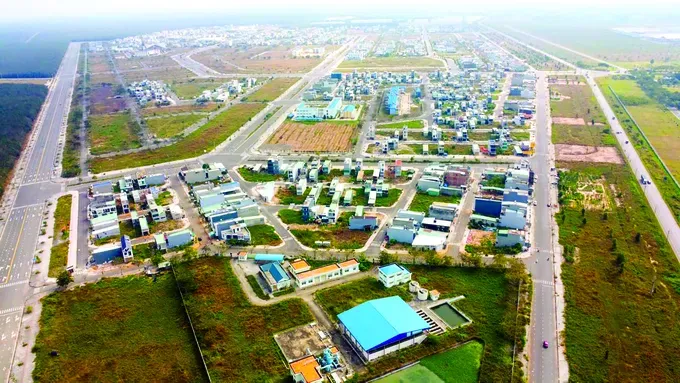
Under provincial planning adjustments for 2021–2030 with a vision to 2050, the Long Thanh airport city will include a free trade zone, high-tech industrial parks, a concentrated digital technology hub, innovation districts, high-quality university education zones, aviation logistics areas, financial service centers and modern residential developments.
Each sub-zone will serve a specific function while being closely interconnected, forming a seamless economic ecosystem. The optimized flow of goods, passengers, information and capital is expected to reduce logistics time and costs, creating a strong competitive advantage to attract investment and drive growth.
The development is also linked to the Dong Nai River corridor, forming a green urban axis that integrates ecological and urban elements, enhances quality of life, and helps shape a distinct urban identity.
A comprehensive economic ecosystem
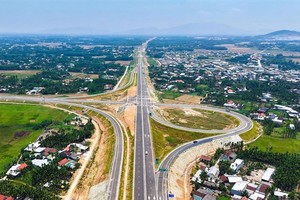
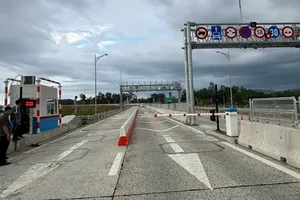
By 2030, the Long Thanh airport city is expected to complete a synchronized transport network connecting the airport with expressways and national railways, ensuring seamless multimodal connectivity between Dong Nai and Ho Chi Minh City.
The project aims to build a modern and integrated aviation service ecosystem within and around the airport, positioning Long Thanh as a regional hub for logistics and transit in Southeast Asia.
The southwestern area of the airport is planned as a financial and aviation service center, serving as a hub for trade, diplomacy and cultural exchange between Vietnam and the world.
Meanwhile, industrial and logistics corridors to the southeast will connect with the Cai Mep - Thi Vai port cluster and urban-industrial-service chains along major transport routes, including the Bien Hoa – Vung Tau Expressway, National Highway 51 and Ring Road 4.
The Long Thanh airport city will also include large-scale university complexes, training centers, and research institutions to supply high-quality human resources. A modern healthcare system, including general and specialized hospitals, is planned to serve a projected population of around 1.5 million by 2045.
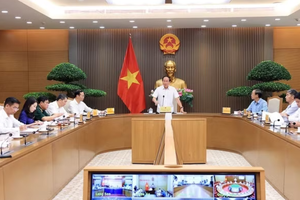
According to Mr. Le Hoang Son, Chairman of the Long Thanh Communce People’s Committee, local authorities are focusing on completing technical infrastructure, accelerating digital transformation, and improving urban services. Priority is being given to transport links connecting to the airport, alongside the development of social infrastructure to meet the demands of a modern urban area.