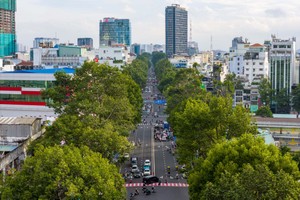
Three years after implementing a pivotal Politburo resolution to drive its development, Ho Chi Minh City has sustained its economic engine status, yet an outdated institutional framework and inadequate decentralization are failing to match the rapid expansion of this emerging multi-center megacity.
Institutional bottlenecks restrict megacity growth
Resolution 31 provided a vital foundation for Ho Chi Minh City to recover from the Covid-19 pandemic and cement its position as Vietnam's top hub for economics, finance, trade, science, and innovation. The resolution helped formalize specific policies, advancing infrastructure projects, urban renewal, digital transformation, and regional connectivity.
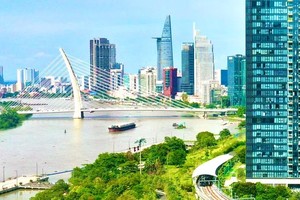
However, local development has quickly outpaced the original policy framework. Administrative adjustments and the transition to a two-tier local governance model require HCMC to restructure. The city is shifting from a traditional urban center into a multi-centric megacity focused on high-tech industries, seaports, logistics, finance, and the marine economy.
This structural shift exposes major institutional barriers. Public administration expert Nguyen Tuan Anh noted that bottlenecks in decentralization, resources, planning, land, transport, and flood management have become more apparent. The current framework fails to match the scale of a megacity housing over 15 million people. Many current mechanisms remain short-term pilots. For a special municipality, a reliance on central approvals and incomplete decentralization prevents Ho Chi Minh City from responding quickly to real-world challenges.
Experts also point out that the level of autonomy granted to HCMC does not match its heavy workload. Despite high targets, the city must navigate multiple layers of bureaucratic approval in key sectors like planning, investment, land, finance, and public services. This increases policy lag, delays processing times, and stifles social resources.
Phan Hoang Vu, General Director of SP-SSA International Terminal (SSIT), argued that future development strategies must be more breakthrough, moving from an approval-and-allocation budget model to proactive market resource mobilization. Ho Chi Minh City must position itself as a regional megacity expanding toward the sea, with the marine economy and logistics serving as core pillars.
Three years after the implementation of Resolution 31, Ho Chi Minh City recorded average annual GRDP growth of 5.8 percent during the 2023-2025 period.
By 2025, the city’s economy is projected to reach VND2.97 quadrillion, equivalent to about US$120 billion, accounting for roughly 23 percent of Vietnam’s GDP.
GRDP per capita is expected to reach between US$8,700 and US$8,800, underscoring the city’s role as the country’s economic engine.
City is transitioning to a multi-centric urban model
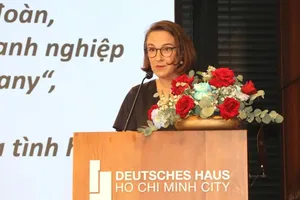
Ho Chi Minh City faces structural challenges regarding its growth model and transport infrastructure. Pham Thai Son, a lecturer at Vietnamese-German University, stated that the old growth model reliant on cheap labor, land expansion, and traditional investment has reached its limit. Amid global competition, digital transformation, and climate change, HCMC must transition to a growth model driven by science, technology, green and circular economies, and high labor productivity.
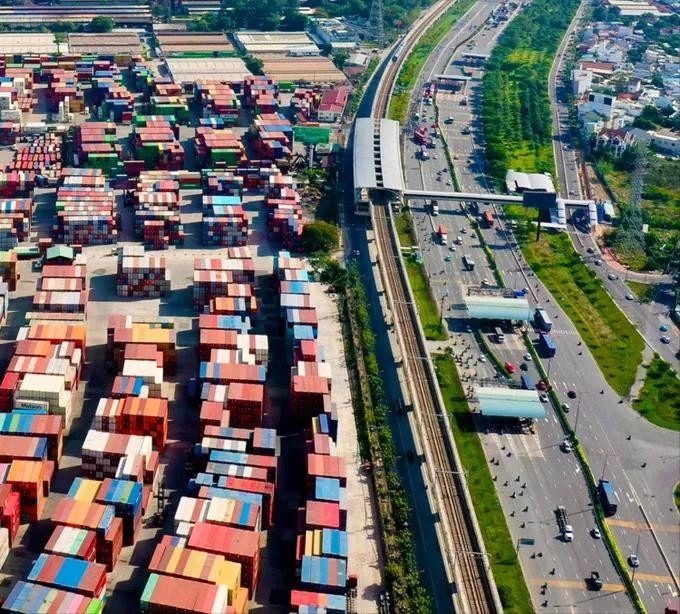
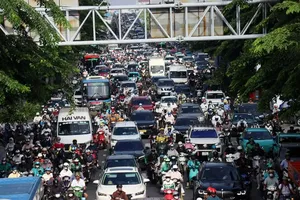
For years, Ho Chi Minh City has faced heavy pressure from traffic congestion, flooding, pollution, a lack of green spaces, and overloaded public infrastructure. Planning by individual projects or short political terms prevents the city from building a synchronized urban structure. Therefore, new planning must adopt a long-term, adaptive vision. Lecturer Pham Thai Son emphasized that urban planning should focus on a multi-centric model, increased regional connectivity, public transit, and eco-urban development.
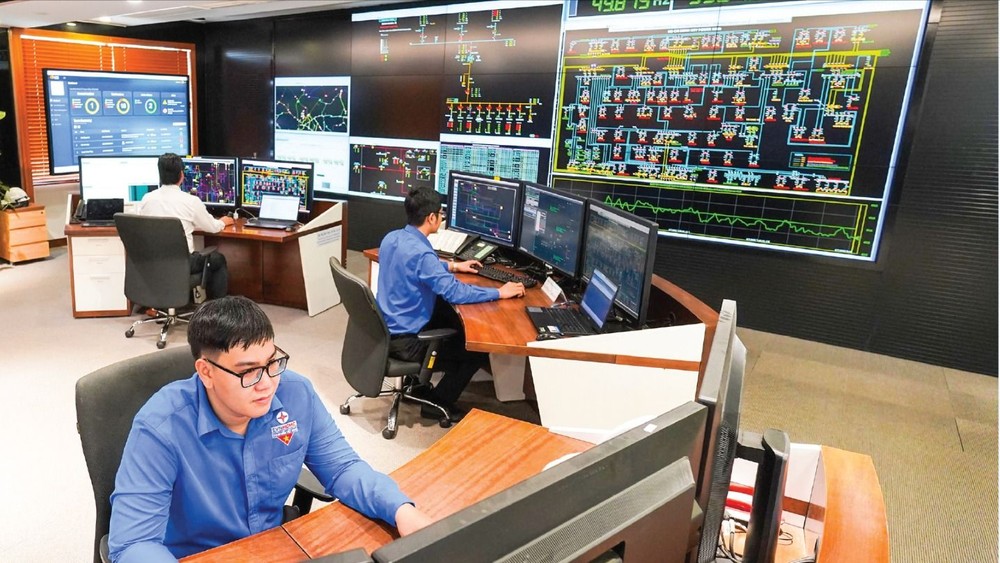
Working in the logistics field, SP-SSA International Terminal (SSIT) General Director Phan Hoang Vu suggested that HCMC needs greater financial autonomy, specifically the right to retain and reinvest revenues from land, seaports, and coastal areas. He proposed treating coastal spaces as a new strategic development fund to build integrated marine economic zones, backed by special mechanisms to attract seaport investors, boost transshipment volumes, and expand international logistics.
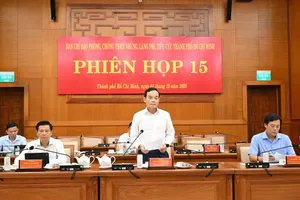
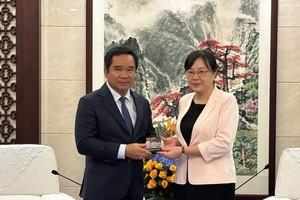
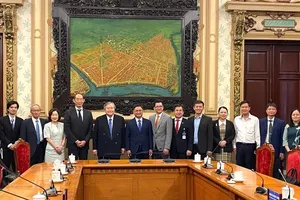
Ho Chi Minh City needs a new strategic direction to sustain its role as Vietnam’s leading economic hub, Vice Chairman of the municipal People’s Committee Nguyen Manh Cuong said.
As the city continues implementing the tasks set out under Resolution 31, it also faces challenges arising from the restructuring of administrative units, requiring conditions that would allow it to fully leverage its potential and advantages while maintaining its leading role in socio-economic development, Vice Chairman of the municipal People’s Committee Nguyen Manh Cuong said.
A new resolution would provide the legal framework needed for the city to preserve its position as a driver of national economic growth, he added.
The city is also grappling with major challenges stemming from intensifying competition, particularly in international markets, as well as geopolitical impacts. At the same time, Ho Chi Minh City needs a new strategic orientation to meet demands for growth model transformation, digitalization, green transition, and higher-quality development based on science, technology and innovation.
The city’s GRDP growth reached 8.03 percent in 2025 and 8.27 percent in the first quarter of 2026, marking the highest level in the past decade, but remained below the targeted double digit pace, Ho Chi Minh City Vice Chairman Nguyen Manh Cuong said.
He added that a new resolution to replace Resolution 31, alongside the development of a special urban law for Ho Chi Minh City, would create stronger mechanisms and momentum for the political system to accelerate growth targets in the city’s next development phase.
)