Over the past three years of implementing Resolution 31, Ho Chi Minh City has faced a period of significant challenges. The city not only had to recover from the Covid-19 pandemic but also cope with global economic slowdown, supply chain disruptions, volatile markets, fierce investment competition, and mounting pressures from digital transformation, green transition and climate change.
Despite these difficulties, the city has maintained growth momentum, gradually recovered, and recorded positive changes across multiple sectors. New growth drivers such as the digital economy, innovation, and high-tech industries have become increasingly visible.
The investment and business environment has continued to improve, while social welfare, education, healthcare, and cultural sectors have also seen progress. International cooperation and global integration have further strengthened the city’s position within regional and global networks.
During the 2023-2025 period, Ho Chi Minh City’s economy showed encouraging signs of recovery, with GRDP growth improving year by year. Although the city has yet to achieve the double-digit growth target it aims for, the results demonstrate its resilience, adaptability and recovery capacity as Vietnam’s leading economic hub amid fluctuations in global trade, investment, exports, finance, labor and supply chains.
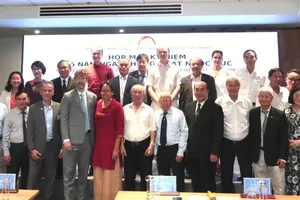
According to Dr. Pham Thai Son of the Vietnamese-German University, Resolution 31 played an important role in helping the city recover after the pandemic while promoting infrastructure investment and expanding development space. However, he noted that the context has changed rapidly due to intensifying global competition, demands for new growth models, and climate adaptation pressures. As a result, the city now needs a new resolution not only to remove immediate bottlenecks but also to shape a longer-term development strategy.
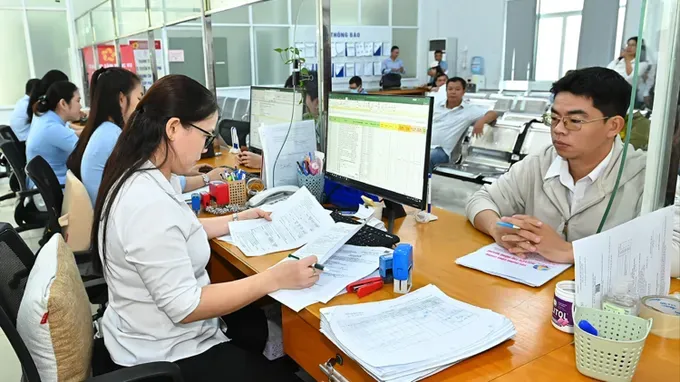
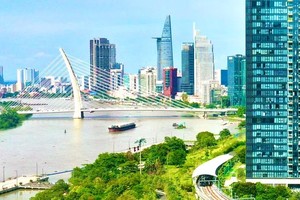
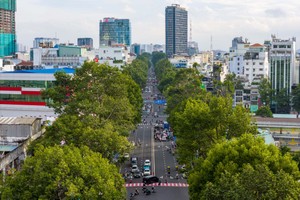
While traditional economic drivers have served the city well for years, they are no longer sufficient for the next stage of development. Following administrative restructuring and development expansion, Ho Chi Minh City is evolving into a multi-center mega-city with a population of more than 14 million people and an area exceeding 6,700 square kilometers.
The expanded urban space integrates central urban areas, high-tech industries, seaports, logistics, marine economy, finance, services and innovation.
Such a transformation opens enormous development opportunities but also requires a new governance model and more suitable institutional frameworks.
Experts believe the city must accelerate its transition toward a growth model based on science and technology, innovation, productivity and knowledge-based industries.
Dr. Nguyen Van Dao from Van Lang University said that the early preparation of a new resolution to replace Resolution 31 reflects the city’s entry into a completely new stage of development. A megacity with a much larger economic scale, population, infrastructure, and regional influence requires governance mechanisms that match its new stature.
The city is now aiming for more ambitious milestones, including sustained double-digit economic growth, annual budget revenue exceeding VND1 quadrillion (nearly US$38 billion), and the creation of a world-class financial center.
To achieve these objectives, experts say that the city should focus strongly on science and technology, innovation, digital economy, green economy, marine economy, smart logistics, modern finance and high-quality human resources.
Dr. Nguyen Quang Giai of the University of Finance and Marketing proposed positioning Ho Chi Minh City as the nation’s innovation center, bringing together high technology, digital finance, artificial intelligence, big data, smart logistics, universities, and technology enterprises. He added that the city urgently needs a modern urban financial system capable of mobilizing resources for strategic infrastructure projects such as metro systems, digital infrastructure, green urban development and energy transition.
Beyond economic indicators, experts emphasize that the city’s new stature must also be measured by the quality of life and satisfaction of its residents. A modern city should provide better transportation, cleaner environments, affordable housing, quality schools and hospitals, green spaces, public safety, and stronger social welfare systems.
According to Dr. Nguyen Van Dao, as the city becomes more modern, it must also preserve its cultural identity, community spirit, and the dynamic, creative, humane, and open-minded characteristics of its people. These values, he said, form the foundation of sustainable development and represent the distinctive identity of the city named after President Ho Chi Minh.
The city’s resilience through years of uncertainty and external pressures now serves as a foundation for future expansion. However, to reach a new level of development, the city now needs a shift from pilot mechanisms toward a unified and stronger legal framework suited to the scale and strategic role of a special urban center.
Through comprehensive institutional reforms, Ho Chi Minh City can strengthen its role as both the country’s economic engine and a modern regional city offering better living standards for residents.
Experts call for a new development vision for Ho Chi Minh City
Experts and local officials believe Ho Chi Minh City needs a new generation of policies and governance mechanisms to support sustainable growth, climate resilience, innovation, and better urban management.
Associate Professor Dr. Tran Hoang Ngan, a member of the 16th National Assembly and Chairman of the Development Breakthrough Advisory Council at Saigon University, said that the new resolution for Ho Chi Minh City should represent a major upgrade in development thinking, institutions, policies, growth models, development resources, and science, technology and innovation.
According to him, the resolution would also serve as an important political foundation for drafting a Special Urban Law for Ho Chi Minh City, helping institutionalize and ensure the long-term stability of special mechanisms and policies tailored to the city.
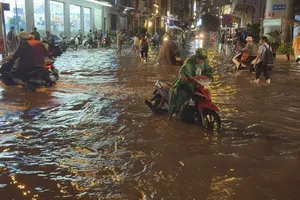
Master Nguyen Tuan Anh, an expert in public policy, noted that Ho Chi Minh City is simultaneously facing challenges from high tides, heavy rainfall, land subsidence, sea-level rise, saltwater intrusion and rapid urban concretization.
He said that the city’s future planning should adopt a “smart living with water” approach by restoring canal and river spaces, increasing permeable surfaces, developing green and blue infrastructure, protecting the Can Gio mangrove forest, strictly controlling development in low-lying areas, and redesigning drainage systems, retention lakes, flood parks and ecological corridors.
Resolution 31 has opened a new stage of development, so the replacement resolution should elevate Ho Chi Minh City into a truly special urban center with special institutions, special planning, special implementation capacity, and special responsibilities for the Southeastern region and the country as a whole, he said.
Meanwhile, Mrs. Nguyen Thi My Hang, Secretary of the Party Committee and Chairwoman of the People’s Council of Ben Cat Ward in Ho Chi Minh City, hoped that the city’s new development orientations would create stronger and more flexible conditions to remove bottlenecks at both the municipal and grassroots levels.
She emphasized that stronger decentralization requires transparent responsibility-sharing, helping local governments actively address urban planning, infrastructure, digital transition, environmental quality and social welfare issues.
Once the city has better mechanisms and greater resources, residents in every neighborhood and local community should be the people who benefit most directly and clearly, she said.
)