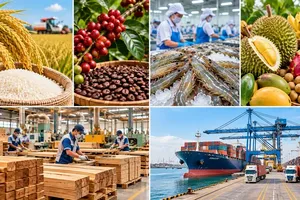
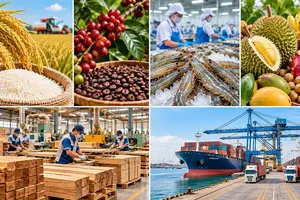
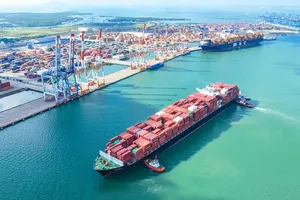
For Vietnam, the challenge is not merely to maintain growth but to sustain a high growth rate on a solid and sustainable foundation. In this context, Ho Chi Minh City is pursuing a “smart growth” approach, prioritizing quality and sustainability over growth at all costs.
From growth pressures to the imperative of model transformation
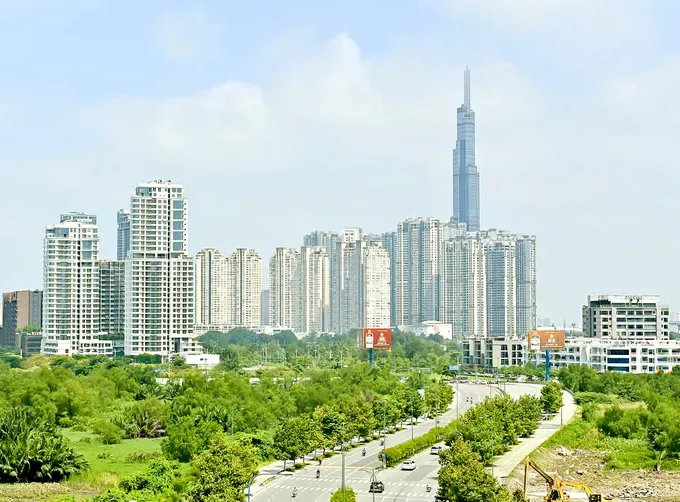
Mr. Pham Binh An, Deputy Director of the Ho Chi Minh City Institute for Development Studies, noted that the current global economic landscape is becoming increasingly uncertain, driven by prolonged geopolitical tensions, rising logistics costs, and progressively tightening trade standards. In this context, the requirement for major urban centers is no longer mere growth but the ability to sustain high growth on a solid and sustainable foundation.
With its contribution accounting for approximately 23.5 percent of national GDP and nearly 19.5 percent of total export turnover, Ho Chi Minh City is directly exposed to these external fluctuations. Accordingly, the city has shifted from a mindset of “growth at all costs” to a “smart growth” approach, placing emphasis on quality, resilience, and long-term efficiency.
This approach has been concretized through the development of growth scenarios at different thresholds—7–8 percent, 8–9 percent, and above 10 percent—alongside phased progress monitoring. Under this framework, achieving double-digit growth will remain a significant challenge if the first-half growth rate does not reach at least 10.3 percent.
Conversely, internal pressures within the economy are becoming increasingly pronounced. Mr. Nguyen Ngoc Hoa, Chairman of the Ho Chi Minh City Business Association (HUBA), observed that enterprises are facing a “confluence of pressures,” including rising costs, contracting markets, and increasingly stringent standards. With more than 97 percent of businesses classified as small and medium-sized enterprises (SMEs), uneven adaptive capacity has emerged as a bottleneck for the broader economic ecosystem.
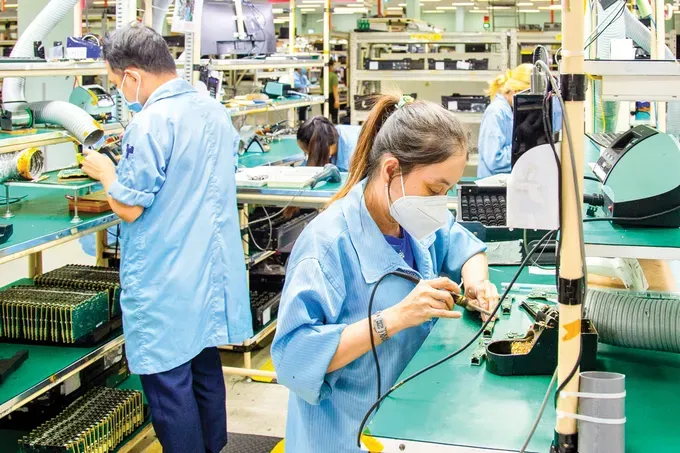
This reality indicates that the growth model based on scale expansion, processing, and low costs is gradually losing its effectiveness. As input costs rise and market standards tighten, traditional competitive advantages are being eroded, compelling Ho Chi Minh City to transition toward a growth model driven by productivity, technology, and value-added creation in order to sustain long-term growth.
From extensive to intensive growth
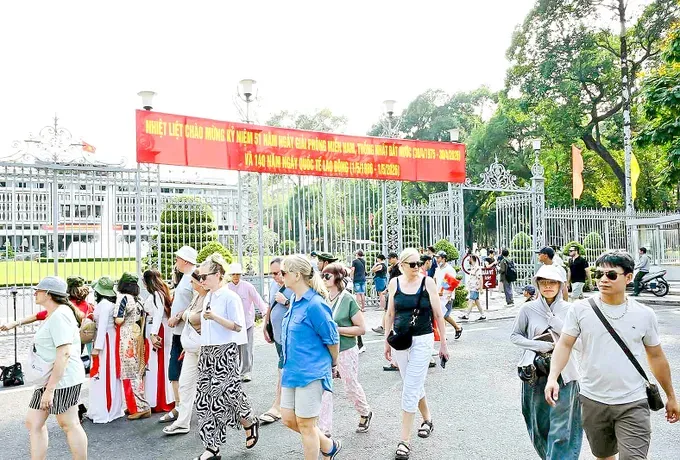
As the limitations of the traditional growth model become increasingly evident, Ho Chi Minh City is compelled to adopt a new approach that not only prioritizes rapid growth but also ensures sustainability and efficiency.
According to Mr. Nguyen Loc Ha, Standing Vice Chairman of the Ho Chi Minh City People’s Committee, this orientation is being concretized through a strategic shift toward sectors and industries with high scientific and technological content, closely associated with the digital economy and green economy.
The city is focusing on attracting investment into high-value-added segments, while simultaneously promoting technological innovation and enhancing the quality of human resources. This represents a fundamental transition from an extensive growth model to one driven by depth, productivity, and value creation.
Initial outcomes have been clearly reflected in the economic structure. The digital economy now contributes approximately 25 percent of GRDP and is targeted to reach 30–40 percent in the coming years, while high-tech industries, finance, logistics, and modern trade are increasingly assuming a leading role.
At the enterprise level, the transition in the growth model is no longer optional but has become a prerequisite for survival. As input costs continue to rise and market standards grow more stringent, businesses can no longer rely on low-value-added processing activities to sustain operations.

According to Mr. Lam Quoc Thanh, General Director of Saigon Trading Group (SATRA), enterprises are compelled to engage more deeply in the value chain—from production to distribution—rather than remaining confined to downstream stages. Reorganizing the entire value chain not only helps improve product quality but also reduces intermediary costs, thereby contributing to price stabilization and supporting consumer demand. To ensure this transformation is substantive, a critical requirement is to enhance implementation capacity.
Dr. Do Thien Anh Tuan, lecturer at the Fulbright School of Public Policy and Management, emphasized that within the same institutional framework, effective implementation can generate breakthroughs, whereas weak execution may become a bottleneck. Therefore, the city needs to concentrate resources on key priorities, assign clear responsibilities, and establish measurable performance indicators.
From a resource perspective, the challenge is no longer about mobilizing additional capital but about allocating it appropriately and using it efficiently. Mr. Nguyen Duc Lenh, Deputy Director of the State Bank of Vietnam – Regional Branch 2, noted that credit flows need to be directed toward priority value chains, particularly in clean production and high-tech sectors. When capital is channeled effectively, it not only supports growth but also accelerates the transformation process.
Overall, growth is no longer a matter of speed but of quality and efficiency. In this regard, Ho Chi Minh City’s double-digit growth target essentially reflects the imperative to restructure the economy toward greater efficiency, where governance capacity, quality of implementation, and the adaptability of enterprises play a decisive role.
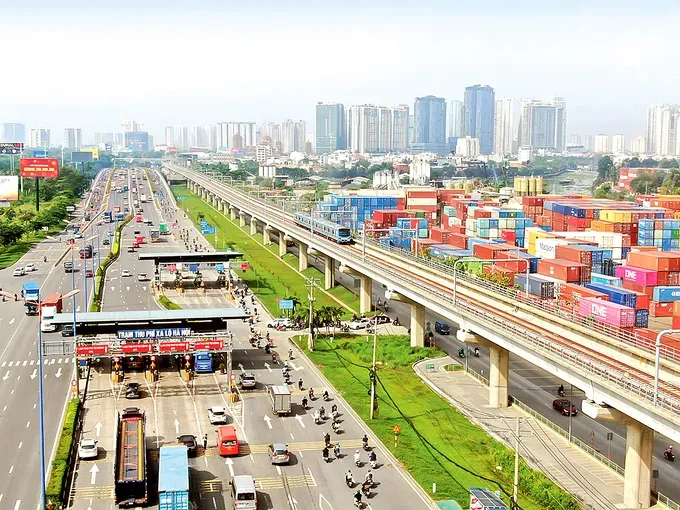
According to Dr. Vo Tri Thanh, former Deputy Director of the Central Institute for Economic Management, in order to sustain double-digit growth amid rising input costs and market volatility, Ho Chi Minh City must prioritize improving productivity and the quality of growth, rather than continuing to rely on scale expansion. The foremost solution is to support enterprises in enhancing productivity through technological innovation, digitalization of processes, and improved governance. As productivity rises, businesses can absorb part of the input cost increases, ease price pressures, and maintain their competitiveness in the market.
At the policy level, the city needs to further advance institutional reforms and improve the business environment toward greater transparency, stability, and predictability. At the same time, it should accelerate the development of digital infrastructure, foster innovation, and enhance the quality of human resources to lay a solid foundation for long-term productivity gains.
In addition, it is essential to establish mechanisms that encourage long-term investment, particularly in high-tech industries, green production, and the digital economy. When capital flows are effectively directed toward high-value-added sectors, overall growth efficiency will be significantly improved.
Mr. Le Phung Hao, Chairman of Global AAA Consulting, stated that the most critical bottleneck at present is not the lack of opportunities but the absence of a capital structure aligned with the new stage of development. As the economy transitions toward high-tech sectors, the demand for long-term capital at reasonable costs is becoming increasingly urgent, while the current financial system has yet to fully meet these requirements.
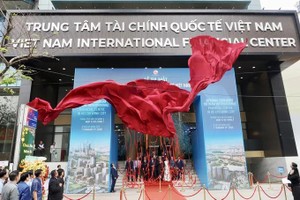
A key solution is for Ho Chi Minh City to accelerate the effective operation of an international financial center capable of connecting with global financial institutions, thereby expanding capital sources and diversifying financial instruments. The development of models such as digital finance, open banking, venture capital funds, and Mergers and Acquisitions (M&A) activities will not only address capital constraints but also enable enterprises to scale up, innovate technologically, and integrate more deeply into global value chains.
In addition, at the enterprise level, it is necessary to implement a “three-pillar strategy” to adapt to the evolving context, comprising digitalization to enhance operational efficiency, green transformation to meet market standards, and regional linkages to optimize supply chains.
According to Professor Vu Minh Khuong of the Lee Kuan Yew School of Public Policy, National University of Singapore, in order to achieve double-digit growth, Ho Chi Minh City must address the challenge of mobilizing “large-scale resources,” particularly for infrastructure, energy, data, and high-tech sectors. The current constraint, he noted, lies not merely in a shortage of capital but in the lack of sufficiently robust projects capable of absorbing and effectively directing large capital flows.
Therefore, the core solution does not rest in seeking additional funding but in enhancing the quality and structure of investment projects. The city needs to develop a portfolio of strategic projects of adequate scale, underpinned by clear, transparent, and feasible financial models, in order to build confidence among both domestic and international investors.