These days, it appears production lines inside Nidec Vietnam Factory in Saigon Hi-Tech Park are kicking into high gear to meet looming deadlines. Equipment management runs incredibly smoothly, largely thanks to a prior initiative dubbed the Advanced Manufacturing System (AMS), spearheaded by local workers.
For IT staffer Nguyen Duc Tung, the reality was that before this initiative, inventory checks ate up exorbitant time and manpower. Driven to accelerate digital transformation, his unit proactively deployed the AMS to digitize asset management via QR codes and Android devices, effectively getting the ball rolling.
Running the AMS for 10,000 devices remarkably slashed the inventory timeframe from three months down to just one, shaving off eight labor shifts per cycle. Independently developing this framework reportedly saved the firm roughly VND200 million (US$7,600) in outsourced costs.
Beyond the immediate financial upside, it significantly bolstered transparency, swiftly facilitated production, and laid a robust groundwork for internal digital transformation. Stemming directly from his daily grind, Tung teamed up with colleagues to truncate arduous manual processes, rendering the workload far less taxing at the end of the day.
Working in a highly dynamic environment, Tung meticulously researches to elevate his output. “Our company established a Ho Chi Minh Cultural Space,” he explained. Reflecting on Uncle Ho’s exemplary life, Tung reevaluates his professional approach. The President’s principles of daring to think and act pushes him to boldly pursue positive workplace changes.
This vividly demonstrates how this spirit is organically forged among laborers, genuinely impelling the workforce to proactively seek superior methods.
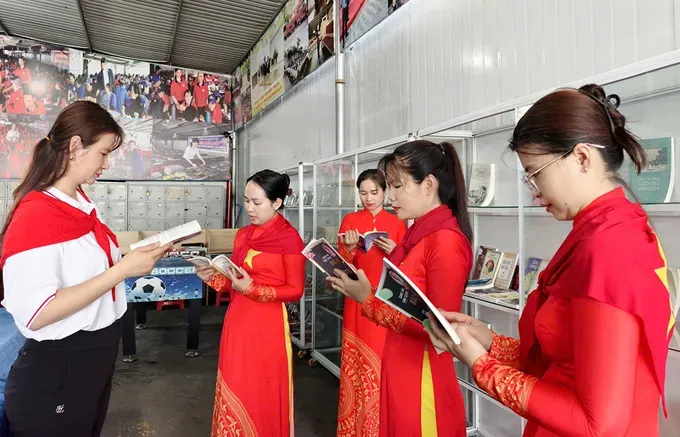
According to the company’s Labor Union Chairman Luu Kim Hong, since the space opened, a multitude of workers drop by daily to read. Folks linger to reflect on Uncle Ho’s life. It appears this venue also serves as a staging ground to execute welfare activities for disadvantaged laborers.
A similar story of laborers applying the principles of President Ho Chi Minh has been reported in HCMC. Wrapping up a grueling day on the shop floor, as workers hurriedly retreat to their rented rooms after a long shift, 35-year-old Tran Thi Truc Ly from Dong Thap Province opts to stick around for a few extra minutes. Employed in the warehouse division of Asia-Italy Door Technology Co. Ltd. in Tan Hiep Ward, she reportedly walks up to the corporate office area with a few factory pals to visit a unique spot affectionately dubbed “Uncle Ho’s corner.”
Inside this roughly 20-square-meter office, portraits of President Ho Chi Minh, the late General Vo Nguyen Giap, and the late General Secretary Nguyen Phu Trong are solemnly displayed on an altar. Even though the space is quite compact, it invariably exudes a profound sense of tranquility, wholly insulated from the rattle of machinery and the frantic pace of work outside.
Ly gently lights a few incense sticks and stands in reverent silence. For her and countless other factory employees, this isn’t merely a ritual; it’s an invaluable window to introspect after a hard day’s labor. Every time she heads up there, she feels her soul settle, prompting her to reflect much more deeply.
Adjacent to the worship zone sits a sprawling, 100-square-meter expanse dedicated to exhibiting books and archival materials chronicling Uncle Ho’s life and illustrious career. The bookshelves are meticulously organized, with dossiers and photographs neatly arranged. After clocking out, a significant number of workers consciously choose to stay behind, leafing through the pages instead of making a hasty exit.
Ly recounted that previously, getting to know vanguard leaders was largely confined to sparse reading materials. However, ever since the company carved out this Cultural Space, she and her colleagues have enjoyed far greater, more immersive access to this historical wealth.
“There’re incredibly simple anecdotes about Uncle Ho, yet reading them makes me realize I need to live and work with a heightened sense of responsibility,” she disclosed. It’s not just after clocking off; during brief interludes mid-shift, she and her coworkers frequently pop into this sanctuary. Some digest a few pages, others chat, while some merely sit in absolute silence for a few minutes to blow off steam and alleviate mounting pressures.
“Every time I step in here, I realize how much harder I need to push myself, and at the end of the day, I’m working with far more accountability and genuinely want to commit to this company for the long haul,” Ly shared.
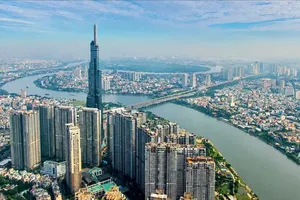
Marking half a century since the city was deeply honored to bear Uncle Ho’s name, the true yardstick for HCMC's development isn’t solely quantified by towering architectural marvels or robust economic growth metrics. Instead, it’s vividly reflected in how the Ho Chi Minh value system has firmly taken root, seamlessly morphing into pragmatic actions.
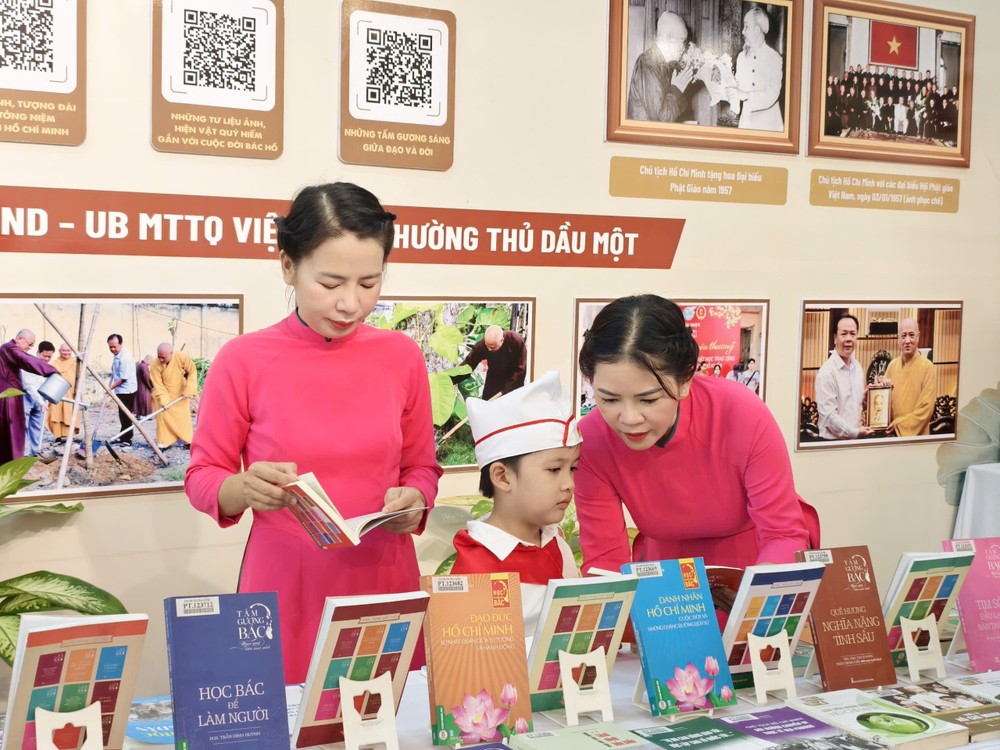
The Ho Chi Minh Cultural Space has essentially evolved into a definitive call to action, characterized by streamlined, fierce operational efficiency within the administrative apparatus. It manifests as the unwavering, subservient dedication of every single cadre, a relentless thirst for innovation at every factory workstation, and a pristine paradigm for the younger generation to emulate.
By transmuting heritage into a tangible resource and leveraging cultural prowess as a launchpad, the Party Committee, the administration, and the people of HCMC are relentlessly cementing the city’s formidable mettle as the nation’s premier locomotive.
Spirit of learning from Uncle Ho enters working life
As part of its strategic trajectory to cultivate the Ho Chi Minh Cultural Space through 2030, HCMC unequivocally emphasizes the imperative to tightly intertwine the assimilation and emulation of Ho Chi Minh’s ideology, morality, and lifestyle with the political mandates, daily routines, and civic lives spanning every agency, unit, and locality.
Not merely stopping at superficial propaganda campaigns, the city is fiercely determined to disseminate stellar practices, highly effective models, and paragons of inventive labor who dare to think and dare to act across a myriad of sectors. This sweeping initiative encompasses everyone from cadres, intellectuals, and artists down to the factory stalwarts manning industrial floors.
Ultimately, HCMC has set its sights on ensuring that studying and following Uncle Ho ceases to be a string of hollow, token slogans, but instead organically crystallizes into an integral facet of every citizen’s mindset, work methodology, and daily conduct, ensuring the Ho Chi Minh Cultural Space breathes life right into their everyday existence.