Since the first congress of the Ho Chi Minh City Party Committee for the term 2025-2030, Ho Chi Minh City has recorded clear progress across multiple sectors, laying a critical foundation for achieving double-digit growth and meeting its 2026 state budget revenue targets.
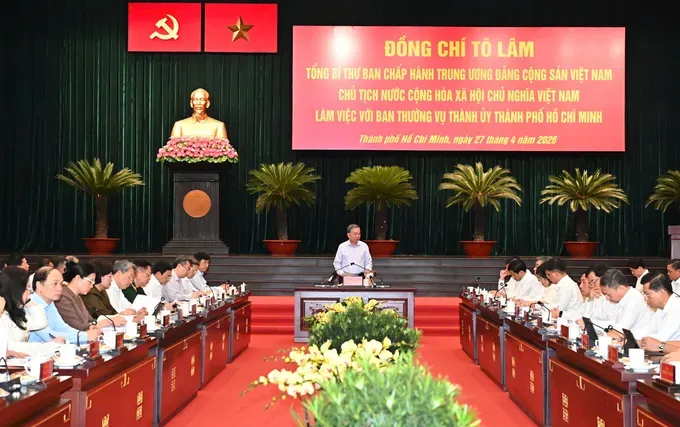
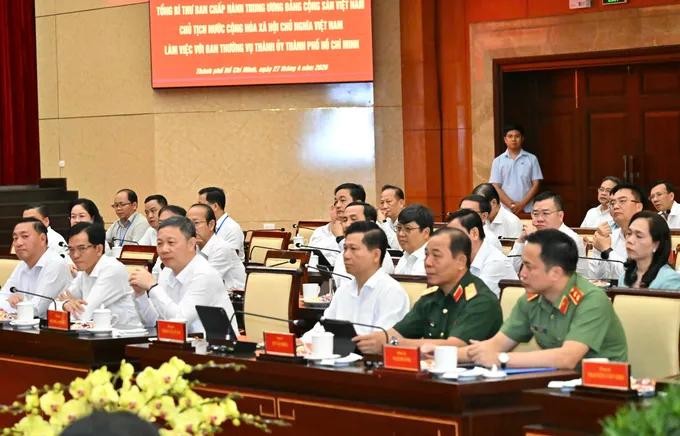
On the afternoon of April 27, General Secretary and State President To Lam, along with a central delegation, held a working session with the Standing Committee of the Ho Chi Minh City Party Committee.
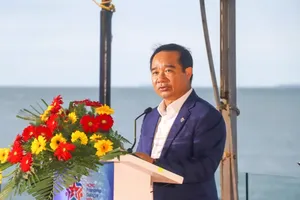
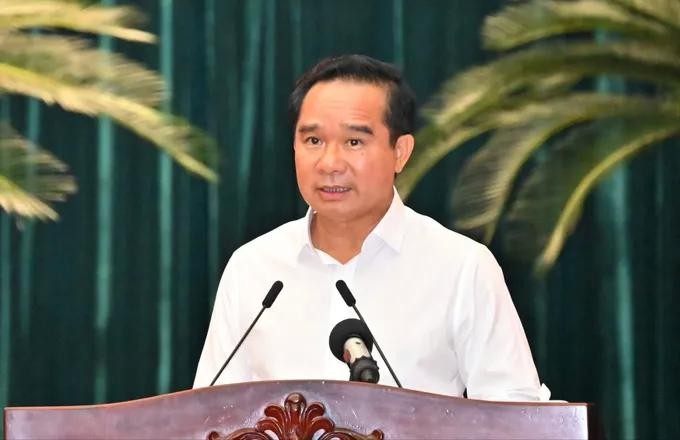
Presenting the report at the meeting, Chairman Nguyen Van Duoc of the Ho Chi Minh City People’s Committee affirmed that the Standing Committee has identified double-digit growth as a strategic objective.
Accordingly, from the beginning of the year, the city’s Party Committee issued directives outlining key tasks and solutions for the 2026–2030 period, requiring synchronized implementation across the entire political system, tied to leadership accountability and established principles.
On that basis, the municipal People’s Committee has rolled out a plan to drive double-digit growth, focusing on three main pillars including investment, consumption, and exports. At the same time, he revealed that the city is leveraging new growth drivers such as science and technology, innovation, digital transformation, and green transition. The plan clearly assigns responsibilities and sets monthly and quarterly quantitative targets, including accountability for agency heads.
In addition, according to the Chairman, the city has also moved decisively to implement tasks assigned by the Party chief and State President, including expanding green spaces and parks, accelerating land clearance compensation for the Thu Thiem New Urban Area, and issuing and implementing a resolution on building a drug-free city.
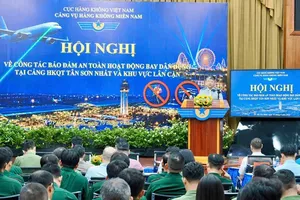
In parallel, the city has acted on directives to reduce travel time between Ho Chi Minh City and Long Thanh International Airport to 30 minutes. Specifically, it is accelerating the development of an urban railway line connecting Tan Son Nhat Airport with Long Thanh Airport.
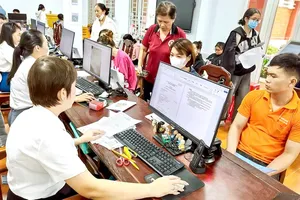
According to the city’s People’s Committee Chairman, the two-tier local government model is operating smoothly, ensuring greater efficiency in serving residents and businesses.
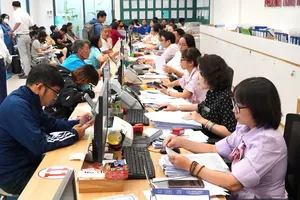
To address the imbalance of staff shortages and surpluses, the city has reassigned personnel across localities and strengthened grassroots staffing, focusing on training key officials in urban management, finance, land administration, and healthcare. Public administrative service centers from the grassroots level to the city have effectively handled administrative procedures beyond jurisdictional boundaries.
The city has also invested more than VND2 trillion (US$75.9 million) in digital infrastructure and data strategy to enhance development efficiency.
The Chairman of the Ho Chi Minh City People’s Committee reaffirmed that Ho Chi Minh City remains steadfast in its pursuit of growth through comprehensive and coordinated solutions. The city aims to mobilize total social investment equivalent to 30 percent–40 percent of GRDP, ensuring both substance and sustainability.
The city is targeting a 100 percent disbursement rate for its 2026 public investment plan. At the same time, it is working to unlock and mobilize additional investment resources, with a focus on resolving bottlenecks in compensation and site clearance, and accelerating the launch and implementation of key projects funded by public investment, private capital, and foreign direct investment (FDI).
Moreover, he said that Ho Chi Minh City is also stepping up the rollout of social housing programs, aiming to complete 28,500 units in 2026, with priority given to rental housing to better meet demand across different population groups.
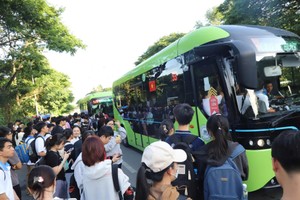
In particular, the city is prioritizing urgent directives issued by To Lam, including efforts to ease traffic congestion, tackle flooding, improve environmental quality, and build a drug-free city. It is also implementing a policy of free bus services to reduce reliance on private vehicles, thereby helping to alleviate congestion and curb environmental pollution.
The city’s leadership emphasized that, with synchronized measures and strong political resolve, Ho Chi Minh City is determined to achieve double-digit growth, laying a solid foundation for a new phase of development.
In the first quarter of 2026, the economic and social situation in Ho Chi Minh City showed positive results. Specifically, the Gross Regional Domestic Product (GRDP) increased by 8.27 percent (8.57 percent excluding crude oil), marking the highest growth in a decade. The total social investment capital reached over VND141.7 trillion (an increase of 10.7 percent); the total retail sales of goods and service revenue rose by 13.3 percent; and the Industrial Production Index (IIP) grew by 11 percent.
The city has initiated several large projects with a total investment of nearly US$20 billion. At the same time, it has resolved issues for 831 out of 838 projects, with a total capital exceeding VND205 trillion, thereby releasing significant resources for development.