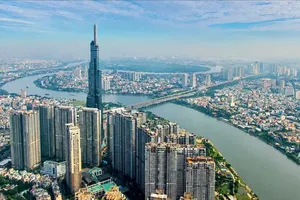
Ho Chi Minh City is planning to launch a specialized maritime financial hub to retain billions of US dollars in shipping transactions currently lost to other regional rivals, officials and experts said.
The planned maritime finance center will be integrated into the Vietnam International Financial Center in Ho Chi Minh City (VIFC-HCMC), aiming to capture capital from an expanding network of local mega-ports.
A leap in maritime infrastructure
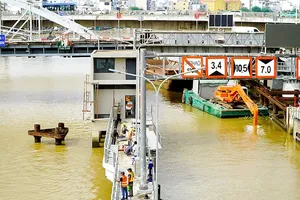
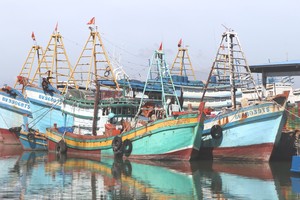
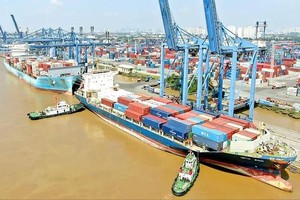
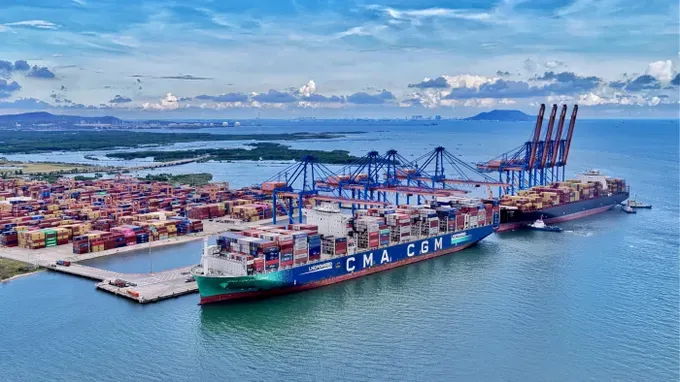
Ho Chi Minh City is entering a new era of the maritime economy with several mega-port projects underway. These projects will lay the groundwork for the city to become a regional logistics and international maritime hub. Key developments include the Can Gio International Transshipment Port, Cai Mep Ha, and Gemalink Phase 2. Together, they will form a massive ecosystem of deep-water ports, logistics, and shipping.
The Southeast Asian country’s city recently approved an investor for the Can Gio International Transshipment Port, marking a major turning point for the maritime industry in Ho Chi Minh City and Vietnam. This strategic project features a 7.5-kilometer pier capable of handling 16.9 million TEUs by 2047 and accommodating container ships up to 250,000 tons. Meanwhile, Gemadept has commenced Gemalink Phase 2 with an investment of nearly VND13.8 trillion to expand deep-water port capacity in the Cai Mep - Thi Vai cluster.
Do Cong Khanh, Deputy General Director of Gemadept, stated that Phase 2 will raise total capacity to 3 million TEUs per year. This expansion will meet rising cargo demands and attract transshipment flows from neighboring countries.
In parallel, the 351-hectare Cai Mep Ha project, valued at over VND50 trillion, will serve as an international gateway logistics hub for the Southern region. From 2026 to 2030, Ho Chi Minh City also plans to deploy a series of port and logistics projects, including ICD Long Binh, Long Son General Port, Vung Tau International Passenger Port, and specialized logistics centers.
VIFC-HCMC to launch maritime finance ecosystem
Logistics experts and shipping companies agree that as the port system reaches an international scale, the next step is building a regional maritime finance center in Ho Chi Minh City. This center will integrate financial services, marine insurance, international payments, shipbroking, maritime arbitration, and global supply chain transactions.
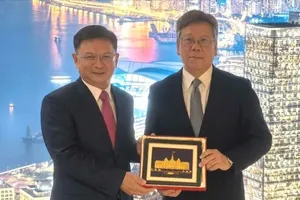
Nguyen Huu Huan, Vice Chairman of the VIFC-HCMC Executive Agency, noted that the total value of goods passing through the Ho Chi Minh City port system exceeds US$1 trillion annually. However, 80 percent to 90 percent of the financial transactions for these goods take place in Singapore and Hong Kong (China).
The maritime finance center under VIFC-HCMC aims to retain this cash flow, targeting the return of 30 percent of overseas transactions equivalent to US$300 billion annually to Vietnam within the next five years. To achieve this, VIFC-HCMC will launch a maritime financial ecosystem on May 21, featuring a maritime finance trading floor with participation from logistics firms, ports, banks, and international corporations.
Addressing why Vietnam has not yet become a "capital transshipment port" for the maritime economy, VIFC-HCMC Executive Agency Vice Chairman Nguyen Huu Huan pointed to two major bottlenecks: foreign enterprises hesitate to transact entirely under Vietnamese law, and capital flow restrictions cause delays due to reporting requirements with the State Bank of Vietnam.
Nonetheless, it is anticipated that both of these obstacles will be addressed once the Vietnam International Financial Center (VIFC) is fully operational. Specifically, the establishment of an international court and an international arbitration center will offer foreign partners the legal guarantees necessary to conduct their operations with assurance.