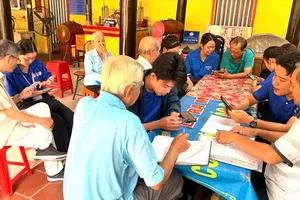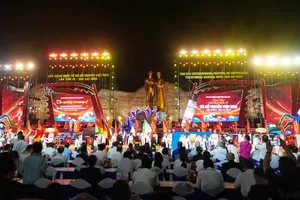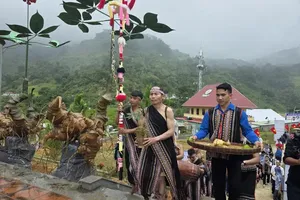
On April 17, at the Vietnam National Village for Ethnic Culture and Tourism, the Ministry of Culture, Sports and Tourism held a national conference to implement ethnic cultural work for 2026, set orientations for the 2026–2030 period, and honor outstanding village elders, community leaders, artisans, and reputable figures.
The conference was attended by representatives of all 54 ethnic groups from 34 provinces and cities, along with artisans, village elders, and community leaders—the key custodians who directly practice and transmit cultural heritage. The event also served to recognize and honor their sustained contributions to preserving the cultural lifeblood within communities.
In her opening remarks, Deputy Minister Trinh Thi Thuy said the 14th National Party Congress and Politburo Resolution No. 80-NQ/TW reaffirm the role of culture not only as the spiritual foundation of society but also as a vital resource driving socio-economic development in the new era.
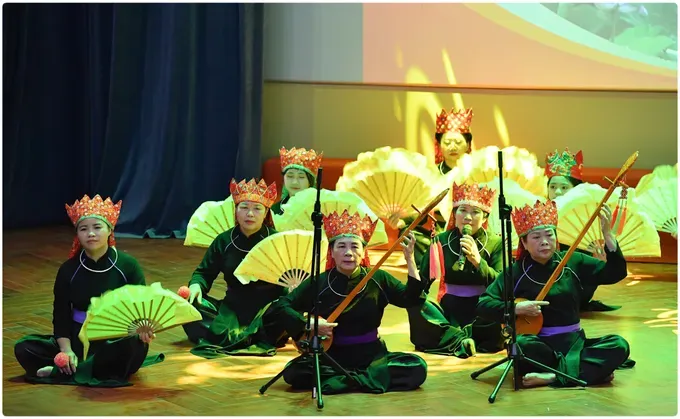
Ethnic minority cultures, she noted, are identified as a key pillar both preserving and promoting national cultural identity and serving as a driver for sustainable socio-economic growth. This is a major orientation of the Party and State and a central task for the country as a whole, as well as for the culture, sports and tourism sector.
The conference reviewed results for the 2021–2025 period and engaged in in-depth discussions to propose solutions for preserving and promoting heritage in the coming years, with an emphasis on linking preservation to sustainable development, especially as the country targets high growth.
Delegates noted that over the past five years, ethnic cultural work has achieved positive results but continues to face significant challenges. Many cultural values are at risk of fading; investment resources remain limited; and grassroots personnel are insufficient and lack specialized expertise. Some localities still face difficulties in implementation, with ineffective integration of resources and slow progress in certain areas.
For the 2026–2030 period, the sector will focus on improving institutions and policies, accelerating digital transformation, developing cultural products linked to tourism, preserving languages, customs, and indigenous knowledge, and strengthening the role of communities in safeguarding and promoting heritage. Major initiatives combining cultural preservation with economic development and digital-based cultural education will also be developed.
The conference agreed that preserving and promoting the cultural values of ethnic minorities are not only about safeguarding identity but must also become an internal resource and a form of national soft power. Accordingly, preservation efforts should be closely linked with tourism and the cultural economy to create sustainable livelihoods and directly improve the material and spiritual well-being of ethnic communities.
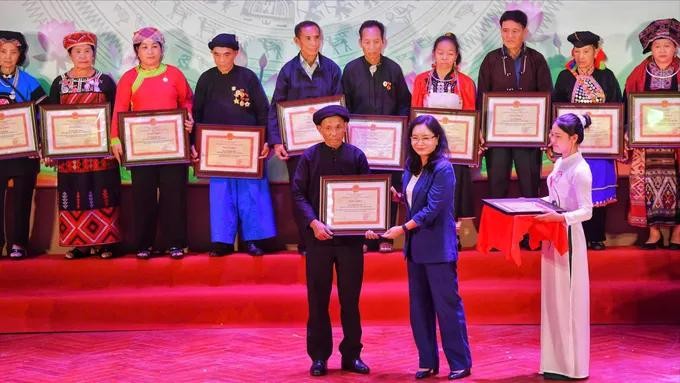
On this occasion, many village elders, community leaders, artisans, and reputable individuals were commended and recognized for their contributions to preserving, transmitting, and promoting the traditional cultural values of Vietnam.