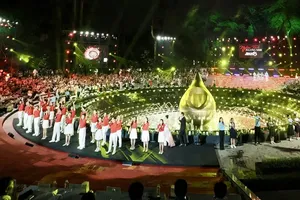
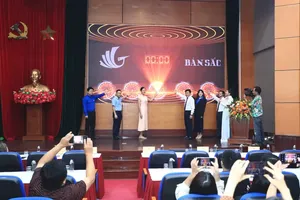
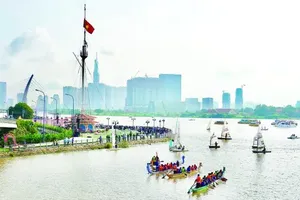
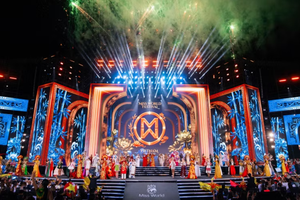
This favorable foundation is expected to help shape a new engine of growth for the city in the coming period.
Cultural industries in the creative economy
In recent decades, alongside the advancement of the knowledge-based economy and digital technologies, the concept of the creative economy has been increasingly emphasized in the development strategies of many countries. Unlike traditional economic models, which primarily rely on natural resources or low-cost labor, the creative economy is driven by ideas, knowledge, talent, and human creativity.
Within this framework, products and services are generated not only from tangible resources but also from cultural values, intellectual capital, and intellectual property.
Within the framework of the creative economy, cultural industries are regarded as one of its core components. Sectors such as film, music, performing arts, design, advertising, publishing, media, and video games not only meet society’s cultural and entertainment demands but also generate substantial economic value through creative markets and digital content.
A distinctive feature of these industries lies in their value creation. Rather than being primarily derived from tangible materials, the value of their products is largely embedded in creative ideas and intellectual property. This enables scalability and facilitates widespread distribution across global markets.
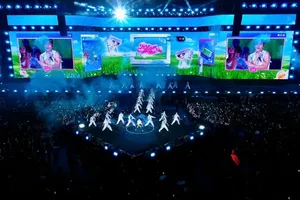
Global practice shows that cultural industries have become an important economic pillar across numerous nations. In the United States, the film and entertainment industry, centered in Hollywood, generates substantial revenue and exerts far-reaching influence on global culture. In South Korea, a strategic focus on developing cultural content industries—such as music, film, television, and video games—has given rise to the “Hallyu Wave,” enabling the country’s cultural products to expand strongly into international markets. Meanwhile, in the United Kingdom, creative industries, including design, advertising, fashion, and media, have emerged as some of the fastest-growing sectors of the economy.
These experiences demonstrate that when organized and developed in accordance with market principles and technological advancements, cultural values can be transformed into significant economic resources. In addition, this transformation contributes to enhancing soft power and strengthening the national and urban image on the global stage.
Ho Chi Minh City holds substantial potential
As cultural industries emerge as a key driver of the creative economy, Ho Chi Minh City stands out as a hub with highly favorable conditions for sectoral development.
First and foremost, the city represents the largest cultural market in the country. Its substantial population size, youthful demographic structure, and steadily improving living standards have generated diverse and growing demand for cultural and entertainment activities. From film, music, and performing arts to cultural events, exhibitions, design, and digital content, the city’s cultural market remains vibrant and demonstrates strong consumption capacity. This provides a critical foundation for cultural activities not only to flourish creatively but also to evolve into commercially viable industries.
In addition to its strong market foundation, Ho Chi Minh City serves as a central hub for a wide range of creative sectors. The majority of the country’s film studios, advertising agencies, media companies, design studios, publishing houses, and major digital content producers are concentrated in the city.
The city also brings together a large community of artists, designers, content creators, and a vibrant cohort of young creative talents. This convergence has fostered a dynamic ecosystem that is highly conducive to the production, distribution, and consumption of cultural and creative products.
The Prime Minister issued Decision No. 2486/QD-TTg in 2025, approving the Strategy for the Development of Vietnam’s Cultural Industries to 2030, with a vision to 2045. Under this strategy, Vietnam identifies 10 priority cultural industry sectors for development, including film, fine arts, photography, and exhibitions; performing arts; software and entertainment games; advertising; handicrafts; cultural tourism; creative design; television and radio broadcasting; and publishing.
These sectors represent a convergence of culture, creativity, technology, and intellectual property, with strong potential to generate high-value-added products and services. The strategy sets a target for cultural industries to contribute approximately 7 percent of GDP by 2030, with this figure projected to rise to around 9 percent by 2045.
In addition, the strategy outlines the development of a comprehensive cultural industry ecosystem, in which creative, production, distribution, and consumption activities are interconnected through market mechanisms and technological platforms.
Another important factor lies in the city’s increasingly developed media and creative ecosystem. Ho Chi Minh City serves as a center for numerous press agencies, media platforms, and content technology companies. The growing interconnection among media, advertising, entertainment, design, and technology sectors is creating an open creative space where cultural ideas can be transformed into economically valuable products and services.
Notably, the expansion of the digital economy and technological platforms is opening up new opportunities for the city’s cultural industries. Fields such as digital content, video games, online video production, creative design, and digital media are experiencing rapid growth, giving rise to entirely new modes of cultural production and distribution. Leveraging digital technologies, cultural products are no longer confined to local markets but can increasingly reach regional and global audiences.
New policy approaches
To enable cultural industries to truly become a driving force of the creative economy, Ho Chi Minh City needs to adopt new policy approaches. First and foremost, it is necessary to develop a comprehensive cultural industry ecosystem, ensuring close linkages among creative, production, distribution, and consumption activities.
In addition, greater attention should be given to the development of creative spaces and cultural industry clusters within the urban landscape. Areas with advantages in science, technology, and education can be shaped into hubs for innovation and content industries; coastal zones may integrate cultural industries with tourism and cultural-entertainment events, while newly developed urban-industrial areas can foster integrated cultural and creative complexes serving local communities.
Additionally, the convergence between cultural industries and the digital economy is expected to generate new growth opportunities for sectors such as digital content, video games, online media, and creative design.
Particularly important is the continued refinement of policies related to copyright, intellectual property, and investment attraction in creative sectors.
Leveraging its strengths in market scale, a dynamic creative workforce, and a well-established media–technology ecosystem, Ho Chi Minh City has significant potential to advance its cultural industries. With appropriate policy orientation and the development of a coherent and effective creative ecosystem, these industries can be further nurtured and expanded.
Beyond enriching urban cultural life, cultural industries are capable of generating substantial economic value, fostering innovation, and enhancing the city’s competitiveness in the context of global integration.