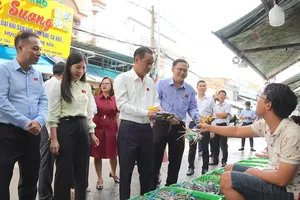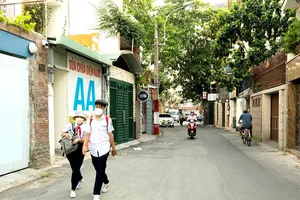
On a vibrant Sunday morning, a narrow alleyway on Doan Nhu Hai Street (Xom Chieu Ward) was echoing with the lively chatter of early risers collaboratively sweeping and sanitizing the streets.
“We dedicate our weekend mornings to comprehensively cleaning the alleys, treating it as a physical exercise while simultaneously fostering a green, pristine, and aesthetically pleasing living environment,” shared Nguyen Thi Hang, Head of the Frontline Work Committee of Neighborhood No.1.
Standing comfortably and confidently right beside her were her two beloved, officially adopted Lao student sons. Unless explicitly informed by a local resident, very few casual observers would ever accurately recognize these two industrious individuals as visiting international university students originating from neighboring Laos.
This seamless integration was wonderfully evident as the two energetic young men conversed astonishingly fluently and cheerfully in Vietnamese with the accompanying neighborhood elders while they were diligently sweeping the scattered autumn leaves.
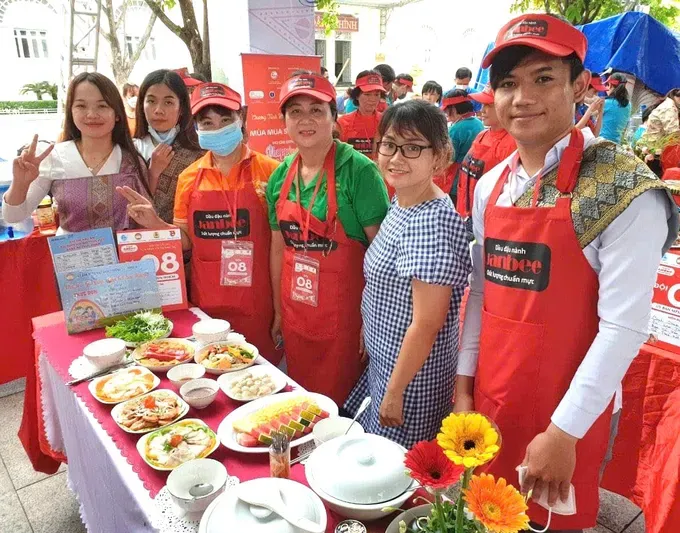
Beyond growing accustomed to the sight of Lao students partaking in street clean-ups, numerous alley residents frequently observe these youths gathering in Ms. Hang's cozy kitchen to collaboratively prepare traditional Vietnamese and Lao delicacies. Joyful laughter and animated conversations constantly emanate from this warm culinary space. Stemming from these intimate family meals, Ms. Hang and her adopted Lao children have even participated in various culinary competitions, successfully securing prestigious awards.
Beyond merely growing accustomed to the familiar, heartwarming sight of dedicated Lao students enthusiastically partaking in these communal street clean-ups, numerous alley residents frequently observe these energetic youths happily gathering within Ms. Hang’s cozy and invitingly warm kitchen. There, they collaboratively prepare a delightful array of aromatic, traditional Vietnamese and Lao culinary delicacies. Joyful laughter and engaging conversations constantly emanate from this wonderfully warm, fragrant culinary space.
Stemming directly from these culturally enriching family meals, Ms. Hang and her adopted Lao children have even participated in various highly competitive local culinary competitions, successfully securing numerous prestigious awards.
Ms. Hang’s household is among those prominently participating in the aforementioned program, meticulously organized by the Vietnam Fatherland Front Committee – HCMC Branch. Initially adopting two Lao students, she subsequently welcomed four additional foster children, citing their endearing nature and commendable diligence as reasons she simply could not refuse.
Alongside her six Lao student children, Ms. Hang noted that they occasionally invite friends over, expanding their familial dining table to comfortably accommodate up to 20 individuals. Notably, every student affectionately addresses Ms. Hang as “Mother.”
Ms. Hang recounted that upon their initial arrival, the children were understandably disoriented, unfamiliar with the Vietnamese language, and unaccustomed to local customs and traditions. So whenever neighborhood events transpired, she proactively created favorable conditions, highly encouraging their active participation in diverse activities ranging from environmental sanitation, artistic performances, and culinary contests to charitable endeavors and excursions to historical and cultural relics.
In a similar story, within the modest residence of Pham Thi Bich Ly, situated in Cho Quan Ward, laughter and profound joy are continuous during weekends, holidays, and birthdays. Local residents have grown thoroughly accustomed to the heightened excitement radiating from Ms. Ly’s home every weekend when her adopted Lao children visit. For these appreciative international students, Ms. Ly’s household truly constitutes a deeply affectionate “second home.”
Beyond dedicating time to escorting her children on recreational trips and educational visits to various fascinating municipal museums and historical sites, Ms. Ly also intimately introduces them to her extended relatives. She actively engages in empathetic dialogues concerning their academic pursuits and personal lives, thereby significantly bolstering their communicative confidence and providing heartwarming reassurance through her constant parental care and encouragement.
To Bin, a Lao student currently enrolled at Pham Ngoc Thach University of Medicine, Ms. Ly embodies a profoundly warm maternal figure. She consistently inquires about his academic progress, physical well-being, and personal sentiments regarding his rigorous studies and clinical internships. Her continuous encouragement and sagacious guidance empower Bin and her other adopted children to remain exceptionally resilient while living far from their homeland.
Ms. Ly also frequently collaborates with her foster children to meticulously prepare nutritious meals and hearty soups, personally delivering them to the doorsteps of solitary and disadvantaged elderly residents.
Lao student Souknilanh Phoutthasak, also studying at Pham Ngoc Thach University of Medicine, disclosed that throughout his academic tenure and residency in HCMC, he has continually received unwavering care, substantial assistance, and genuine affection from Vietnamese host families.
Warm meals brimming with laughter and simple yet profoundly affectionate words of encouragement have remarkably alleviated the students’ homesickness. “I deeply feel that Vietnam has truly become my beloved homeland,” Souknilanh Phoutthasak expressed with visible emotion.
During the 2021-2025 period, an impressive 289 Vietnamese families graciously adopted 385 Lao students and 88 Cambodian students pursuing their higher education in HCMC. According to Standing Vice Chairwoman Truong Thi Bich Hanh of the Vietnam Fatherland Front Committee – HCMC Branch, this initiative stands as a preeminent model within the city’s grassroots diplomatic endeavors.
The program’s most substantial efficacy lies in cultivating an optimal environment for Lao and Cambodian students to authentically experience the daily routines of Vietnamese families. This profound immersion successfully forges enduring connections, comprehensively nurturing the students’ emotional well-being, psychological resilience, and capacity for affection while they are studying far from their families and native countries.