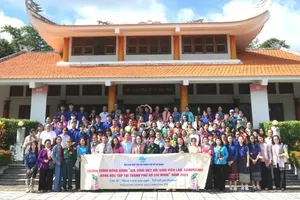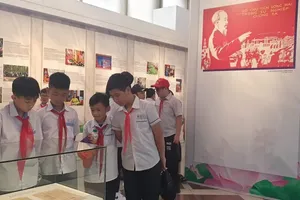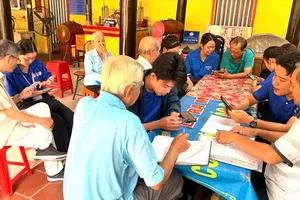
Continuing its remarkable, educational series of deeply engaging activities in the vibrant month of March 2026, the renowned War Remnants Museum has recently launched two profoundly impactful mobile exhibitions at various bustling local schools across HCMC.
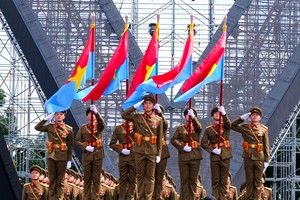
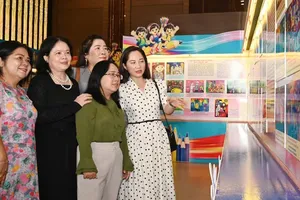
These captivating educational events include the thematic, highly detailed display titled “The Soldier of Today” at Nguyen Van Lich Primary School located in Linh Xuan Ward. Simultaneously, the museum introduced the deeply moving exhibition titled “The Vietnamese Women’s Ao Dai Through the Hardship of War” at Duong Van Thi High School situated in Tang Nhon Phu Ward.
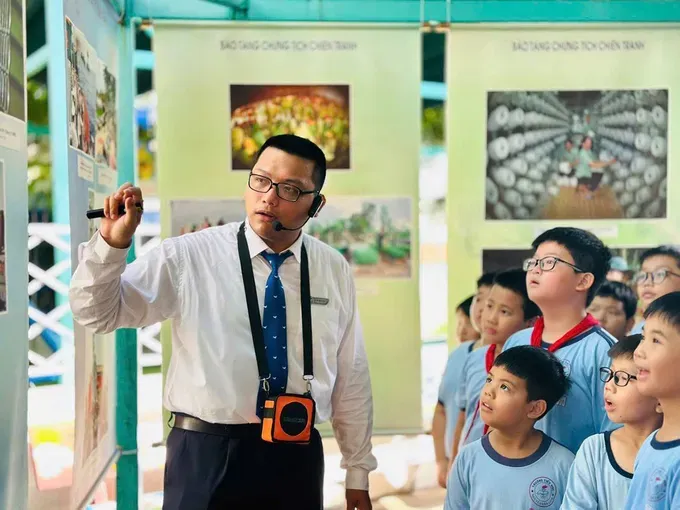
Ordinary, everyday schoolyards and familiar, brightly lit classrooms have miraculously transformed into immersive venues specifically designed for absorbing vivid, multifaceted historical narratives. This transformation is achieved through the careful presentation of powerful, evocative images, preserved historical artifacts, and the passionate, deeply knowledgeable recounting provided by very dedicated museum staff members.
This deliberate shift in the traditional educational context has undeniably generated a unique, magnetic appeal. It successfully enables curious young students to absorb complex historical knowledge much more effortlessly and enthusiastically compared to conventional, often quite rigid classroom learning methods utilized in standard academic environments.
A representative from Nguyen Van Lich Primary School noted that the “The Soldier of Today” exhibition delivered relatable and genuinely inspiring content. This information actively helped eager students to better understand the vital, modern roles and the heavy, essential duties of the brave armed forces during harmonious, peaceful times.
The young children not only significantly broadened their comprehension of national defense but also successfully nurtured a deep, unwavering patriotism. The special event fostered a strong, unifying national pride and a heartfelt gratitude for the quiet, unseen historical sacrifices.
In Duong Van Thi High School, the exhibition titled “The Vietnamese Women’s Ao Dai Through the Hardship of War” evoked a genuinely emotional resonance among students regarding the rich, complex history and resilient culture of Vietnam.
The powerful, enduring image of the traditional Ao Dai, a globally recognized, elegant symbol of traditional feminine beauty that contrasted sharply against the harsh, unforgiving, devastating backdrop of brutal war vividly depicted the unbelievable resilience, quiet strength, and fierce indomitability of ordinary Vietnamese women.
Although the formal, structured program has successfully concluded, its powerful and emotional echoes still linger beautifully through every single recounted story and every unforgettable image. The thoughtfully displayed, carefully chosen content not only aids the maturing students in comprehensively understanding their own complex history but also actively awakens a highly conscious, deeply rooted appreciation for lasting, global peace. This is naturally accompanied by a strong realization of the responsibility to preserve national cultural values.
Museum activities have traditionally been rather subdued. This stems partly from the specific nature of this medium, which requires viewers to possess a certain degree of interest, patience, and a desire to learn. Consequently, bringing museums closer to students, the cultural public of the future, is regarded as a strategic trajectory.
Going beyond mere knowledge transmission, mobile exhibitions also contribute to shaping the cultural taste of the younger generation. From these initial experiences, students can develop an intrinsic need to explore museums and heritage in the future, thereby forging a new demographic of audiences who are knowledgeable, engaged, and appreciative of historical values.
HCMC currently boasts the highest number of Level-I public museums nationwide (with 7 out of 9 meeting the standard). Innovating the approach to the public is both an intrinsic necessity and a response to societal demands. No longer limited to a preservation function, museums have proactively disseminated heritage values, integrating exhibition content into the daily lives of citizens. The mobile museum concept stands as one of the most effective solutions to this end.
Given the positive indicators from these mobile exhibition programs, it’s highly anticipated that this model will be further replicated in the near future. When that happens, every school will become a cultural hub, a place where history is recounted in a vibrant and relatable manner.
From these very hubs, a love for heritage and national pride will be seeded, growing sustainably within the younger generation, who will continue to preserve and promote the country’s historical and cultural values in the future.
On a broader scale, mobile exhibitions are also integral to the development process of HCMC’s cultural industry. When heritage is appropriately harnessed and propagated, the museum serves not merely as a repository of the past but also emerges as a dynamic resource for creativity, education, and tourism.
“When granted early access to museum spaces, young people will gradually form the habit of exploring history and culture in a proactive and profound manner.”
Chairwoman Le Tu Cam of the HCMC Cultural Heritage Association