At a working session on April 15 with Inspection and Supervision Delegation No. 11 of the Politburo and the Secretariat, Ho Chi Minh City authorities proposed a series of governance reforms aimed at improving administrative efficiency and supporting long-term economic growth.

The session focused on the organization and operation of local government agencies under the two-tier local government model, the implementation of Politburo Resolution No. 57-NQ/TW, and strategies to achieve average GDP growth of more than 10 percent during the 2025–2030 period.
Reporting at the conference, Permanent Deputy Secretary of the Ho Chi Minh City People’s Committee Party Committee Nguyen Thanh Xuan said the city’s administration had demonstrated proactive and flexible leadership in implementing urban governance reforms and expanding decentralization linked to accountability.
The city also proposed that the central government allow Ho Chi Minh City to pilot special administrative-economic units at the grassroots level to replace the traditional commune-level model in selected areas. The proposed model would operate under a “city within a city” framework.
According to the proposal, these units would not only perform state management functions at the local level but also operate under flexible economic and urban governance mechanisms with broader decentralization, stronger autonomy, and more advanced institutional frameworks to attract investment and boost growth.
In addition, Ho Chi Minh City requested greater authority in determining staffing levels for officials, civil servants and public employees paid from the state budget. The city argued that staffing allocations should be based on actual workload, population size, security requirements and the city’s budget capacity.

Ms. Pham Thi Thanh Hien, Director of the city’s Department of Internal Affairs, said that current staffing regulations for communes and wards remain inadequate. Under existing rules, wards are capped at 70 staff positions while communes are limited to 50. However, many wards in Ho Chi Minh City have populations exceeding 50,000 residents, while some communes, such as Ba Diem and Dong Thanh have populations of more than 200,000 people.
As a result, many local officials and civil servants are overwhelmed with heavy workloads and often have to work day and night, she said.
Vice Chairman of the Ho Chi Minh City People’s Committee Nguyen Manh Cuong added that the city has been actively restructuring its civil service workforce but emphasized that the process requires a long-term roadmap. He noted that the central government has recently approved increases in the number of vice chairpersons at commune-level People’s Committees and deputy heads of divisions, while the city is also proposing the reclassification of certain communes into wards to meet urban development needs.
Speaking at the working session, Mr. Nguyen Hong Linh, Deputy Head of Inspection and Supervision Delegation No. 11, acknowledged the city’s proactive approach and praised its efforts in implementing central government resolutions and directives.

Regarding personnel arrangements, he stressed the need for Ho Chi Minh City to build a workforce capable of meeting new development demands, especially in leadership, technology, data, finance, and urban management. He also urged the city to continue reviewing and restructuring its workforce to ensure the right people are assigned to the right positions based on expertise and capability.
The delegation also recognized the city’s concerns regarding staffing quality and quantity in densely populated communes and wards under the new two-tier local government model. According to the delegation, further research is needed to develop suitable mechanisms ensuring efficient governance for a special urban center like Ho Chi Minh City.
Positive results in digital transformation
Ho Chi Minh City also reported significant progress in digital transformation. Currently, 100 percent of official documents exchanged among administrative agencies are processed electronically. Online public service applications account for more than 88 percent of total dossiers, while the on-time resolution rate has reached 99.54 percent.
Citizen and business satisfaction levels have risen to 96.31 percent. The city has proposed cutting approximately 36 percent of administrative procedures, equivalent to 530 out of 1,487 procedures, while reviewing an additional 432 procedures for digital data integration.
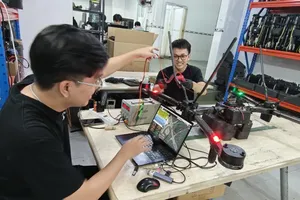
The city continues to rank second nationwide in the Provincial Innovation Index (PII), with its startup ecosystem accounting for 44 percent of the country’s startup investment capital. Authorities are also prioritizing strategic sectors such as artificial intelligence, semiconductors, big data, and unmanned aerial vehicles (UAVs).
In parallel, the city is strengthening intellectual property activities and promoting collaboration among government, businesses and academic institutions to attract high-tech investment.

Ho Chi Minh City aims to achieve annual GRDP growth of 10 percent to 11 percent during the 2026–2030 period. To achieve this target, the city plans to focus on three major growth drivers: boosting investment, domestic consumption, and exports; developing the digital economy and key industries such as semiconductors, AI, fintech, marine economy, and cultural industries; and accelerating institutional reform, governance capacity and high-quality human resource development for eight strategic sectors.

The city also identified institutional reform and governance innovation as key breakthroughs, including the effective implementation of National Assembly Resolutions 98 and 260, as well as pilot models for “Autonomous Urban Areas” and regulatory sandbox mechanisms for emerging technologies.
Authorities pledged to reduce at least 30 percent of administrative procedures and compliance costs for businesses. By April 2026, the city had resolved or established solutions for all 838 delayed projects, helping unlock more than VND206 trillion (US$7.8 billion) in investment capital.


















)




