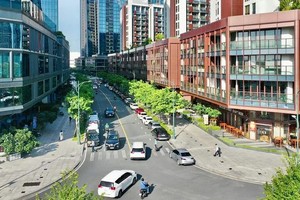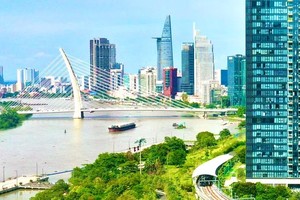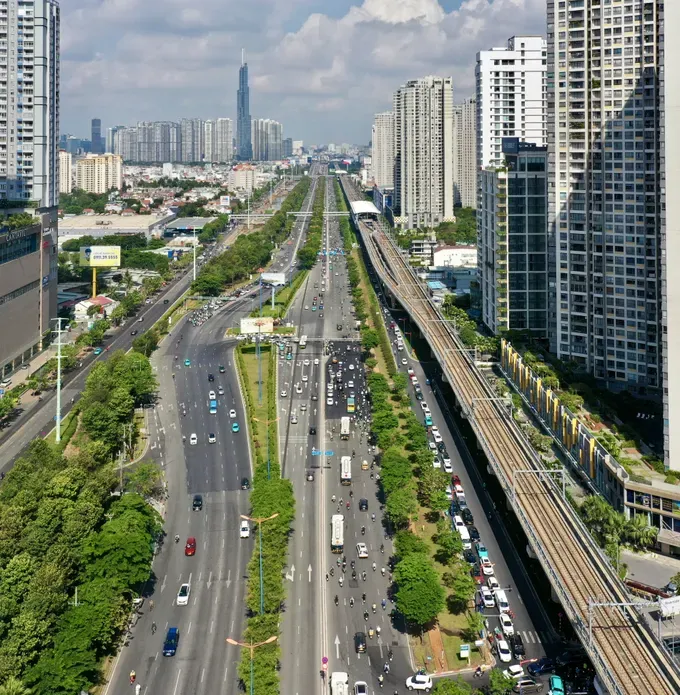
Under the plan, by 2050, Ho Chi Minh City is expected to become one of the world’s top 100 cities in terms of quality of life, while maintaining its distinctive identity and serving as a major center for the economy, finance, trade, services, logistics, tourism, education, healthcare, and science and technology. The city will develop into a multi-center megacity featuring synchronized and modern infrastructure, smart governance, and effective adaptation to climate change.
Regarding preliminary development projections, Ho Chi Minh City is expected to achieve an average GRDP growth rate of at least 10 percent per year during the 2025–2050 period. By 2050, the city’s GRDP is projected to reach approximately US$1.2 trillion under the most favorable domestic and international economic conditions. Urban construction land is also expected to expand to around 290,000–320,000 hectares by 2050.
The outline requires the master plan to define strategies for the city’s rapid and sustainable economic development while reinforcing its role as a leading growth engine for the national and regional economy and building Ho Chi Minh City into a civilized, modern, dynamic, and innovative metropolis.
Regarding urban development orientation, Ho Chi Minh City will study and clearly identify strategic connectivity corridors to further strengthen the eastern economic gateway linked to the Southeastern region. The plan also seeks to ensure seamless connectivity between Ho Chi Minh City and major industrial hubs in Bien Hoa, as well as the future Long Thanh International Airport, thereby forming a strategic growth cluster.
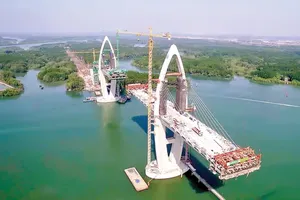
The backbone of this connectivity corridor will be a multimodal transport infrastructure network currently being accelerated for development, including ring roads, expressway systems, and railway networks.


)