From the "out-of-the-box" experiments during the subsidy era after 1975 to its current status as the country’s economic locomotive, Ho Chi Minh City has never stopped innovating or testing new ideas. Those first moves helped shape a dynamic urban identity and forged a willingness to lead and take responsibility that allowed the city to guide and spread development for itself and the nation.
Ho Chi Minh City charts new horizons in urban growth
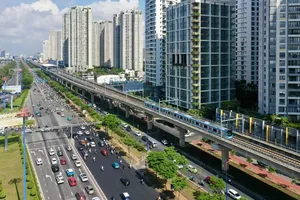
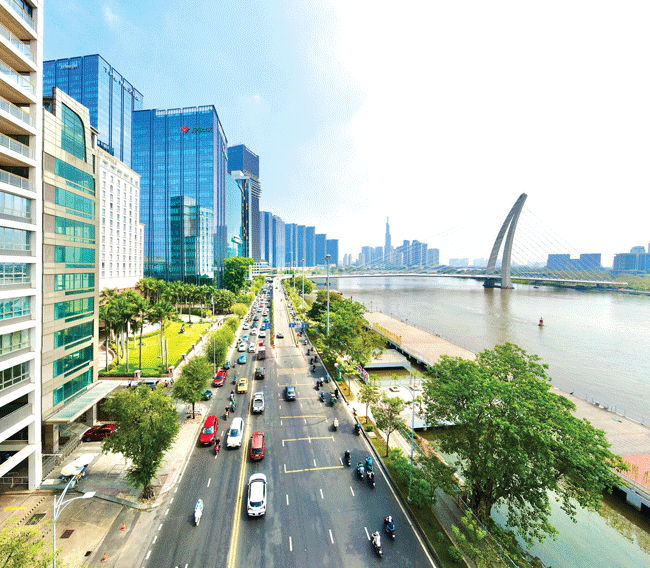
April is a month of remembrance, recalling Vietnam’s national reunification, but in Ho Chi Minh City it also serves as a reminder of transformation. From Nguyen Van Linh Boulevard, the road bends into Phu My Hung, which was once a swamp, now a showcase of modern urban planning. Officially recognized as Vietnam’s first model urban zone, the district stands as a testament to the city’s willingness to experiment, to lead, and to redefine its future.
Along its internal roads, new projects are steadily taking shape, extending a new phase of development in the city’s southern area. A large-scale arts complex, the Phu My Hung Art Center, is under development. Nearby, a 1,000-bed high-tech general and oncology hospital project has also been launched. Any mention of Phu My Hung must also include the Tan Thuan Export Processing Zone.
In a conversation, Phan Chanh Duong, former General Director of IPC and a key figure behind the Tan Thuan Export Processing Zone project, noted that this was Vietnam’s first export processing zone. Beyond creating jobs and attracting foreign currency, it helped open the door to new thinking on international cooperation and foreign investment. If the Tan Thuan Export Processing Zone (1991) marked an initial step in reshaping thinking and infrastructure, then the Phu My Hung urban area (1993) elevated the scale of development.
These “first bricks” defined the face of southern Saigon and opened a new trajectory for urban growth. From the success of Tan Thuan, the export processing zone and industrial park models were replicated nationwide. The Vietnam–Singapore Industrial Park (VSIP 1), established in 1996, became one of the first model industrial parks and was later expanded to many localities (Vietnam now has 478 industrial parks, export processing zones, and economic zones).
According to Truong Van Phong, Deputy Head of the Ho Chi Minh City Exporting Processing and Industrial Zones Authority, the city currently has 66 such zones, covering a total area of 27,000 hectares. Under the 2050 master plan, the city will develop an additional 39 industrial parks spanning 23,000 hectares, oriented toward high-tech and environmentally friendly industry that enhances added value and competitiveness. This pioneering spirit in developing urban zones and export processing areas is equally evident in the financial-banking sector and the private economy.
Associate Professor Tran Hoang Ngan, Chairman of the Advisory Council for Development Breakthroughs at Saigon University, observed that in Ho Chi Minh City, the private sector, comprising household businesses, limited liability companies, joint-stock companies, credit institutions, and commercial banks, formed early and grew rapidly. The country’s first three pilot commercial banks including Saigonbank, Eximbank, and HDBank, were all established in the city and continue to operate today.
Ho Chi Minh City was also home to the country’s first equitized state-owned enterprise, the first listed company on the stock market, and Vietnam’s first stock exchange. Crucially, the city’s forward-looking path has never been solely about economic growth. Each policy decision has been accompanied by concern for people’s livelihoods—how every step forward can be tied to food, clothing, housing, employment, and opportunities for upward mobility.
Ho Chi Minh City was the first locality in Vietnam to launch a Hunger Eradication and Poverty Reduction Program in 1992. From its early steps, the program evolved into a comprehensive and sustainable social welfare system, mobilizing broad societal participation. By 2025, the city reported no households living below its multidimensional poverty line.
Ho Chi Minh City also pioneered the construction of “gratitude houses” in 1982. What began as an initiative by staff of the Housing Repair Company under the city’s Department of Housing quickly spread, giving rise to similar programs such as charity houses, friendship houses, comradeship houses, and great solidarity houses. These efforts honor those who contributed to society while fostering compassion within the rhythm of urban life.
History shows that Ho Chi Minh City’s identity did not emerge by chance. It was built through repeated willingness to experiment and to lead, despite skepticism. These choices shaped the city’s “pioneering gene”—moving first to open paths, to care for people, and to ensure that every stage of urban progress improves quality of life.
Ho Chi Minh City’s economic surge brings wider opportunities
Ho Chi Minh City is not only the largest urban center in the country but also a hub that carries a disproportionate share of national responsibilities. That role is reflected in concrete figures; for instance, in 2025, the city contributed 23.5 percent of Vietnam’s GDP and roughly one-third of total state budget revenue.
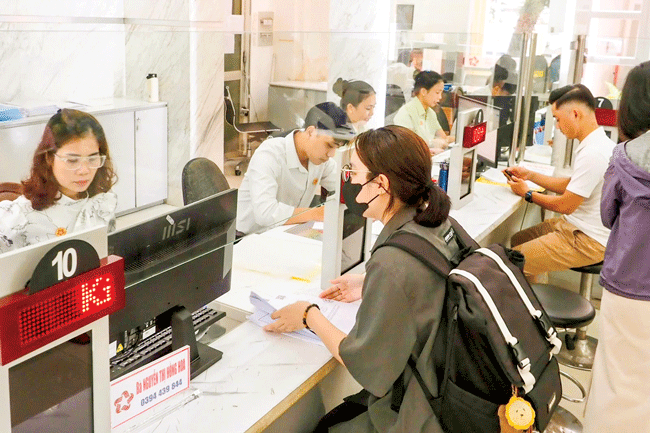
In the first quarter of 2026, Director Hoang Vu Thanh of the municipal Department of Finance reported that the city’s GRDP grew by 8.27 percent, the highest rate in the past five years. Total social investment reached VND141.781 trillion, up 10.7 percent, while foreign direct investment inflows approached US$2.9 billion, a 219 percent increase. These indicators suggest that Ho Chi Minh City’s economy is regaining momentum, driven by internal capacity, market resilience, and growing confidence among residents and businesses in a development-oriented administration.
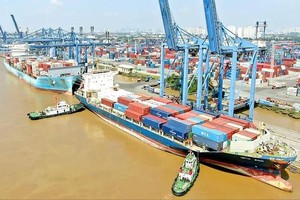
Behind these growth figures lies an increasingly evident role as a connector, driver, and multiplier of economic activity. In the first quarter, cargo throughput at the city’s seaports reached 88.37 million tonnes, up 7 percent, while inland waterway transport totaled 37.47 million tonnes, an increase of 12 percent. These flows reflect the steady movement of goods from the Mekong Delta, the Southeast region, and the Central Highlands into the city, before continuing through processing, distribution, and export chains. Ho Chi Minh City serves as both a transit point and a value-adding hub, where goods are reorganized, upgraded, and integrated into broader logistics, trade, financial, and market networks.
As a result, the city’s growth expands opportunities for other localities. The faster it advances, the more it pulls the wider region and the national economy forward. Being an economic locomotive is not simply a matter of scale; it is a responsibility. That responsibility means leading in innovation, strengthening linkages, sharing development models, and generating new momentum for the country.
Alongside the rest of Vietnam, Ho Chi Minh City is targeting double-digit GRDP growth for the 2026–2030 period and beyond. According to Dr Tran Du Lich, member of the National Financial and Monetary Policy Advisory Council, this goal affirms the city’s leading economic role and tests the effectiveness of its pilot, special policy mechanisms. To achieve it, the city needs to shift from capital-driven growth to a knowledge-based model, enhancing productivity and innovation, and progressively positioning itself as a regional hub for technology, finance, and startups in Southeast Asia.