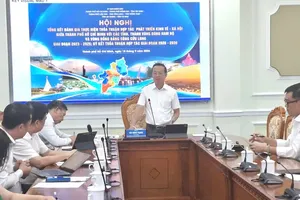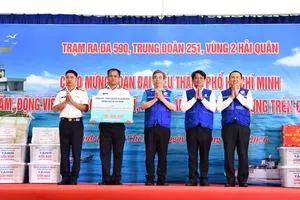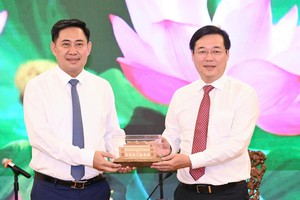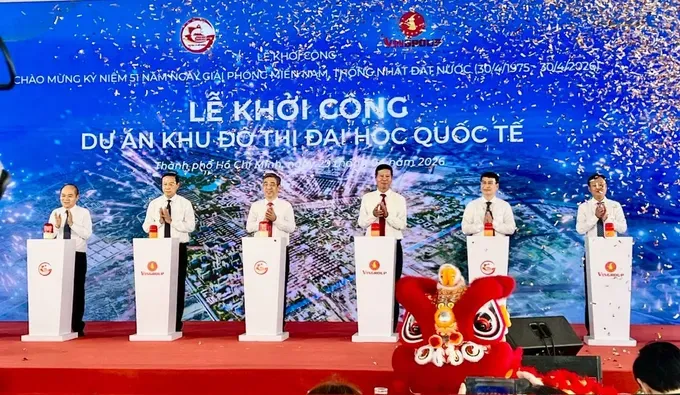
The ceremony was attended by Vice Secretary of the Party Committee and Chairman of the Vietnam Fatherland Front Committee of Ho Chi Minh City Nguyen Phuoc Loc; Vice Chairman of the Ho Chi Minh City People’s Committee Tran Van Bay; Standing Vice Chairman of the Ho Chi Minh City People’s Council Nguyen Van Tho; along with representatives of various municipal departments and agencies.
The event was held on the occasion of the 51st anniversary of the Liberation of the South and National Reunification (April 30, 1975–2026), carrying significant political and socio-economic importance while reflecting Ho Chi Minh City’s aspiration for sustainable development.
The project spans approximately 880 hectares, located in the northwestern part of the city, one of the emerging growth poles with substantial development potential. The urban area benefits from convenient connectivity via National Highway 22, Ring Road 3, the Ho Chi Minh City – Moc Bai Expressway, and, in the future, Metro Lines No. 2 and No. 3. This is considered a critical factor in strengthening regional linkages and fostering socio-economic development across the area.
According to the developer, the project is designed as a green and knowledge-based ecosystem, integrating spaces for living, learning, working, and leisure. A key highlight is its landscape system featuring water surfaces, canals, and a diverse chain of parks, forming a distinctive “city within islands—islands within a city” structure, thereby improving the microclimate and enhancing quality of life.
The urban area is planned into five functional sub-zones, including Zen Park, Blue Ocean Park, Knowledge Park, International Park, and Golf Paradise Park. Each sub-zone is designed around a distinct theme, combining green spaces with modern amenities, with a view to shaping a signature “city of parks.”
The project features a comprehensively developed system of amenities, highlighted by a more than 150-hectare education, training, and research complex; international-standard healthcare facilities; large-scale commercial centers; a 36-hole golf complex; and a wide range of entertainment and recreational services. The urban area will also include over 100 parks of various sizes—such as botanical parks, water parks, and Japanese-style parks—contributing to the creation of a green, modern living environment.
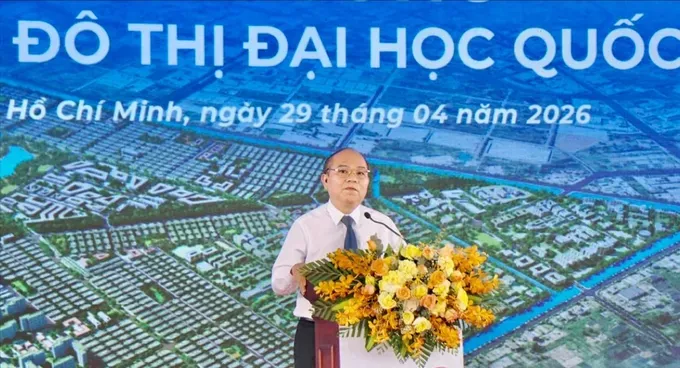
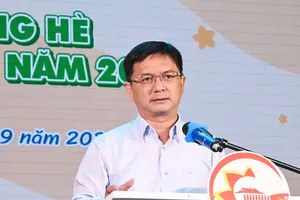
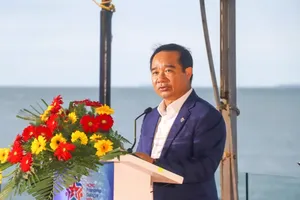
Speaking at the ceremony, Vice Chairman of the Ho Chi Minh City People’s Committee, Tran Van Bay, underscored that the project is not merely an urban development but also a concrete step toward realizing the city’s strategic orientation for science and technology advancement. In the context where the digital economy and innovation are emerging as primary growth drivers, Ho Chi Minh City has identified science and technology, along with digital transformation, as playing a pivotal role. In 2026, the city aims for the digital economy to account for approximately 30 percent of GRDP, with contributions from science, technology, and innovation reaching 18 percent.
The International University Urban Area is envisioned as a knowledge- and technology-driven city, with a projected population and student body of around 200,000. Of the total area, more than 183 hectares are allocated for education, training, and research, contributing to the formation of an innovation ecosystem and attracting high-quality human resources.
Ho Chi Minh City is also prioritizing infrastructure development in the northwestern area, with key projects such as Ring Road 3 and Metro Lines No. 2 and No. 3, among others. These investments are expected to lay the foundation for the area to emerge as a new growth pole, complementing the city’s existing development corridors.
City leaders affirmed that Ho Chi Minh City will continue to improve the investment climate, develop transport and logistics infrastructure, and remain committed to accompanying investors, addressing bottlenecks, and creating favorable conditions for project implementation in line with schedules, quality standards, and sustainability goals. The developer was urged to mobilize resources, accelerate construction progress, and bring the project into operation at the earliest possible time.
The groundbreaking of the project is expected to generate additional momentum for socio-economic development, contributing to the realization of Ho Chi Minh City’s vision of becoming a smart, modern, and sustainable urban center in the years ahead.