From economically valuable sporting events
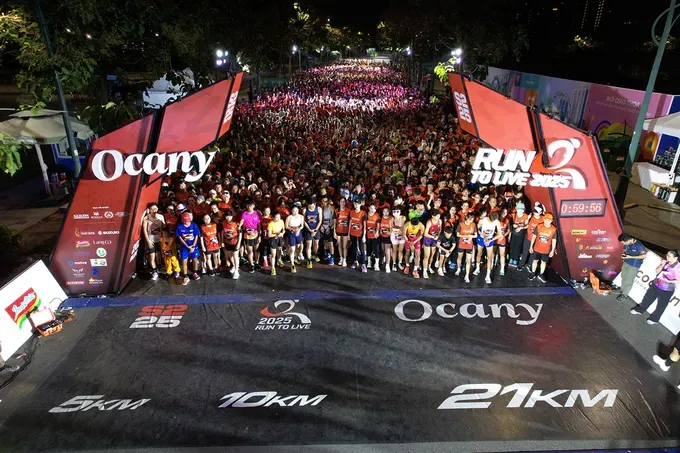
In the course of urban development, sports and physical fitness have become increasingly intertwined with quality of life and the service economy.
In Ho Chi Minh City, this trajectory began relatively early, as the city proactively hosted and organized numerous international-scale sporting events from the late 1980s. Competitions such as athletics meets, international marathons, the Golden Racket Table Tennis Tournament, and trans-Vietnam cycling races, along with a wide range of events in martial arts, tennis, volleyball, basketball, and football, have helped elevate professional standards while laying the groundwork for a socialization-oriented approach and mobilizing non-budgetary resources.
Subsequently, the linkage between sports and the service economy has gradually taken shape. Spectators, athletes, and visitors coming to the city not only participate in sporting events but also make use of a diverse array of services, including accommodation, dining, shopping, and entertainment. Revenues generated from sponsorship, advertising, sports merchandise, and tourism have directly contributed to the city’s budget, establishing an initial foundation for the development of the sports economy.
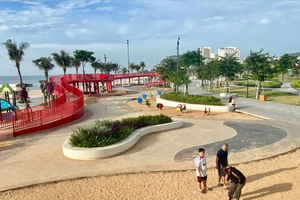
This spirit continues to be inherited and advanced in a new context, as Ho Chi Minh City shifts toward an “open” model of organizing sporting events in public spaces and along central urban corridors.
According to the Deputy Director of the Ho Chi Minh City Department of Culture and Sports, Nguyen Nam Nhan, staging events in public spaces not only makes sports more accessible to residents but also creates a strong appeal for businesses and brands seeking to enhance their visibility and associate with the city’s dynamic and positive sporting image.
More importantly, sporting events today have evolved into an integrated ecosystem, closely aligned with tourism development and urban experience.
This approach has delivered tangible results. A notable example is the 2024 Teqball World Championships, hosted by Ho Chi Minh City for the first time and held along Nguyen Hue Walking Street. The event reached approximately 470 million potential audiences worldwide, was covered across 74 countries, and generated an estimated media value of around US$2.1 million.
Subsequently, the 2025 Ho Chi Minh City International Martial Arts Festival attracted about 35,000 spectators, achieved 8.67 million social media impressions, and generated media value totaling VND16.5 billion (US$626,213), according to the organizing committee. These figures in terms of reach and media value demonstrate that sports are increasingly becoming an effective channel for promoting the city’s image. Such outcomes reaffirm Ho Chi Minh City’s position as an emerging international hub for sports and cultural exchange.
A sustainable pathway forward
In many major cities around the world, sports have evolved into a fully fledged entertainment economy. Ho Chi Minh City is following this global trend, leveraging its key advantages in market scale and a strong foundation in mass sports participation. Notably, more than 36.7 percent of the population engages in regular physical exercise, around 32 percent of households are classified as “sporting families,” and over 15,600 sports facilities and clubs are in operation to meet public demand for training and recreation.
This is a highly important foundational market. Without a sufficiently large sports-playing community, it would be difficult to sustainably develop services, events, retail, and sports sponsorship,” Deputy Director of the Ho Chi Minh City Department of Culture and Sports Nguyen Nam Nhan said.
He further noted that sports should be approached as a multi-layered market, encompassing event organization, sponsorship, broadcasting rights, training and coaching, fitness services, sports retail, sports tourism, sports technology, sports medicine and rehabilitation, as well as the operation of venues and sports institutions. This perspective is aligned with the Vietnam Sports Development Strategy to 2030 with a vision to 2045 and Ho Chi Minh City’s Sports Development Strategy to 2035.
More importantly, for the sports economy to take shape in a substantive manner, a shift in development mindset is essential.
Rather than viewing sports merely in terms of mass movements or standalone tournaments, Ho Chi Minh City’s sports sector needs to transition toward a market-oriented approach. In this model, major sporting events serve as spearheads to “pave the way,” generating spillover effects across related service industries and tourism. Three core pillars have been identified: the event organization industry, the service industry, and sports tourism.
To realize this objective, a synchronized policy framework is required, encompassing land-use planning, infrastructure development, and public-private partnership (PPP) mechanisms, as well as policies on sponsorship, commercial rights, and event organization procedures. Under such conditions, investment in sports will go beyond state budget expenditure to become a strategic instrument for market expansion and a driver of long-term growth.
With its large population, strong purchasing power, a diverse service ecosystem, and increasingly professional event organization capacity, Ho Chi Minh City is facing a significant opportunity to accelerate the development of its sports economy. As sports become an integral part of urban life—from daily fitness activities to large-scale events—the economic value generated by this sector will become increasingly evident.
Beyond enhancing quality of life, sports have the potential to evolve into a “soft industry,” directly contributing to economic growth while helping shape the image of a dynamic, modern, and globally integrated city.
According to Dr. Ly Dai Nghia, Director of the Ho Chi Minh City Sports Training and Competition Center, the city holds key advantages in terms of population size, income levels, and a high rate of regular sports participation, ranking among the leading localities nationwide. These factors provide a solid foundation for a diverse market of sports products and services.
He emphasized that the integration of sports with tourism and media will open up new revenue streams, making a meaningful contribution to the city’s economic growth.

)