Metro line 2 (Ben Thanh - Tham Luong) is currently undergoing accelerated construction with various synchronized solutions aimed at shortening the timeline, while also establishing a technological standard for the entire urban railway system that is about to be implemented.
Commitment to timely progress
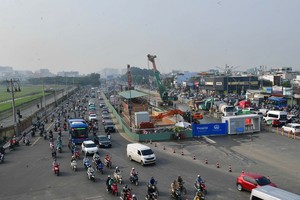
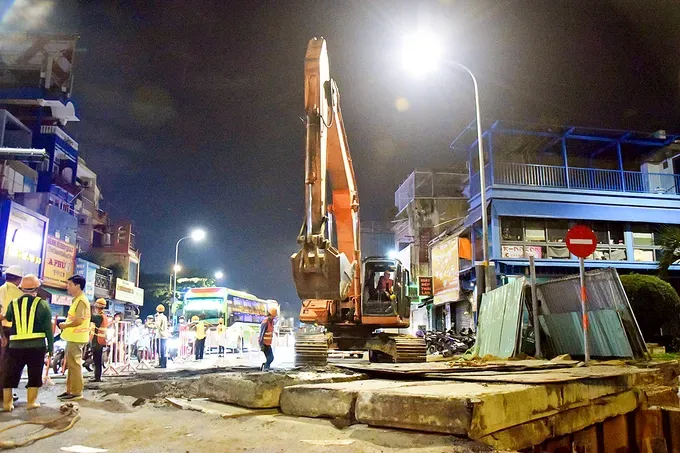
At the construction site of metro line 2, the atmosphere is one of urgency, reflecting the determination to expedite this key transportation infrastructure project in Ho Chi Minh City. At locations such as station S5 in Le Thi Rieng Park, Hoa Hung Ward, and S10 on Pham Van Bach Street, Tan Binh Ward, numerous geological survey drilling operations are being conducted simultaneously to facilitate the assessment of the geological strata and prepare for underground construction using TBM (Tunnel Boring Machine).
Le Hoang Tuan, Deputy General Director of Hung Nghiep Company, the contractor responsible for the drilling surveys, stated that the contractor is mobilizing specialized equipment and a skilled workforce to work continuously in shifts, primarily during the night until dawn. The drilling machines operate continuously to collect soil samples, which are essential for the technical design of the underground components. The construction process is organized meticulously, strictly adhering to safety regulations regarding labor and traffic in the fenced-off areas. The arrangement of multiple shifts, with a focus on nighttime work, not only optimizes time but also minimizes the impact on urban traffic.
Notably, to expedite the schedule, the construction plan has been adjusted to enhance equipment and optimize technical solutions. The number of Tunnel Boring Machines (TBM) has increased from 4 to 5, while the tunnel diameter has been adjusted accordingly. The TBMs are flexibly arranged along different sections of the route, allowing for simultaneous construction in multiple directions, thereby contributing to a reduction in the overall project timeline. Alongside the acceleration, safety measures are always prioritized. Construction areas are fenced off, and traffic flow is organized sensibly to minimize the impact on residents' daily lives. Geological surveys continue to be identified as a crucial foundational step, ensuring that subsequent construction phases are carried out safely and in coordination.
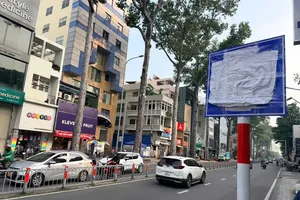
According to the leadership of the Ho Chi Minh City Management Authority for Urban Railways (MAUR), preparatory work is being carried out in a coordinated and synchronized approach. Since early March, traffic flow around station areas has been reorganized to support upcoming construction activities. At the same time, the relocation of technical infrastructure is being accelerated, with completion targeted for the second quarter of 2026 to ensure a cleared site is handed over to contractors.
The greatest challenge of the project is the underground construction along major traffic streets such as Cach Mang Thang Tam and Truong Chinh, where vehicle density is high. To mitigate the impact, MAUR will collaborate with relevant units to manage traffic remotely, while also announcing the construction schedule in phases to allow residents to plan their movements accordingly.
Establishment of a metro industrial complex
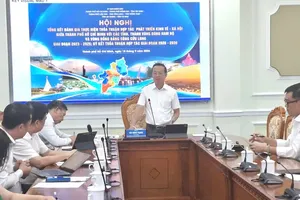
To accelerate the implementation of metro projects, Truong Hai Group (THACO) has been identified by the Government as one of the core forces in the strategy to develop urban railway infrastructure in HCMC.
The company has been assigned as the EPC general contractor for Metro Line No. 2, with a total investment exceeding VND55 trillion. At the same time, the HCMC People’s Committee has tasked it with conducting research and preparing the feasibility study for the Ben Thanh – Thu Thiem metro section.
According to Tran Ba Duong, Chairman of THACO, for Metro Line No. 2, the company has formed a consortium with China Railway Group Limited (CREC), a major Chinese railway construction corporation, to undertake the full scope of the project, including design, construction, and the supply and installation of equipment. The consortium has been licensed by the city Department of Construction, with the project expected to be implemented over 60 months and completed by the fourth quarter of 2030.
Previously, THACO signed a cooperation agreement with Hyundai Rotem of South Korea to facilitate the transfer of technology for manufacturing locomotives, rolling stock, and electromechanical (E&M) systems.
This partnership is expected to enable the company to progressively master the full value chain, from manufacturing and installation to operation and maintenance, in line with international standards.
In addition to constructing Metro Line No. 2, THACO will develop a specialized industrial park to support the railway sector. The group plans to build a 786-hectare industrial zone in the Tan Uyen – Binh Co area, Ho Chi Minh City, with total investment exceeding VND12.8 trillion. Construction of key factories within the complex is scheduled to commence simultaneously in early May.
Among these, the steel structure and specialized equipment manufacturing plant has been identified as a critical component, directly serving the production of mechanical structures and equipment for metro systems. It is expected to be completed and put into operation by September 2026.