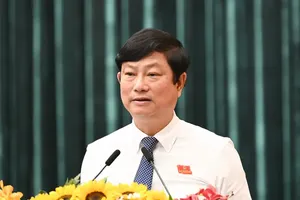
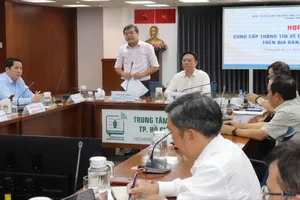
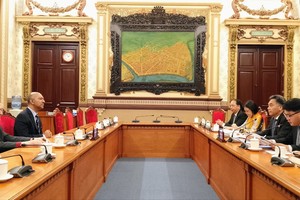
The event was jointly presided over by Chairman of the Ho Chi Minh City People’s Committee Nguyen Van Duoc, and Vice Chairman Nguyen Manh Cuong.
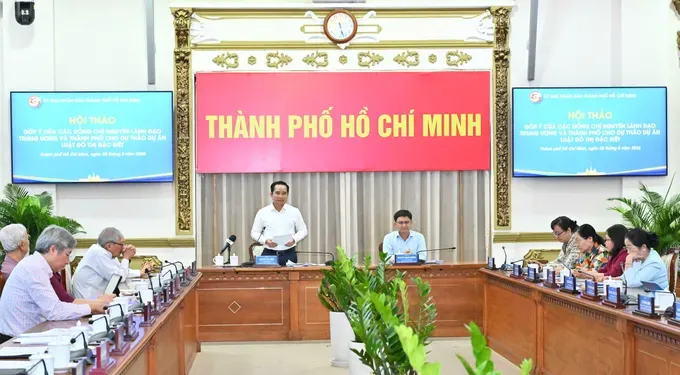
Speaking at the seminar, Vice Chairman of the Ho Chi Minh City People’s Nguyen Manh Cuong stated that Resolution No. 09-NQ/TW of the Politburo not only provides strategic orientation but also affirms the Central Government’s determination to develop Ho Chi Minh City into a modern, civilized and compassionate metropolis with rapid and sustainable growth, maintaining its role as a major economic, financial and service hub of Southeast Asia and Asia.
Providing comments at the meeting, former Deputy Head of the Central Economic Commission, former Permanent Deputy Secretary of the Ho Chi Minh City Party Committee, and former Chairman of the Ho Chi Minh City People’s Council Pham Chanh Truc emphasized that the special urban status of Ho Chi Minh City must be viewed in terms of its scale, potential, development trajectory, and scientific and technological foundation, as well as its position as a large, “open” and internationally integrated market. The city must truly serve as the country’s growth engine and act as the core of the Southern Key Economic Region.
Former Chairwoman of the Ho Chi Minh City People’s Council, Nguyen Thi Quyet Tam, proposed that the draft replace the phrase “radical decentralization and delegation of authority” with “sufficiently strong decentralization and delegation of authority” to better reflect practical realities.
According to Ms. Nguyen Thi Quyet Tam, this mechanism should be firmly built on three pillars, including practical capacity, potential, and the competitive advantages of Ho Chi Minh City. The Central Government should grant full and enhanced authority and responsibility that surpass the current legal framework, while in particular avoiding a “request-and-approval” mechanism and changing the mindset in managing the organizational apparatus and personnel.
Former Chairwoman of the Ho Chi Minh City People’s Council, Pham Phuong Thao, stated that the functions of departments and sectoral agencies should be clearly institutionalized in law. These agencies should not only serve as advisory bodies but must also assume the role of state management agencies in their respective sectors and fields, thereby reducing the need to seek approval from the Ho Chi Minh City People’s Committee.
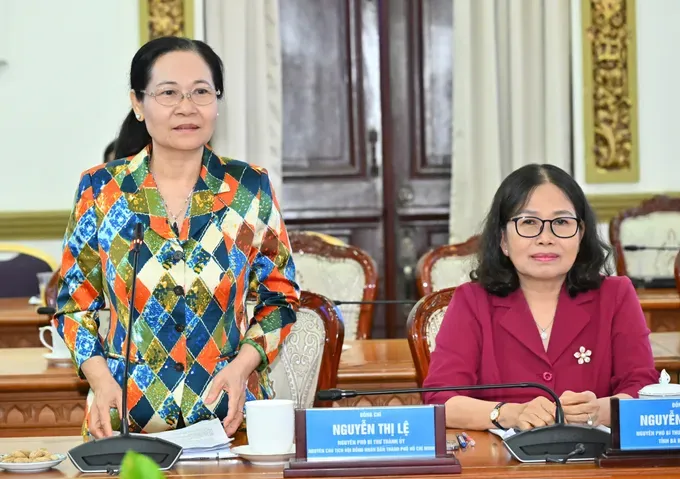
Meanwhile, former Chairwoman of the Ho Chi Minh City People’s Council, Nguyen Thi Le, analyzed that if the draft stipulates decentralization in the form of listing specific tasks that local authorities are allowed to perform, it would effectively mean that the city continues to operate under a mechanism of “seeking approval” for each specific policy.
Selectively inheriting effective mechanisms
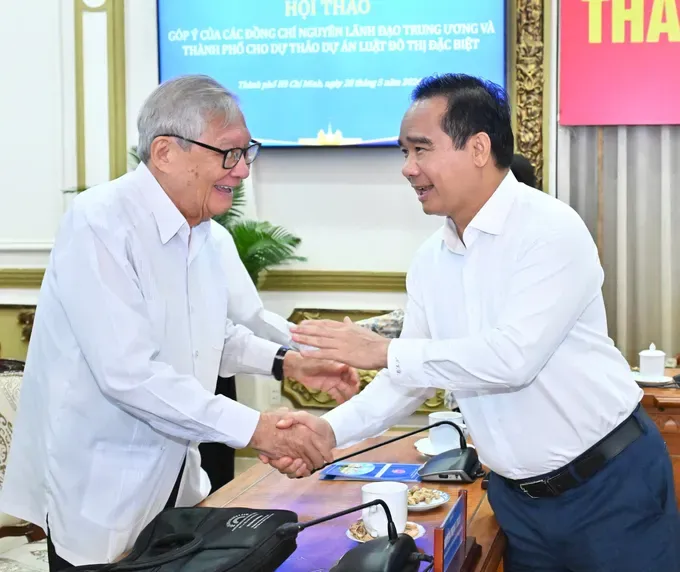
Former Deputy Head of the National Assembly’s Committee for External Relations, Nguyen Ngoc Tran, noted that when Ho Chi Minh City implements controlled experimental mechanisms (sandbox) or public–private partnership (PPP) arrangements, risks and errors are inevitable. Therefore, the draft law should establish a mechanism to protect officials and clearly distinguish between risks arising in pursuit of the common interest and acts of personal gain or profiteering.
In the same vein, Ms. Nguyen Thi Le pointed out that the provisions on exemption from liability in the draft remain too general.
The concept of “acting without self-interest and within proper authority” is not clearly defined, making it difficult to apply in practice and potentially fostering a mindset of fear of making mistakes and fear of taking responsibility. She proposed that this concept should be clarified to remove practical barriers and encourage officials to be capable and willing to take responsibility.
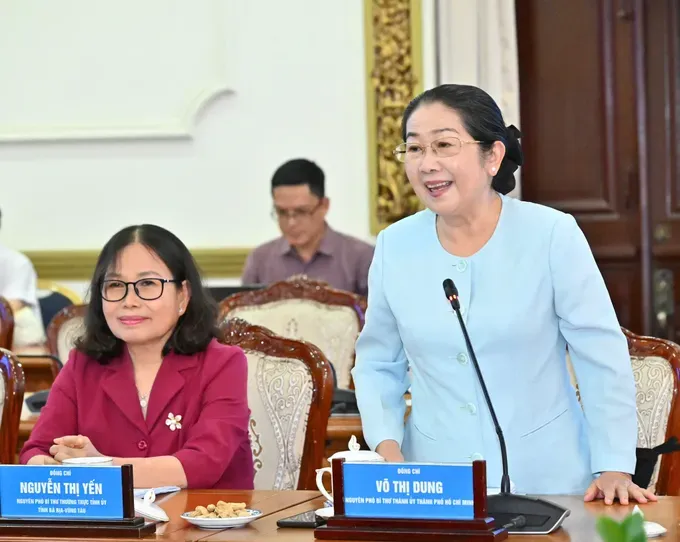
Former Deputy Secretary of the Ho Chi Minh City Party Committee, Vo Thi Dung, stated that the mechanisms for controlling power must be clearly stipulated in the law. She suggested that the law should supplement provisions assigning authority to the Ho Chi Minh City People’s Council to issue specific mechanisms for power control.
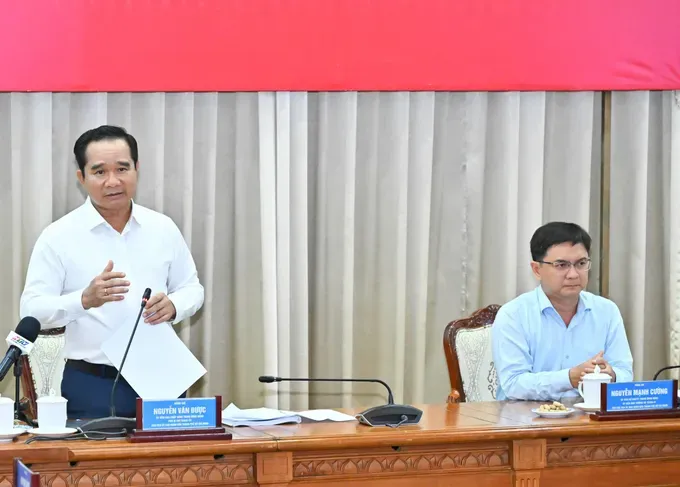
Acknowledging the opinions from delegates, Chairman of the Ho Chi Minh City People’s Committee Nguyen Van Duoc assessed that the contributions were highly responsible and of good quality, all aimed at the city’s development. According to him, the formulation of a Special Urban Law to enable Ho Chi Minh City to grow rapidly and sustainably is a strategic orientation entrusted by the Central Government, as well as the aspiration of the City’s Party Organization and its people. This represents a major opportunity for the city to achieve further breakthroughs, including double-digit growth targets and fast, sustainable development.
Analyzing the requirements placed on Ho Chi Minh City in the coming period as a leading growth engine, the Chairman of the Ho Chi Minh City People’s Committee stated that this serves as a foundation and determination for the city to develop a Special Urban Law featuring superior institutional mechanisms. The city’s viewpoint in drafting the law is to selectively inherit existing special mechanisms already granted by the National Assembly, as well as policies that have proven effective under the Capital Law. At the same time, the city is boldly proposing new and stronger mechanisms to support rapid, sustainable development, moving toward the vision of a "megacity".