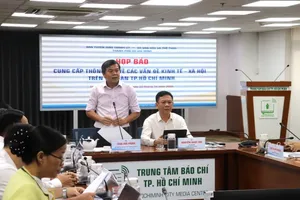
This view was raised by leaders of the Ho Chi Minh City People’s Committee during their presentation at a conference reviewing one year of implementing the city’s overall organizational model of the political system and the two-tier local government model, held on May 28.
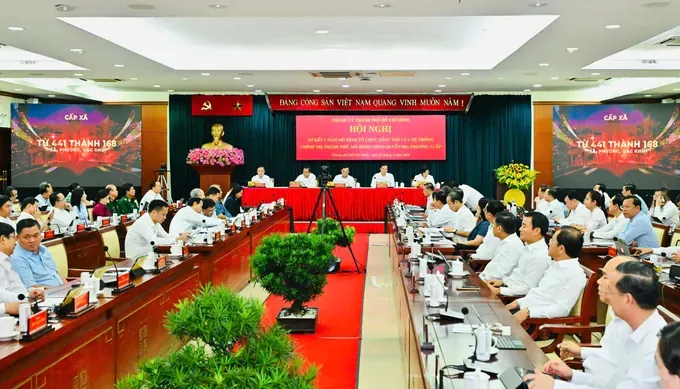
Vice Chairman of the Ho Chi Minh City People’s Committee, Nguyen Manh Cuong, stated that the organization of the two-tier local government model carries strategic significance in the ongoing process of reforming the organizational apparatus of the political system toward a streamlined structure operating with greater effectiveness and efficiency.
In addition, the model meets the requirements for building a modern, professional, transparent, and service-oriented administration, while promoting national development in the new period.
For Ho Chi Minh City—a special urban center and the country’s largest economic hub, where administrative workloads are extremely substantial—accelerating decentralization, delegation of authority, and administrative procedure settlement are considered a prerequisite for ensuring the effective and smooth operation of the government.
Following a review, the tasks decentralized and delegated to the city authorities are highly feasible and well-suited to practical conditions, significantly reducing pressure on central agencies while enabling the municipal government to take a more proactive role in governance and socioeconomic development.
In particular, the policy has helped reduce intermediate administrative layers and shorten the time required for handling administrative procedures.
Citing the vocational education sector as an example, Mr. Nguyen Manh Cuong noted that educational institutions in Ho Chi Minh City previously had to complete administrative procedures with central agencies in Hanoi, resulting in substantial travel and accommodation costs as well as prolonged processing times. These responsibilities have now been directly decentralized to local authorities and are considered well-aligned with practical realities.

However, according to Mr. Nguyen Manh Cuong, although decentralization and delegation of authority have expanded the scope of local powers, they have not yet been accompanied by corresponding allocations of resources, personnel, and implementation conditions at the grassroots level.
The current regulatory framework on organizational structure and staffing at the commune level has yet to fully reflect the specific characteristics of a special urban center such as Ho Chi Minh City. In several localities with large populations and heavy administrative workloads, where a high volume of dossiers and procedures arises, the same staffing quotas are still being uniformly applied, leading to work overloads in advisory and administrative functions.
In addition, data connectivity and information sharing among central and local agencies, as well as across sectors, remain limited, while many sector-specific databases have yet to be synchronously integrated.
Therefore, the city proposed continuing to improve the institutional framework for decentralization and delegation of authority in a synchronized and consistent manner between the Law on Organization of Local Government and specialized laws, while promptly reviewing and amending overlapping and inconsistent regulations.
Decentralization and delegation of authority should go hand in hand with the adequate allocation of implementation resources, including staffing, organizational structure, budget, information technology infrastructure, and shared databases.
For special urban centers such as Ho Chi Minh City and Hanoi, the city recommended studying special mechanisms on organizational structure and staffing arrangements that are appropriate to population scale, workload, and the requirements of modern urban governance.
Staffing pressure in specialized wards and communes

At the conference, ward and commune authorities reported that following the administrative restructuring, the operations of local units have basically stabilized, functioned smoothly, and initially demonstrated effectiveness. The organizational apparatus has been streamlined with fewer intermediary units, while functions and responsibilities have been more clearly defined, helping to reduce overlaps. Officials, civil servants, and public employees have also quickly adapted to their new positions, ensuring the continuity and regularity of operations. However, several initial difficulties remain.
Secretary of the Party Committee of Saigon Ward, Nguyen Tan Phat, pointed out that some ward-level civil servants have sought transfers to municipal departments and agencies in pursuit of greater long-term job stability. Meanwhile, many officials have been reluctant to transfer to other wards due to concerns over potential staff downsizing in the future, resulting in a gradual decline in local human resources.
In addition, several aspects of decentralization and delegation of authority have yet to be implemented in a fully synchronized manner or accompanied by adequate guidance and support mechanisms.
According to Mr. Nguyen Tan Phat, Saigon Ward possesses distinctive characteristics in terms of economy, commerce, services, foreign affairs, and public security, resulting in increasingly high requirements for state administration. However, there has yet to be a specific governance mechanism or authority framework tailored to such a special locality, as existing mechanisms remain largely similar to those applied in other localities. This has partly affected the ward’s proactiveness and flexibility in addressing emerging issues.
The Secretary of the Saigon Ward Party Committee proposed that the Government approve a staffing allocation mechanism based on population size, the number of Party organizations and Party members, as well as the specific characteristics of each locality.
He also suggested introducing regulations on coordination mechanisms between local Party committees and personnel management agencies, particularly for banks, economic groups, corporations, agencies, and units directly under central authorities.
At Ba Diem Commune, the large geographical area and sizable population have posed significant challenges to leadership, direction, and state management. According to Mr. Nguyen Anh Tuan, Secretary of the Ba Diem Commune Party Committee, the workload has surged sharply following the administrative merger, as commune-level divisions are now handling responsibilities previously managed by multiple municipal departments and agencies, while staffing allocations remain far below actual demands. This has resulted in serious overloads in specialized divisions, particularly the Party Building Committee, the Economic Office, and the Culture and Social Affairs Office.
The commune’s facilities and technical infrastructure also remain inconsistent and incomplete, while the archival storage system has become overloaded due to the growing volume of administrative records.
The commune leadership proposed that Ho Chi Minh City continue providing direction and support in improving the organizational apparatus and supplementing resources for task implementation. The locality also called for adjustments and additional staffing allocations in line with actual workloads at the commune level, especially for localities with large populations and extensive administrative areas.
In particular, salary mechanisms, benefits, and allowance policies should be aligned with positions that concurrently handle multiple fields of work or require high professional expertise.













)




