The municipal authorities require all agencies and units involved in the project to recognize this as a significant political mandate, calling for the mobilization of human resources, material resources, and intellectual capacity. The implementation must be carried out with a high sense of responsibility, ensuring both progress and quality.
On March 16, Vice Chairman of the Ho Chi Minh City People’s Committee Bui Xuan Cuong signed Decision No. 1460/QD-UBND, promulgating the implementation plan for the construction project of Metro Line 2.
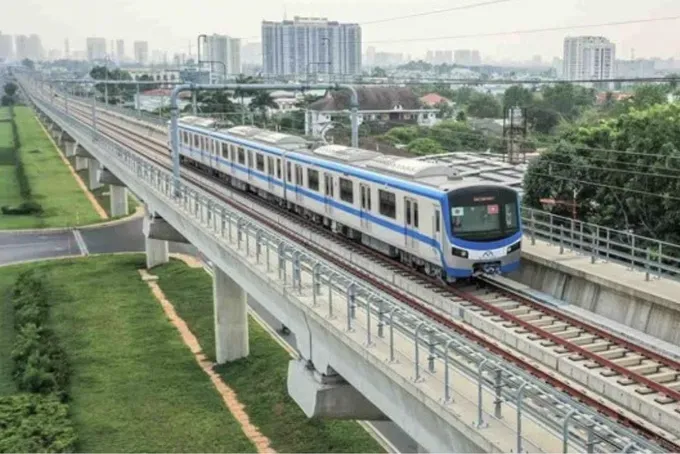
According to the municipal People’s Committee, the issuance of the plan is intended to secure the necessary conditions to expedite investment preparation, moving toward the goal of completing the city’s urban railway network in line with Resolution No. 188/2025/QH15 adopted by the National Assembly. The metro line is expected to form a strategic transport corridor linking the city center with the Thu Thiem urban area, while facilitating connectivity between Tan Son Nhat International Airport and Long Thanh International Airport via the central urban zone.
During the implementation process, municipal departments and agencies are required to proactively handle administrative dossiers and procedures under a priority mechanism, while intensifying the application of information technology and digital transformation to shorten processing time and prevent delays or overdue cases. The assignment of specific responsibilities to each unit and locality must be clearly defined and closely aligned with the project timeline, thereby ensuring transparent and efficient implementation, as well as preventing risks of misconduct, loss, and wastefulness.
The plan also outlines several key milestones in the project preparation phase. These include reporting to the Standing Board of the Municipal Party Committee on the policy for urgent project implementation and the adjustment and supplementation of investment capital under the public-private partnership (PPP) model and approving the route alignment and locations of works along the route.
The Ho Chi Minh City People’s Committee has assigned the Department of Planning and Architecture to appraise and submit to the municipal People’s Committee for approval the route alignment and locations of works along the route. The department is also tasked with coordinating the handover of project boundaries to localities through which the route passes, facilitating the implementation of compensation, support, and resettlement.
The Department of Agriculture and Environment is responsible for reporting to the municipal People’s Committee for submission to the People’s Council to approve the land fund portfolio for BT (Build–Transfer) contract payments, while guiding investors to fully comply with environmental procedures in accordance with regulations. Meanwhile, the Department of Construction will advise the municipal People’s Committee on technological solutions and technical standards of the project, take the lead in appraising the feasibility study report, and monitor as well as expedite the implementation process.
The Department of Finance, for its part, will take the lead in advising on the establishment of an appraisal council for the project’s feasibility study report while reviewing the capacity to balance state budget funds participating in the PPP project and proposing appropriate capital allocation plans in line with the city’s medium-term public investment plan.
People’s Committees of wards along the metro lines, including Ben Thanh, Saigon, An Khanh, and Binh Trung, are responsible for receiving the project boundaries, organizing compensation, support, and resettlement activities, and coordinating during the construction process.
The Ho Chi Minh City Urban Railway Management Board (MAUR) is tasked with supporting the investor in finalizing the feasibility study report, ensuring overall consistency in planning, technology, and technical standards of the city’s metro system, particularly in terms of connectivity with existing and future metro lines at Ben Thanh Station.
According to the decision, Dai Quang Minh Real Estate Joint Stock Company is the entity bearing full responsibility before the Ho Chi Minh City People’s Committee for implementing the project in line with the approved schedule.