With electricity demand rising rapidly and pressure mounting to reduce emissions, rooftop solar power is being increasingly adopted in Ho Chi Minh City, particularly by supermarkets, shopping malls, and many households.
Shopping centers across HCMC are embracing rooftop solar power
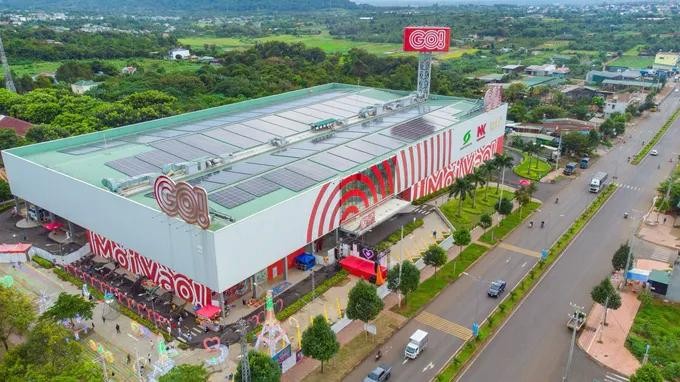
At midday, under the blazing sun, thousands of solar panels installed on the rooftops of shopping centers across Ho Chi Minh City are generating clean electricity to power air-conditioning systems, cold storage facilities, lighting, escalators, and other equipment. Rooftop solar power is gradually becoming a major trend in the modern retail sector, an industry with very high daytime electricity consumption.
Nguyen Thi Bich Van, Communications Director of Central Retail Group in Vietnam, said that due to the company's substantial electricity needs, Central Retail has installed rooftop solar systems at 32 GO! and mini go! shopping centers nationwide. The systems currently reduce average electricity consumption by about 14 percent and supply approximately 30 percent of operational electricity demand at each location.
Central Retail has also partnered with several major organizations to develop renewable energy projects. One example is its collaboration with Norsk Solar, which involves rooftop solar installations at 11 GO! shopping centers with a combined rooftop area of nearly 60,000 square meters. The project is expected to generate more than 300,000 MWh of clean electricity over its operational lifetime and help reduce carbon dioxide emissions by more than 120,000 tons.
Following the same trend, AEON Mall has installed rooftop solar systems at several shopping centers to optimize energy costs and increase the use of clean electricity. At AEON Mall Tan Phu Celadon in Ho Chi Minh City, a rooftop solar system with a capacity of more than 1.2 MW has already been put into operation.
Meanwhile, MM Mega Market Vietnam has implemented rooftop solar projects at 16 centers nationwide. The systems are expected to reduce annual carbon dioxide emissions by approximately 5,000 to 7,000 tons and are considered part of the company's strategy to become a “green retailer.”
As one of Vietnam's leading retail operators, Saigon Co.op has also installed rooftop solar systems at several supermarkets and shopping centers. According to estimates by the project developers, these systems could save approximately VND353 billion over 25 years of operation and reduce carbon dioxide emissions by about 5,000 tons annually.
HCMC is intensifying support for rooftop solar power
The rapid growth of rooftop solar power is taking place as electricity demand in Ho Chi Minh City continues to rise sharply. According to statistics from Ho Chi Minh City Power Corporation (EVNHCMC), the city currently has 23,669 rooftop solar systems connected to the power grid, with a combined installed capacity of 1,864.6 MWp. Most of these systems belong to households and individual customers, followed by businesses, factories, and shopping centers. Among them, 1,939 solar power systems have capacities of 100 kWp or more, primarily owned by businesses and production and commercial facilities.
“Those figures remain relatively modest compared to the city's full potential. Therefore, in addition to the efforts of the electricity sector, stronger cooperation from local authorities is needed to encourage greater participation from residents. EVNHCMC is currently intensifying public communication on the benefits of rooftop solar power and working with associations and relevant organizations to guide residents through websites, mobile applications, and online platforms,” said Bui Trung Kien, Deputy General Director of EVNHCMC.
Phan Thanh Lam, Chairman of the Ho Chi Minh City Renewable Energy Association, noted that rooftop solar systems combined with energy storage are becoming an increasingly suitable solution for urban energy development. With a payback period of approximately 3.5 to 4.5 years and a system lifespan of 15 to 20 years, the model is becoming increasingly attractive to both households and businesses.
However, to accelerate market growth, he said additional incentives are needed, including tax benefits, green credit programs with low-interest loans of around 5 percentto 6 percent per year, and reduced administrative procedures. In addition, electricity pricing mechanisms based on time-of-use rates are expected to create further incentives for businesses to invest in energy storage systems to optimize operating costs.
Nguyen Thi Kim Ngoc, Deputy Director of the Ho Chi Minh City Department of Industry and Trade, said that ensuring a stable energy supply while meeting green development goals has become a key priority for the industry and trade sector. As a result, the city continues to view rooftop solar power as an area with significant development potential in the coming years.
To address challenges related to investment capital and technical requirements, authorities are studying and preparing to introduce a range of support measures, including green financing programs, ESCO (Energy Service Company) models, digitalization of administrative procedures, and technical consulting services. These initiatives are intended to make it easier for residents and businesses to invest in rooftop solar power systems.