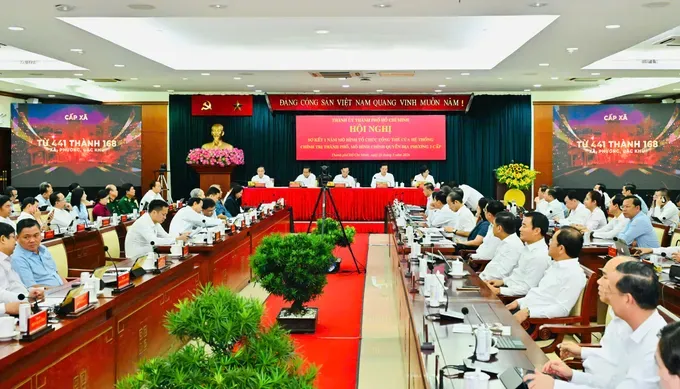
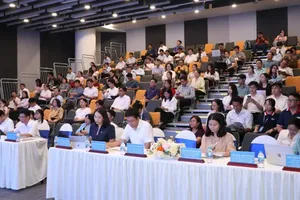
The event was conducted in a hybrid format, combining in-person attendance with online connections to communes, wards, and special administrative zones.
The conference was chaired by Politburo member and Secretary of the Ho Chi Minh City Party Committee Tran Luu Quang.
Co-chairing the conference were Standing Vice Secretary of the Ho Chi Minh City Party Committee Le Quoc Phong, Chairman of the Ho Chi Minh City People’s Committee Nguyen Van Duoc, and Vice Secretaries of the Ho Chi Minh City Party Committee Van Thi Bach Tuyet and Dang Minh Thong.
Achieving many outstanding results
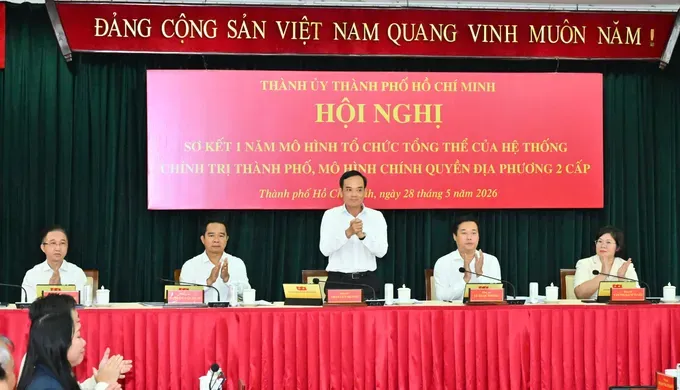
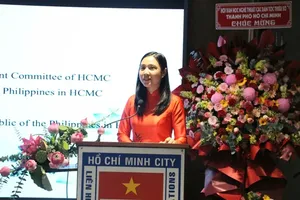
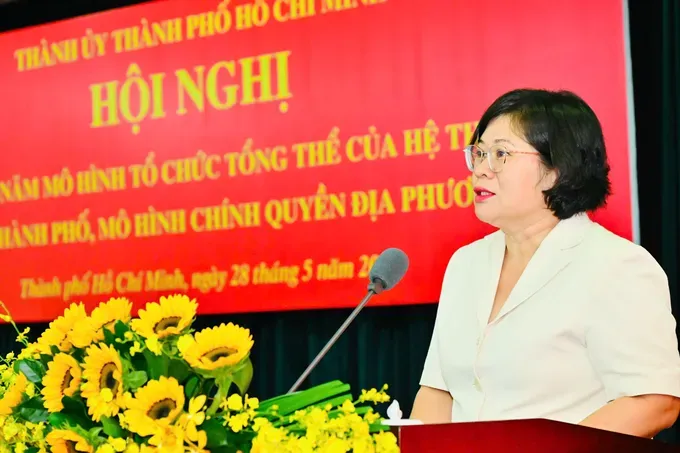
Vice Secretary of the Ho Chi Minh City Party Committee Van Thi Bach Tuyet stated that after one year of implementing the overall organizational model of the political system and the two-tier local government model, Ho Chi Minh City has achieved many significant results. In particular, the city’s governance and administration have increasingly demonstrated the principles of being “effective, efficient, and impactful,” while staying close to the people and responsive to their needs. Citizens and enterprises are placed at the center of public service delivery, and public satisfaction is used as a key measure of the quality of the administrative apparatus.
The quality of essential public services at the commune level has been largely maintained at a stable level. Sectors such as education, healthcare, environmental sanitation, culture, sports, and the reception and resolution of administrative procedures have been ensured. Social welfare and security work has also been carried out effectively.
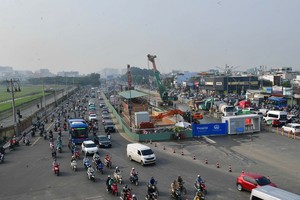
The city has implemented several new policies that have delivered practical and tangible results, such as providing free health check-ups, offering free bus transportation, and carrying out the construction and renovation of facilities serving residents’ daily needs. It has also accelerated the implementation of at least 200 key projects in preparation for major Party congresses and significant public holidays, with priority given to strategic infrastructure projects that have strong spillover effects and serve as key growth drivers.
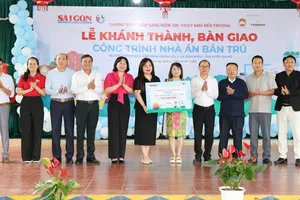
In addition, the city has provided comprehensive care for people with meritorious service, low-income households, and industrial workers, while also promoting the construction and renovation of gratitude houses and charity housing, in parallel with efforts to relocate and reorganize housing along canals and waterways to enhance urban aesthetics.
Alongside these efforts, administrative reform and digital transformation have achieved positive results, reflected in the handling of a large volume of administrative procedure dossiers with an on-time completion rate exceeding 99.5 percent. The rate of online submissions has surpassed 88 percent, while the satisfaction level of citizens and enterprises has reached over 96 percent. Notably, 100 percent of administrative documents are exchanged in electronic form.
The decentralization and delegation of authority, along with the handling of administrative procedures, have been carried out smoothly and effectively. Based on 1,065 delegated tasks stipulated in 28 Government decrees, the city has issued numerous decisions on decentralization and authorization across various sectors.
Specifically, the city has decentralized and delegated 900 tasks from municipal departments and agencies, as well as 108 tasks from the Ho Chi Minh City People’s Committee and its Chairman to the commune-level authorities, thereby enabling local administrations to take greater initiative in performing their functions and duties.
According to Vice Secretary of the Ho Chi Minh City Party Committee Van Thi Bach Tuyet, most of the tasks assigned through decentralization, delegation, and the clarification of authority have generated positive outcomes, contributing to greater proactiveness at the grassroots level, shortening processing times, and improving the quality of services provided to citizens and enterprises.
In addition, the Standing Board of the Ho Chi Minh City Party Committee has focused on seriously implementing personnel restructuring and organization. The arrangement, assignment, transfer, rotation, and mobilization of officials have been carried out in accordance with established procedures and standards. The city has also reviewed and supplemented personnel planning while strengthening training and capacity-building programs aligned with political tasks and the city’s development orientation.
The city has also intensified measures to support localities in effectively carrying out their responsibilities. This includes seconding professionally qualified officials from municipal departments and agencies to work at the grassroots level, particularly in areas such as compensation and site clearance, urban planning implementation, and ensuring construction order. Training and professional development programs for civil servants and public employees, especially at the commune level, have also been further promoted.
The city has implemented the model of “one-stop service—one decision—one accountable focal point” through fully integrated and interconnected online public services, enabling citizens and enterprises to submit applications, monitor processing progress, and receive results entirely online. At the same time, the city has introduced a non-jurisdictional administrative procedure, allowing residents to complete procedures anywhere within the city, regardless of their place of residence. This approach has significantly reduced both time and costs, demonstrating the city’s determination to build a service-oriented administration.
Digital platforms and shared information systems have continued to operate in a stable manner, while the data integration and sharing platform has maintained seamless connectivity within the city and with the national system. Network infrastructure, applications, software systems, and end-user information technology equipment have effectively met the requirements for synchronized, interconnected, and uninterrupted operations among agencies, units, and all 168 communes, wards, and special administrative zones.
Despite the achievements made, several shortcomings and limitations remain and require further attention and remediation. Specifically, the city is facing a situation in which the cadre workforce is simultaneously excessive and insufficient in certain areas. A small number of officials have yet to fully meet job requirements, while there remains a shortage of experienced cadres, civil servants, and public employees in key sectors such as Party building, information technology, finance and accounting, land management, construction and transport, healthcare, culture, and education.
In addition, densely populated localities continue to face significant pressure and workload overloads. The volume of work has increased rapidly under the current staffing framework prescribed by regulations, which has yet to align with differences in population size, geographic area, local characteristics, and the number of Party organizations and Party members among ward- and commune-level Party committees. These disparities have created considerable pressure and overload in task implementation, partly affecting proactiveness and the quality of public service performance.
Effectively implementing the Politburo Resolution No. 09
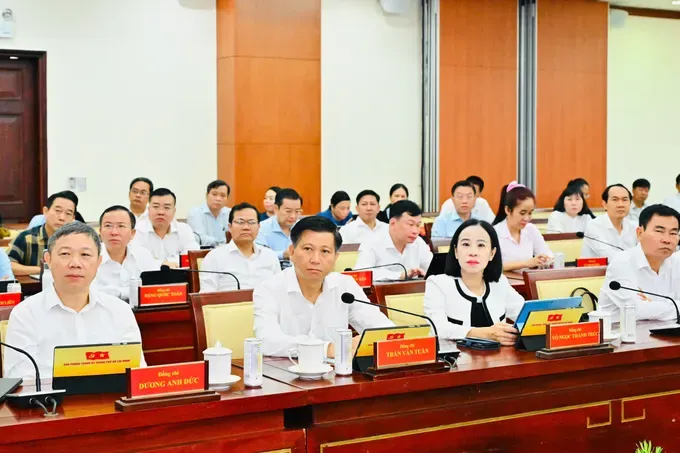
According to Vice Secretary of the Ho Chi Minh City Party Committee Van Thi Bach Tuyet, the city will continue focusing on implementing a number of key tasks and strategic solutions. Among them is the effective implementation of Politburo Resolution No. 09-NQ/TW on the building and development of Ho Chi Minh City in the new era.
Additionally, the city will study, formulate, and propose the promulgation of the Special Urban Law aimed at establishing a synchronized institutional framework and an appropriate, open, and stable legal corridor. The law is expected to become a “breakthrough of breakthroughs,” creating the most favorable conditions for Ho Chi Minh City to fully tap into its potential and advantages, mobilize all available resources, and accelerate rapid and sustainable development.
In parallel, the city will effectively implement socio-economic development plans, national financial strategies, public debt borrowing and repayment plans, and the 2026–2030 medium-term public investment program, in association with the goal of achieving double-digit economic growth.
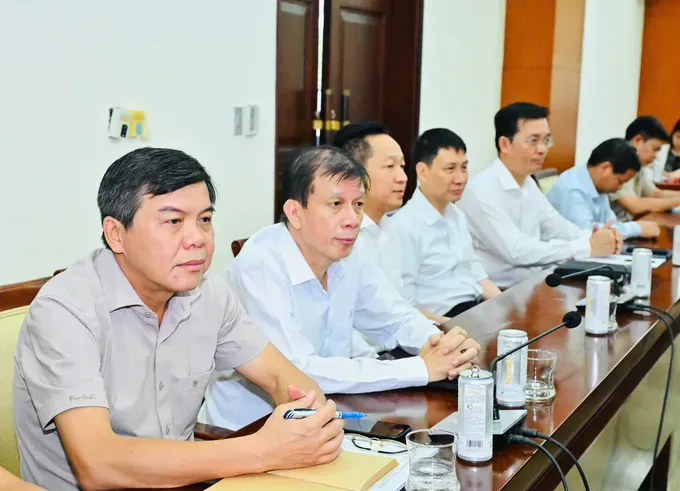
The city will continue reorganizing and consolidating the structure and operations of hamlets and quarters across the city in line with grassroots realities, in conjunction with the restructuring of Party organizations and socio-political organizations. It will also complete plans for the reorganization of office headquarters, public assets, and public administrative service centers in accordance with regulations.
Priority will be given to allocating funding and accelerating the construction, upgrading, and expansion of schools to meet local teaching and learning demands.
At the same time, the city will continue restructuring its contingent of cadres, civil servants, and public employees to meet operational requirements, with priority given to supplementing highly specialized personnel in fields such as information technology, finance and accounting, land administration, construction, healthcare, agriculture, and environmental management.




)