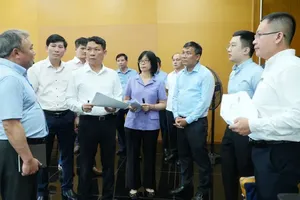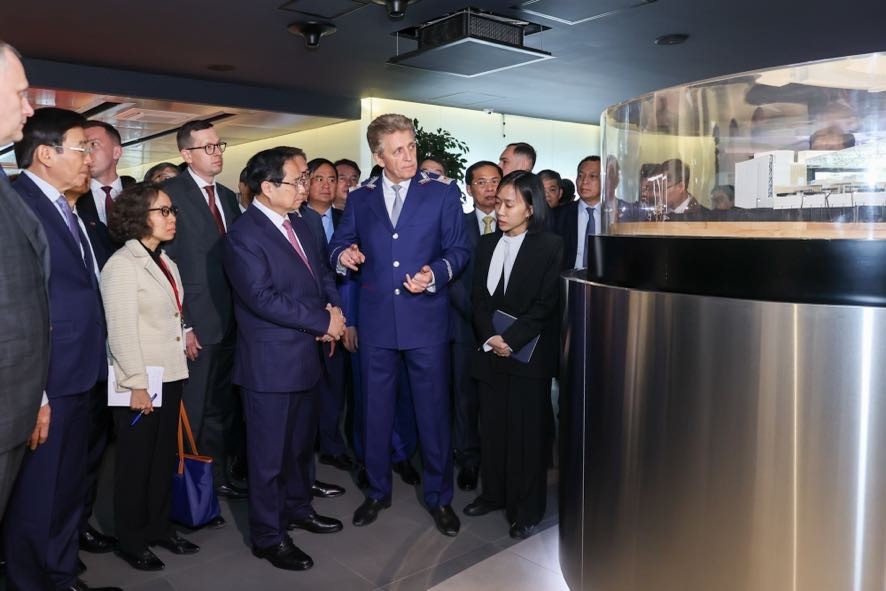
Within the framework of Prime Minister Pham Minh Chinh’s visit to the Russian Federation, delegations from the Hanoi and HCMC People's Committees held working sessions with the Moscow City Government, the Moscow Metro Construction JSC. (Mosmetrostroi), as well as various research, design, and technology agencies. These discussions centered on collaborating to construct an urban railway system, manage underground space, and share metro operational experience.
Amidst the global energy crisis, where national energy security faces unpredictable fluctuations stemming from geopolitical conflicts intertwined with international energy trade, accelerating and intensifying the development of the urban railway network serves as a crucial measure to resolve the energy supply challenge in the medium and long term.
Selecting the Moscow Metro as a partner appears highly suitable and beneficial for meeting the future demands, scale, and service scope of Vietnam’s metro system. The Moscow Metro boasts the longest subway network in Europe with 271 stations and handles an average daily passenger volume of roughly 7.5 million, maintaining a mere 80 to 90-second headway between trains during peak hours.
The Moscow Metro system integrates numerous modern technologies, such as the Troika smart card, which facilitates flexible payments across various public transport modes. It also provides features for journey planning, card management, and real-time information for individual trains.
During their tour of the Moscow Metro, the delegation paid close attention to understanding the operational dynamics between lines constructed in the 20th century, which are 50 to 70 years old, and newly implemented lines integrated with modern residential, commercial, service complexes, and public spaces.
This clearly demonstrated that urban railways are not merely transportation projects; they significantly contribute to urban regeneration. They represent a new generation of urban development models where public infrastructure becomes the backbone for reorganizing space, populations, and the economy in a modern, sustainable, and profound manner.
The Vietnamese side, therefore, desires to promote cooperation and consult Russia’s experience regarding vision, mindset, planning, design, specific project construction, and implementation organization. This is especially true concerning resource mobilization, operations, management, and technology transfer.
In its effort to concurrently address medium and long-term energy supplies and resolve the public transportation puzzle alongside urban infrastructure and services, HCMC perceives this as an opportunity requiring rapid promotion to swiftly actualize the aforementioned dual mission.
Accordingly, the focus will center on key areas including network planning and underground space planning, particularly in handling complex geological foundations and individual intersections within densely built urban areas. It also involves selecting technologies and addressing existing issues to establish a unified regulatory system for the entire Vietnamese metro network, thereby ensuring long-term connectivity among the lines.
The simultaneous construction of multiple lines to maximize the utilization of tunnel boring machines (TBMs) and multi-level, multi-functional underground transit stations necessitates calculated technical steps ranging from detailed to holistic levels. In addition, topics concerning training cooperation, supplying high-quality human resources for the metro system, as well as achieving autonomy in technology, consulting, design, and construction undoubtedly constitute invaluable experience.
The Russian partners are ready to accompany Vietnam and particularly HCMC through these aspects during the upcoming phase of modern urban creation.
There is a strong possibility that the Russian partners will participate as general contractors or subcontractors, supporting Hanoi and HCMC in investing and constructing a Network Operating Control Center (NOCC), akin to the Moscow City model.