Ho Chi Minh City’s draft policy on attracting and utilizing talented people proposes expert incomes ranging from 20 to 50 times the Region I minimum wage, with the highest level at about VND265 million a month, along with an initial support payment and bonuses based on products and projects.
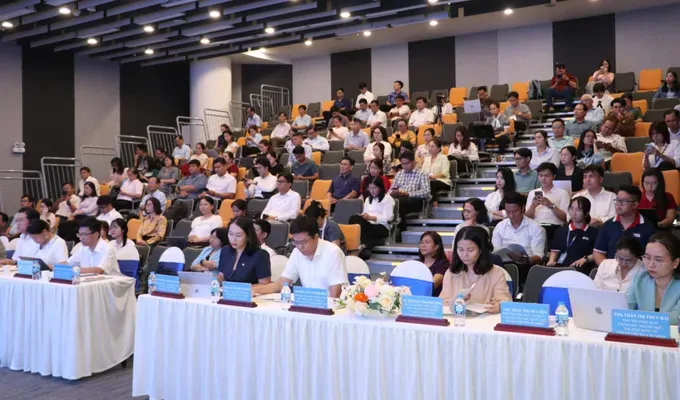
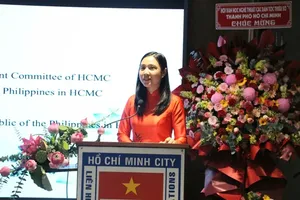
On the morning of September 17, the Ho Chi Minh City Department of Home Affairs and the Department of Science and Technology held a conference to solicit opinions on a draft resolution on mechanisms and policies to attract, utilize and develop high-quality human resources and talented people to work at agencies, organizations, units and businesses in the city.
Pham Thanh Nhan, deputy director of the HCMC Department of Home Affairs, emphasized that high-quality human resources and talented people are among the decisive drivers enabling the city to make breakthroughs and enhance its competitiveness.
The resolution is intended to concretize major policies and is linked to the implementation of the Urban Development Law. Its overarching approach is to shift from “having policies to attract talent” to proactively finding the right people, assigning them the right jobs, evaluating them based on results and creating conditions for talented people to stay with the city over the long term.
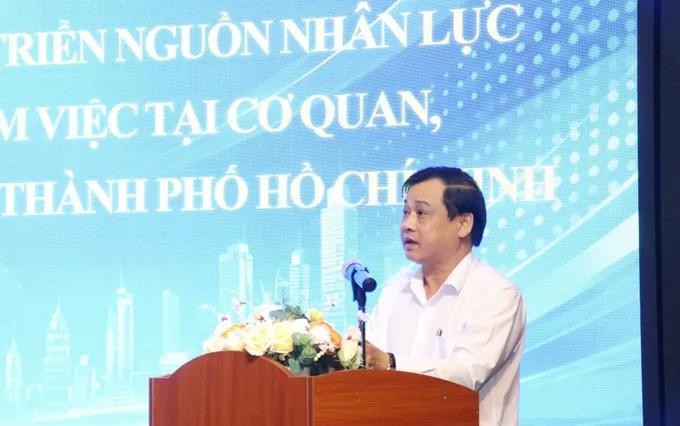
According to the deputy director, policies implemented in recent years have produced initial results but still face difficulties related to eligible groups, criteria, recruitment methods, compensation, working environments, and mechanisms for evaluating and retaining talented people. The draft aims to establish a policy system covering the identification, attraction, recruitment, contract signing, employment, compensation and development of talented people.
Nguyen Si Long, deputy head of the Civil Servants and Public Employees Division under the HCMC Department of Home Affairs, said the draft expands the use of contracts with experts to carry out programs, schemes, projects, works and key tasks. It also allows Vietnamese people living overseas who hold Vietnamese citizenship to be recruited as civil servants and public employees. Officials, civil servants and public employees currently working in the city who have particularly outstanding achievements may also be considered for recognition so that high-quality human resources policies can be applied to them.
Regarding compensation, the draft proposes a one-time initial support payment equivalent to 15 times -100 times the Region I minimum wage, or about VND80 million-VND530 million. Monthly income would range from 20 to 50 times the Region I minimum wage, or about VND100 million-VND265 million, along with bonuses based on products and projects. Highly qualified recruits would also receive monthly support equivalent to two to five times the Region I minimum wage.
The draft also calls for a professional, open and democratic working environment, access to data, laboratories and libraries, and consideration of funding for research, equipment and other necessary resources.
Compensation must go hand in hand with working environment
At the conference, Nguyen Thanh Hien, deputy head of the Management Board of the Ho Chi Minh City Agricultural Hi-Tech Park, said the agency attracted three experts between 2015 and 2019, including one Japanese expert; four experts between 2019 and 2023; and is currently working to attract 10 experts for nine key positions.

However, strict criteria, lengthy procedures and insufficiently attractive compensation remain obstacles. Mr. Hien proposed establishing an international-standard working environment and giving experts and scientists serving as leaders or heads of research teams greater autonomy in selecting and training their working groups.
He also proposed housing-rental support of VND10 million-VND20 million a month during the first three years, along with healthcare, education and employment support for experts’ families.
Similarly, Director Trinh Xuan Thang of the Research and Development Center of the Saigon Hi-Tech Park (SHTP Labs) said that before 2018, the center had effectively contracted foreign experts, with salaries of up to VND150 million a month.
According to Director Trinh Xuan Thang, the implementation of Resolution 20/2018/NQ-HDND capped salaries at about VND14 million a month, making it difficult for the center to attract foreign experts to work directly. It therefore shifted to online arrangements during 2019-2022.
Meanwhile, expert incomes at domestic universities and businesses currently range from VND40 million to hundreds of millions of dong a month. He said HCMC currently offers salaries of VND30 million-VND120 million a month to leaders of internationally accredited centers, depending on their positions and achievements.
SHTP Labs proposed that experts receive salaries equivalent to those positions; flexible recruitment arrangements allowing them to concurrently work abroad; online work; and evaluation based on products rather than regular office hours. The center also proposed annual research funding of VND300 million-VND500 million, depending on the position being recruited.




)