Vietnam hardly competes for talent through financial incentives, tax breaks or research infrastructure, but it can leverage its strengths in culture, family ties and the desire to contribute to the country.
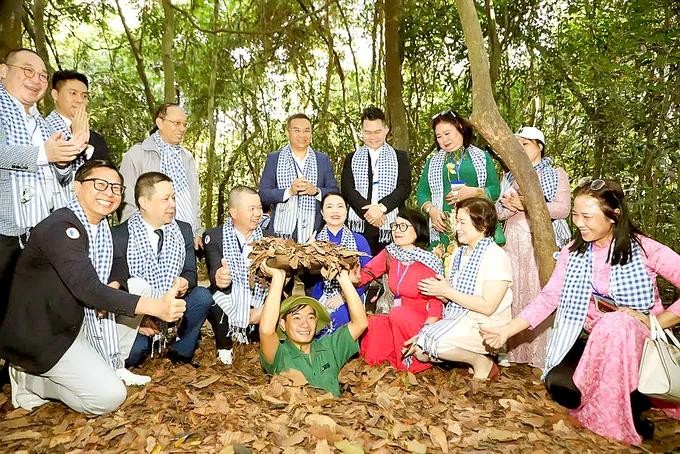
The Politburo has issued Resolution No. 23-NQ/TW on overseas Vietnamese affairs (Resolution No. 23), creating a new legal framework, removing obstacles in administrative procedures and facilitating the return of overseas talent to contribute to the country.
At the National Conference on Studying, Learning, Disseminating and Implementing a Number of Resolutions and Directives of the Politburo on Sept. 3, Foreign Minister Le Hoai Trung, while presenting the key and core contents of Resolution No. 23, affirmed that the resolution would strongly inspire patriotism and the desire to contribute while bringing into full play the resources of overseas Vietnamese.
In reality, despite their substantial intellectual resources, many overseas Vietnamese still face administrative barriers that make it difficult to realize their desire to return home. In 2016, driven by his attachment to his homeland and his desire to bring advanced technology to serve the country, Associate Professor and PhD Bui Quoc Bao, an overseas Vietnamese living in France, returned to Ho Chi Minh City to teach at Ton Duc Thang University. He has directly participated in scientific research, trained students from undergraduate to doctoral levels, and established numerous international cooperation ties.
Based on his experience, Associate Professor and PhD Bui Quoc Bao said the core obstacle today is that many existing regulations are not compatible with the specific characteristics of highly qualified personnel. For example, many experts and scientists who graduate from or are awarded professor or associate professor titles by reputable international institutions still face difficulties in having their degrees recognized when they return to Vietnam. Therefore, a flexible recognition mechanism is needed, based on the reputation of international scientific institutions and the experts’ actual achievements.
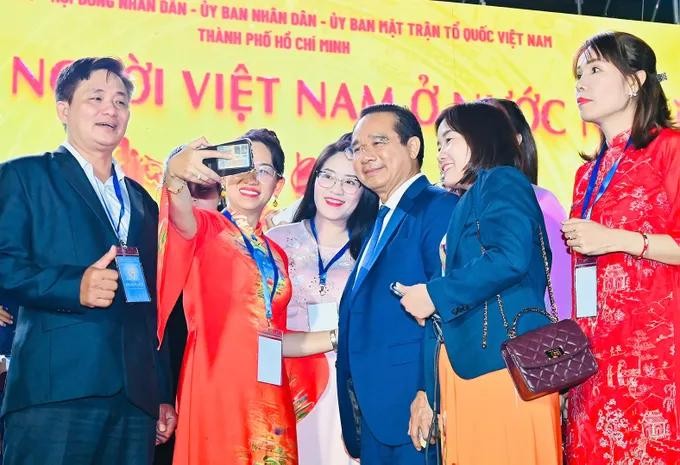
In addition, Associate Professor Bui Quoc Bao said talent attraction policies should not focus on salaries. For scientists, the working environment is decisive. This includes professional autonomy, streamlined procedures for disbursing funds and purchasing equipment, and, in particular, an ecosystem that accepts risk and encourages breakthrough ideas.
The definition of “talent attraction” also needs to be broadened. Experts do not necessarily have to return to Vietnam on a full-time basis. Flexible models, such as short-term assignments, remote consulting, joint project leadership or technology transfer, are entirely feasible in the digital age.
Based on his experience connecting Vietnamese and South Korean experts and businesses, Chairman Tran Hai Linh of the Vietnam-Korea Business and Investment Association (VKBIA) said he had encountered cases in which partners and experts were highly interested in and eager to cooperate in Vietnam, but implementation took considerable time because they had to work with multiple different agencies.
Meanwhile, in the technology sector, time is opportunity. If a project involving artificial intelligence, semiconductors, biotechnology or innovation takes one or two years to complete the required procedures, the technology may have already moved to another generation by the time the project is implemented.
Therefore, Chairman Tran Hai Linh expressed his hope that once an expert is identified as strategic talent, a single point of contact would be assigned to support that expert from the decision to come to Vietnam until the start of work. He also called for clearly defined processing deadlines and coordinated handling of matters involving residency, work permits, taxes, degree recognition, housing, healthcare and children’s education.
Strategy for managing the talent network
At a working session with the Government Party Committee on the national strategy to attract, utilize and develop talent in key industries and fields to support rapid and sustainable development in the new era on Aug. 24, Party General Secretary and President To Lam emphasized the need to study the issuance of a “Vietnam Talent Visa”. This should be accompanied by a transparent, one-stop process with clearly defined processing deadlines, enabling coordinated resolution of procedures and policies related to salaries, residency, employment, taxes, housing, healthcare, education and qualification recognition for talented individuals and their families.
Lecturer Dao Hung at the University of Economics and Law under Vietnam National University Ho Chi Minh City returned from South Korea through the VNU350 program in 2025, which attracts outstanding young scientists and leading scientists to work at Vietnam National University Ho Chi Minh City. He said this is an approach being used by most countries in the region in the race for international talent.
Typical models include South Korea’s K-Tech Pass for technology experts, Japan’s J-Skip for highly skilled workers, and Singapore’s ONE Pass for senior personnel in strategic fields. Therefore, Vietnam’s study of a similar program, tentatively called “V-Special,” would be a strategic direction.
According to lecturer Dao Hung, implementing such a program cannot rely solely on financial incentives and administrative reform. Vietnam cannot outdo Singapore in terms of financial benefits or the UAE in tax incentives, and it would also be difficult to surpass South Korea and Japan in research infrastructure. Vietnam needs a comprehensive approach encompassing both “people” and “talent.” Specifically, people means leveraging the advantages of culture, family and the desire to contribute — a distinctive foundation for attracting overseas Vietnamese intellectuals. Talent, meanwhile, means the ability to address the practical challenges Vietnam needs to solve, rather than simply possessing prestigious titles. This would create genuine appeal in the global talent market.
To harness the intellectual and financial capital of the global diaspora, Nguyen Vu Minh Hoang, Secretary-General of the Association for Liaison with Overseas Vietnamese in Ho Chi Minh City, has proposed the creation of a dedicated resource coordination center.
Envisioned as a strategic "conductor," the proposed hub would bridge the gap between international experts, overseas Vietnamese communities, and the city’s critical development sectors. By cross-referencing a comprehensive talent database with municipal demands, the center would directly connect qualified professionals with local businesses, universities, and research institutions.
In addition, the city needs to develop a “global map of Vietnamese talent” to proactively seek talent for specific development challenges facing the city, shifting from waiting for talented people to come forward to actively finding the right people.
Lecturer Bui Ngoc Hien from the Ho Chi Minh City Cadre Academy (HCA) argues that the city should empower talented individuals. Urban development laws provide mechanisms and policies to attract, value, and develop talent, thereby equipping the city with an internationally capable workforce.
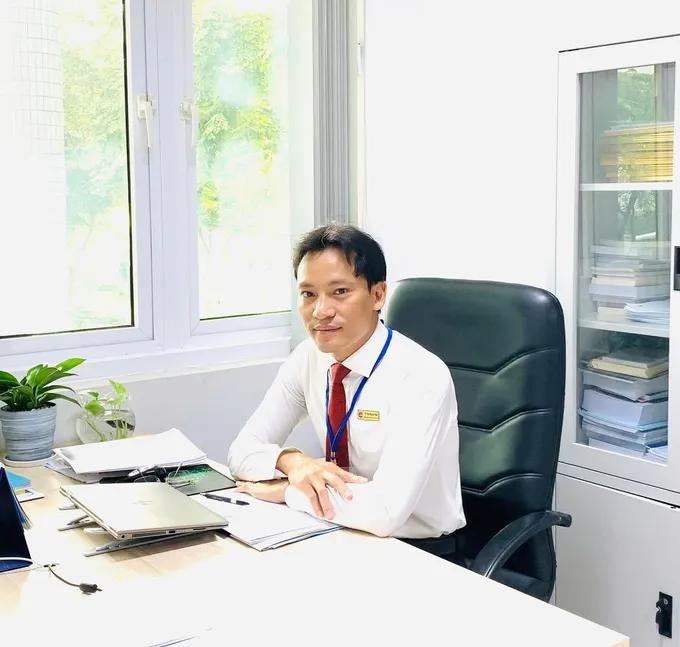
To implement these policies effectively, Ho Chi Minh City needs to grant genuine and maximum autonomy regarding personnel, finance, and intellectual property rights; facilitate the commercialization of research findings and creative ideas; and allocate resources to support research and the implementation of these concepts.
He suggests shifting the management and evaluation focus toward measuring socio-economic outcomes and the practical results of research products, technological innovations, and creative ideas. Furthermore, it is essential to dismantle institutional barriers and foster an environment that genuinely respects creativity across all types of organizations. This approach encourages innovation and enables the proactive, early, and strategic identification and nurturing of talent across various sectors and disciplines. Compensation policies must be redesigned to attract the talent needed to solve the city's development challenges.
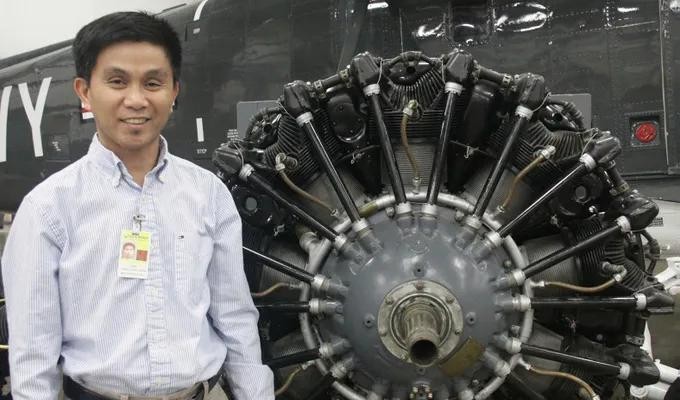
Tran Thang, overseas Vietnamese aeronautical engineer based in the U.S., notes that 2022 statistics show a Vietnamese population of approximately 2.2 million in the United States, with over 260,000 holding postgraduate degrees. An estimated 80,000 of these individuals are considered top-tier professionals present in almost every field. However, the majority of successful Vietnamese in the U.S. do not participate in the local Vietnamese community. Without connection networks, it is impossible to reach this elite group, share information about Vietnam, or foster a sense of attachment to their homeland and roots.
In reality, the number of overseas Vietnamese experts and intellectuals from the United States returning to work in Vietnam is very small. To better attract talent, it is necessary to find common ground between overseas Vietnamese experts and intellectuals and actual domestic needs. While the State plays a key role in policy-making, the primary "landing spots" for talent lie within the business sector and educational institutions. Until clear receiving destinations are established, an effective model for attracting overseas Vietnamese experts and intellectuals cannot be built.