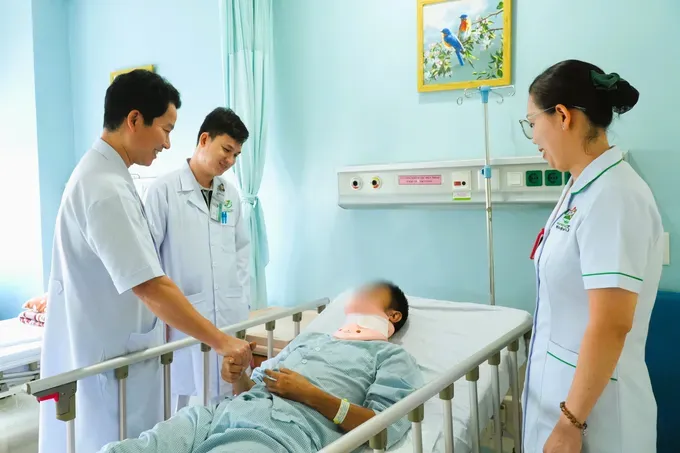
The policy to cover 100 percent of tuition fees for resident doctor training, capped at VND100 million (US$3,833) per person per academic year, along with living-expense support for trainees in certain priority specialties, is expected to ease financial pressures on young doctors, enabling them to pursue advanced training and helping Ho Chi Minh City build a high-quality healthcare workforce.
On August 28, the Ho Chi Minh City Department of Health said the policy to provide financial support to eligible doctors enrolled in resident doctor training programs, recently approved by the Ho Chi Minh City People’s Council, represents a highly commendable initiative.
According to Associate Professor, PhD, Dr. Tang Chi Thuong, Director of the Ho Chi Minh City Department of Health, resident doctor training has long been regarded as one of the most specialized and demanding forms of postgraduate medical education. To gain admission and complete the program, young doctors must undergo a rigorous selection process and intensive academic and clinical training at educational institutions and hospitals.
Alongside the academic pressure, young doctors also face a very practical concern, including tuition fees and living expenses during their years of further training. For many young doctors and their families, these costs represent a significant financial burden, particularly after six long years of medical school. Such pressure can sometimes force capable and eligible young doctors who wish to pursue resident doctor training to reconsider their plans or even put a valuable training opportunity on hold so they can start working sooner, earn an income, and help ease the financial burden on their families.
By covering 100 percent of actual tuition fees, up to VND100 million per person per academic year, while also providing additional living-expense support for priority specialties that are difficult to attract trainees, Ho Chi Minh City will, first and foremost, significantly ease the financial pressure on young doctors and their families during their training,” Associate Professor, PhD, Dr. Tang Chi Thuong said.
In addition, Dr. Tang Chi Thuong noted that the significance of the policy extends far beyond financial assistance. It is about creating the conditions for capable and eligible young doctors to confidently choose the resident doctor pathway based on their abilities, passion, and career aspirations, rather than having to hesitate because of financial constraints.
More broadly, the policy also sends a clear message from the city to the next generation of doctors: if you have the ability, the aspiration to learn, and the determination to become an excellent doctor, the city will stand by you and create the conditions for you to continue pursuing that path.
Affirming that “investment in a high-quality healthcare workforce must come first,” Associate Professor, PhD, Dr. Tang Chi Thuong said a new hospital can be built within a few years. However, a good doctor cannot be “invested in” within just a few years. Producing a highly qualified specialist requires many years of study and clinical practice. Becoming a leading expert takes many more years. And developing a doctor who is not only professionally excellent but also capable of training the next generation requires an even longer process.
Ho Chi Minh City is working toward building a multi-tiered, multi-polar, and multi-center healthcare system, developing specialized centers of excellence while strengthening healthcare capacity in areas where resources remain limited. The policy to support resident doctors should not simply be viewed as a tuition assistance scheme but rather as a long-term, strategic investment in the city’s high-quality healthcare workforce for the future, Dr. Tang Chi Thuong emphasized.
Associate Professor, PhD, Dr. Tang Chi Thuong said that while the city is committed to standing alongside young doctors, they must also recognize their own responsibilities. Support comes with responsibility.
The funding allocated by the city for medical training ultimately comes from society’s resources and the contributions of the people. The city’s health sector hopes that every young doctor benefiting from this policy will understand that the support carries with it certain expectations.
The expectation is that they will study with dedication and seriousness and strive to become highly capable doctors. More importantly, after completing their training, they are expected to bring their knowledge and expertise back to serve patients and contribute to the areas where the city’s healthcare system is most in need.
A young doctor may receive several hundred million Vietnamese dong in support from the city during their years of resident doctor training. But if that resident doctor goes on to become a highly skilled physician, then over the following 30 or 40 years of practice, thousands or even tens of thousands of patients could benefit from the investment made today. That, ultimately, is the greatest “return on investment” of the policy, Dr. Tang Chi Thuong said.