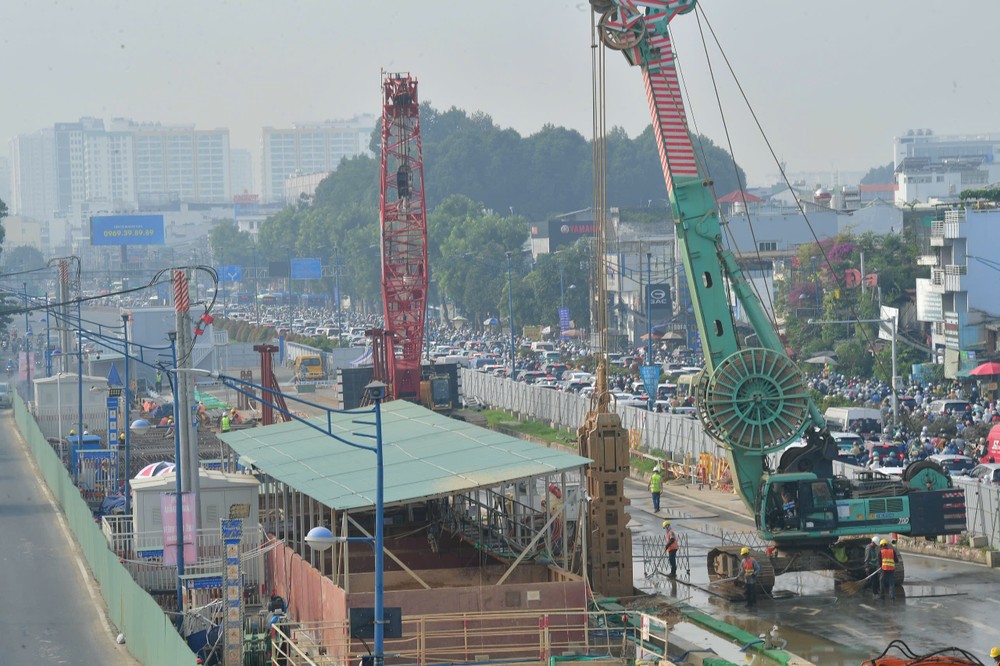
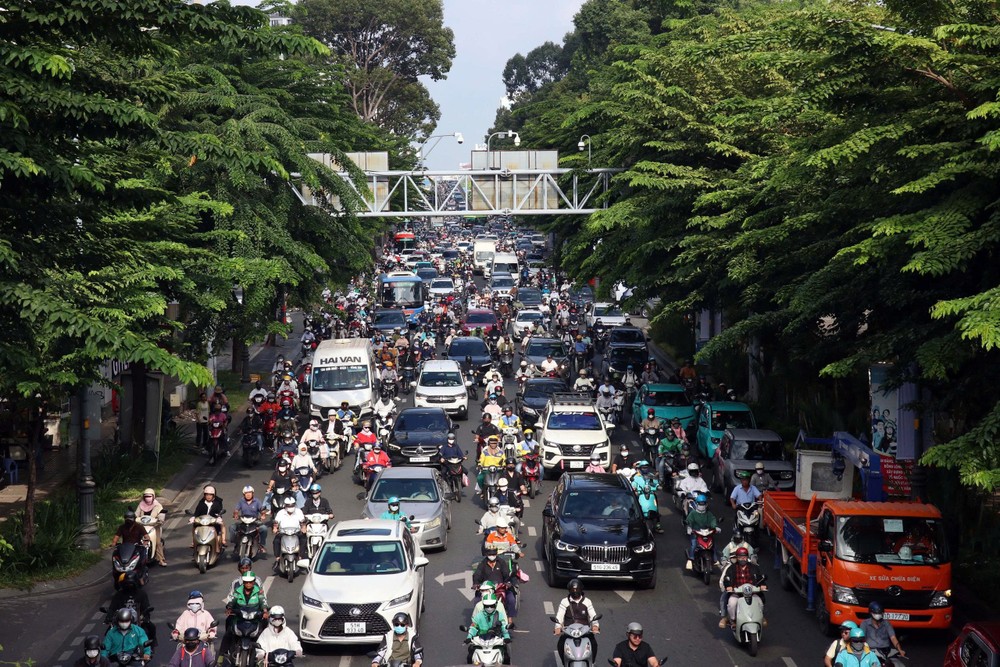
Traffic began building at around 7:30 a.m., and by 8 a.m. the queue stretched for more than one kilometer, particularly between Tham Luong Bridge and the Truong Chinh-Cong Hoa Intersection.
Motorbikes and cars packed the stretch from Pham Van Bach Street to the Cong Hoa junction, with traffic repeatedly inching forward before grinding to a halt again. Traffic entering from side streets added further pressure to the already crowded corridor.
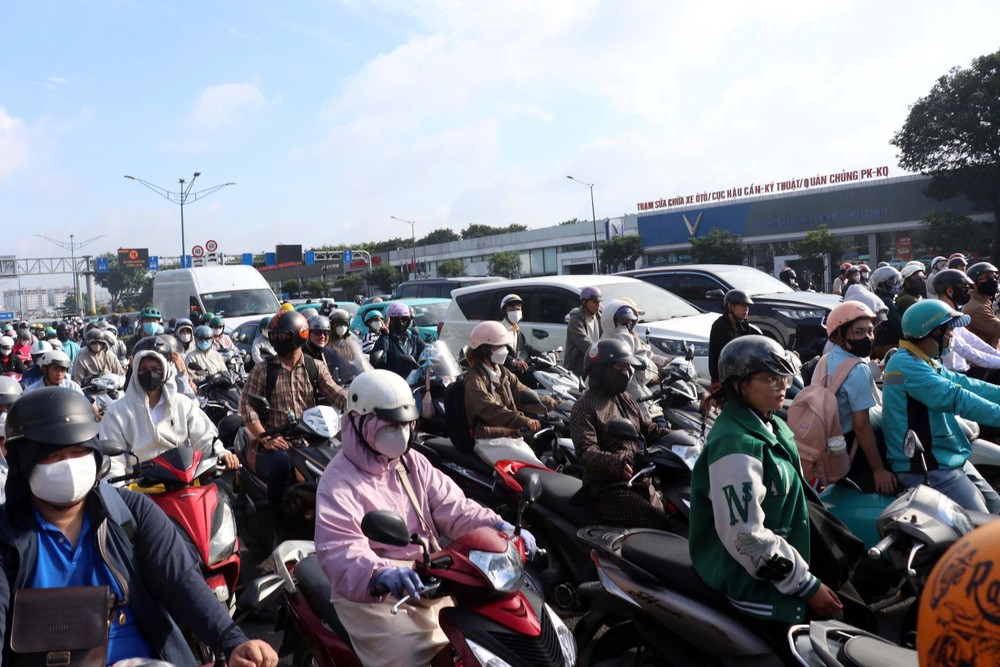
The disruption has been largely attributed to barriers installed on sections of Truong Chinh and Cong Hoa streets, as well as Tan Ky Tan Quy and Huynh Van Gam streets, for the construction of ST9, or Ba Queo Station, on Metro Line No.2 and the relocation of technical infrastructure.
The road closures have reduced available traffic space on routes that already carry heavy volumes during peak hours.
At the Truong Chinh-Cong Hoa Intersection, construction barriers have created a bottleneck on a corridor that has long struggled with congestion. Vehicles heading toward the city center must squeeze through the remaining lanes while traffic continues to arrive from Cong Hoa Street and surrounding roads.
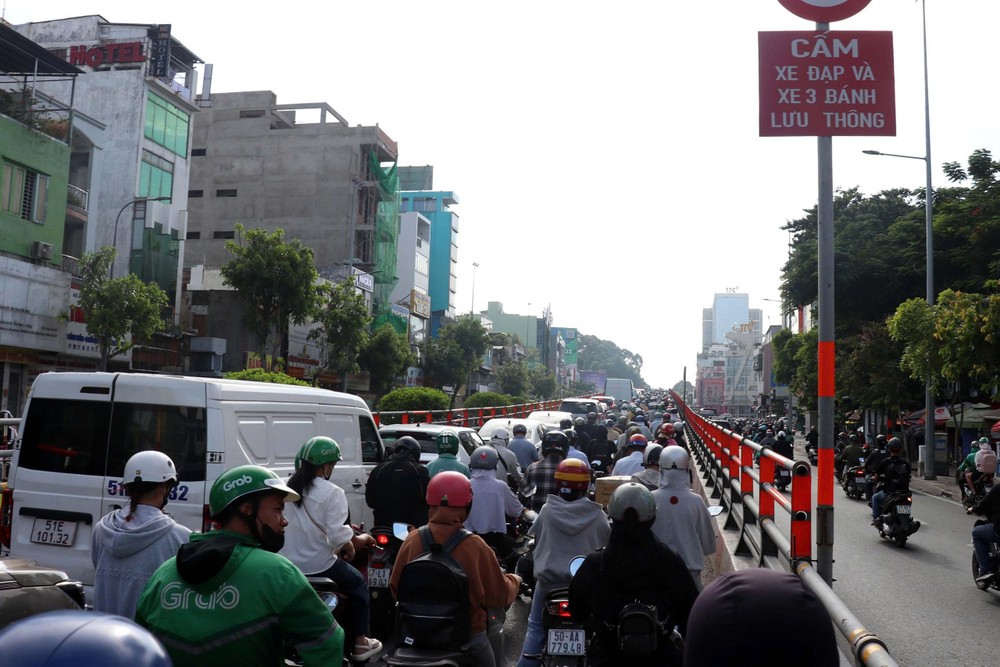
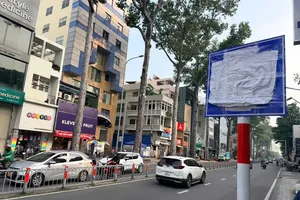
Road signs and diversion notices have been installed along the route, but commuters said the temporary traffic arrangements have substantially lengthened their journeys.
Thanh Tung, a resident of Dong Hung Thuan Ward, said congestion around Truong Chinh and Cong Hoa had already been common before construction began.
"Since the barriers were installed, the roadway has become narrower, and travel takes even longer. I now leave home about 30 minutes earlier, but I am still late for work on some days," he said.
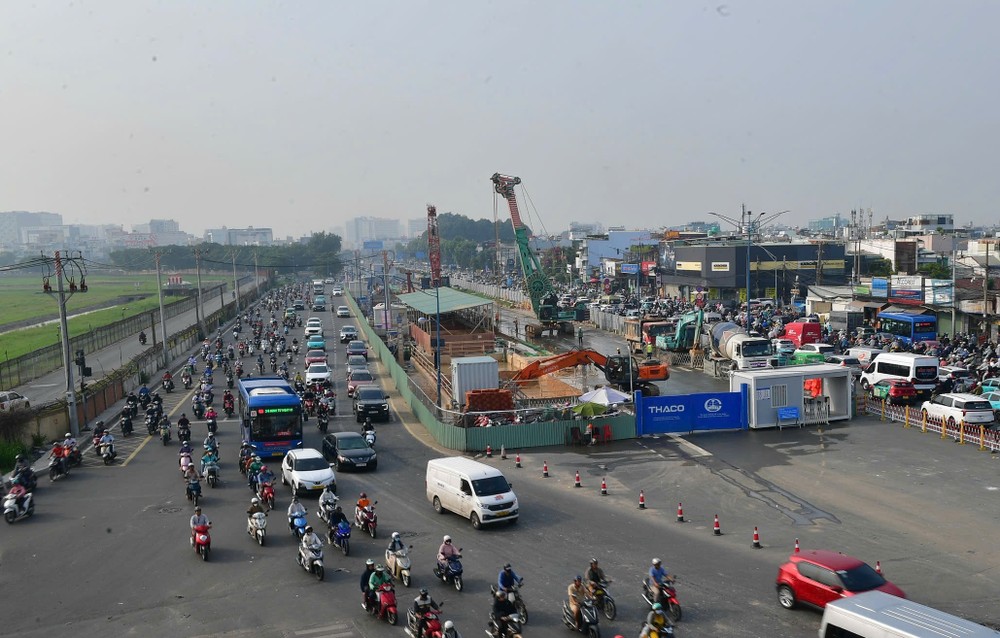
A bus driver operating the An Suong-Ben Thanh route said the area was routinely congested during the morning rush hour. The reduced road width has made it more difficult for buses to move through traffic and maintain scheduled passenger pick-up and drop-off times.
Traffic police were deployed to major intersections to direct vehicles, but congestion persisted because of the high traffic volume and reduced road capacity.
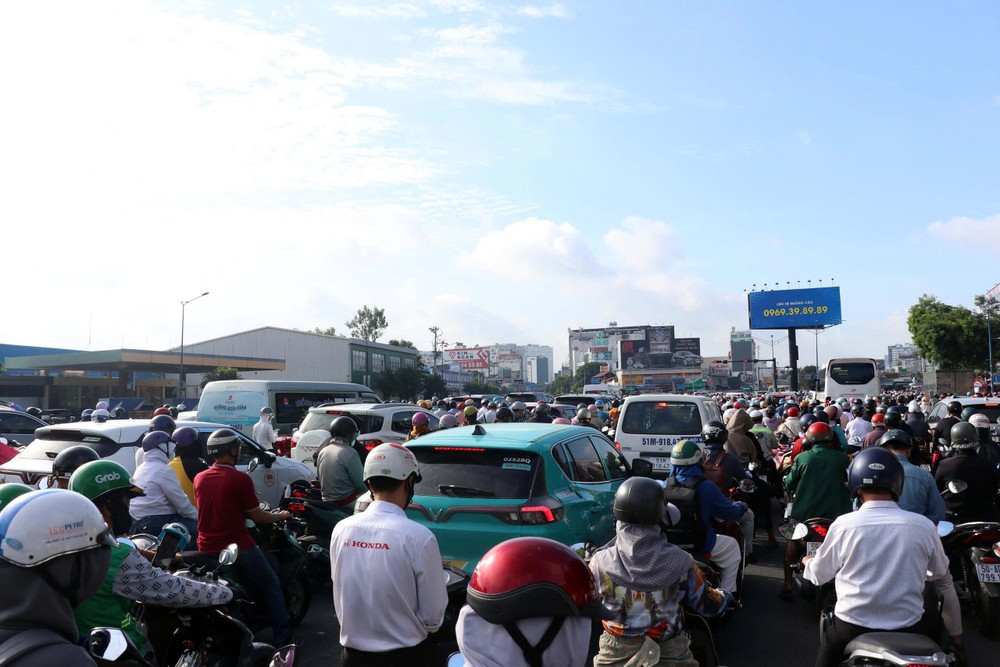
Authorities have advised commuters traveling from the An Suong area toward the city center to use alternative routes through streets including Che Lan Vien, Nguyen Huu Dat, Le Trong Tan, Tan Ky Tan Quy, Ho Dac Di and Huynh Van Gam.
The Cong Hoa-Truong Chinh corridor is a major arterial route linking Ho Chi Minh City's northwest gateway with the city center and Tan Son Nhat International Airport. With Metro Line No.2 construction expected to continue for years, authorities face growing pressure to improve diversions, manage traffic flows more flexibly and minimize the amount of road space occupied by worksites.
The Ben Thanh-Tham Luong section of Metro Line No.2 stretches more than 11 kilometers and includes underground and elevated stations as well as the Tham Luong depot. The project is scheduled for completion in 2030 and is expected to expand public transport capacity and ease long-term pressure on roads serving the city's northwest.